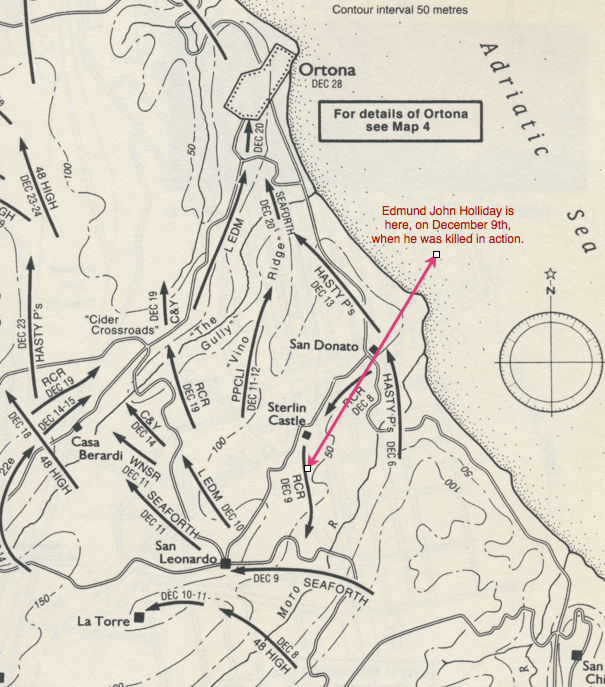
Edmund Holliday was killed on December 9th, 1943 as the Allied British forces moved north up the Italian Peninsula to push the German army out of Italy. Edmund Holliday died after the Allies had crossed the Moro River, and were in the process of clearing German forces out of San Donato, San Leonardo, and La Torre, before pressing toward Ortona. However, this was not an easy task as the German forces had tanks, mortars, heavy machine guns in ready supply, with support infantry in the area to defend the line.

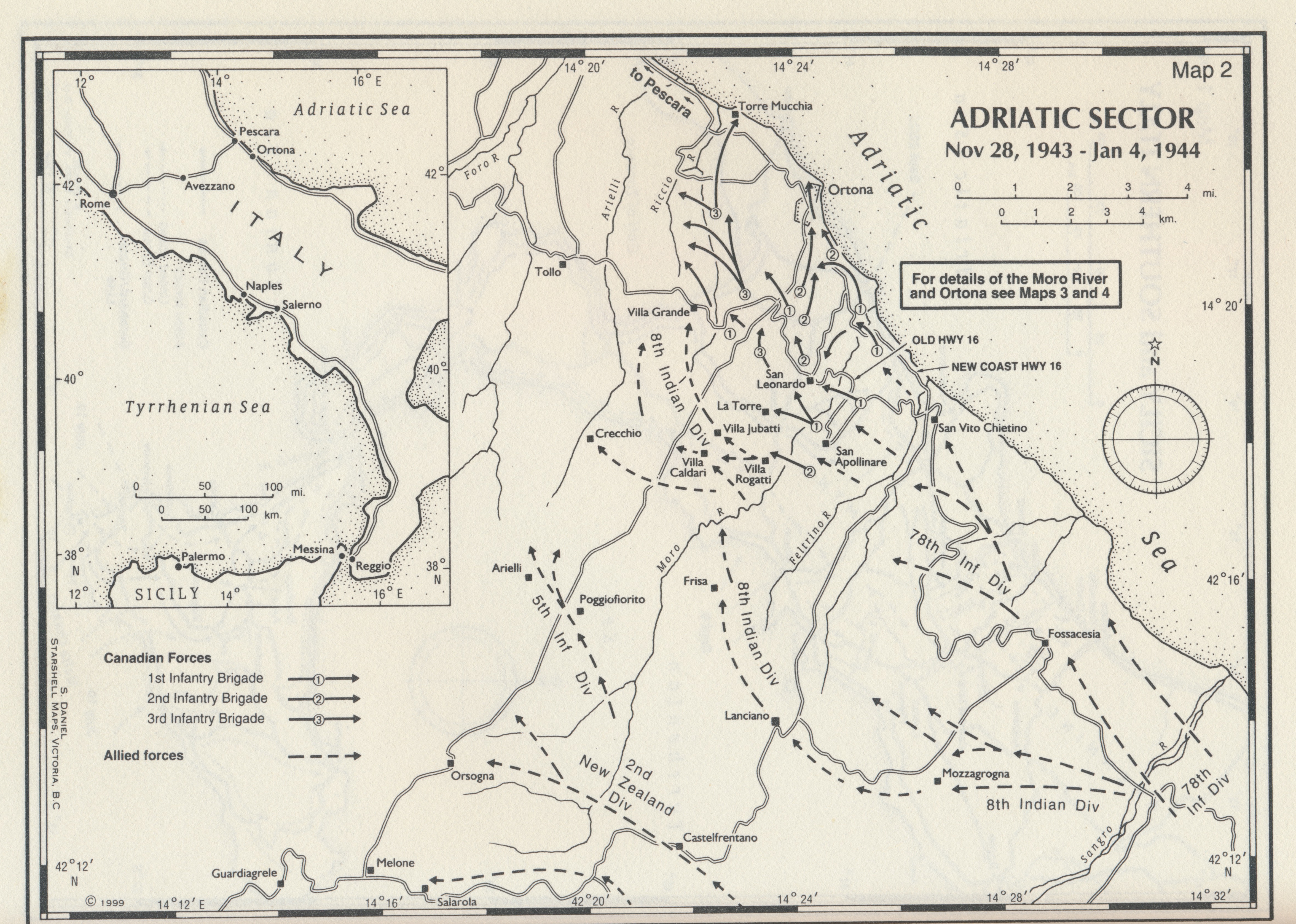
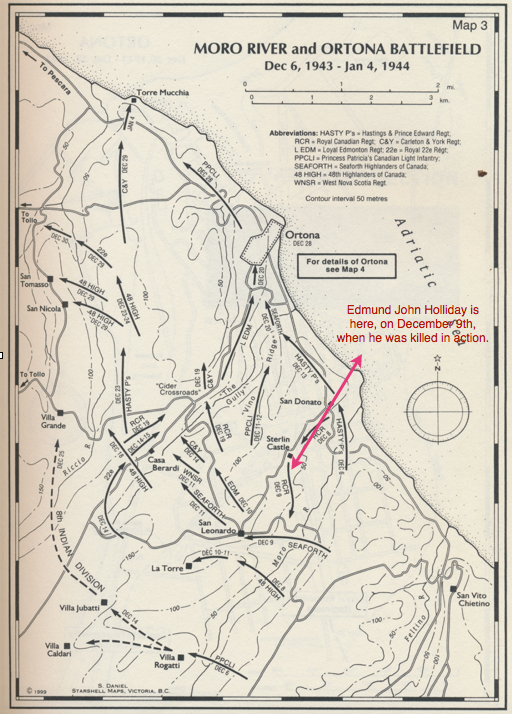
As one can see on the map immediately above, the Allies were pressing in three main thrusts: 1) the Hasty P’s (Hastings and Prince Edward Regiment) was pushing up the coast, 2) the 48th Highlanders were to the left (west) crossing the Moro River toward San Leonardo (very heavily defended by the German armies) and La Torre to prevent reinforcements from moving to San Leonardo, and 3) the Seaforth Highlanders of Canada were pressing up the middle to take San Leonardo.
As the Hasty P’s moved north toward Ortona, the Royal Canadian Regiment (RCR’s) were tasked with clearing out the river valley to the west and allowing for the occupation of San Leonardo. As the RCR’s moved west, its right flank (to the north) was exposed to German assault and very likely to suffer casualties.
The Allied forces were organized like this, in Italy (incomplete listing):
8th Allied Army
1st Canadian Infantry Division
Canadian Infantry Corps
1st Canadian Infantry Brigade
The Royal Canadian Regiment (Private Edmund John Holliday)
The Hastings and Prince Edward Regiment
48th Highlanders of Canada Regiment
2nd Canadian Infantry Brigade
Princess Patricia’s Canadian Light Infantry Regiment
The Seaforth Highlanders of Canada regiment
The Loyal Edmonton Regiment
In the British / Canadian forces structure, the smallest organizational group is a platoon, consisting of 1 officer and 35 men (when at full complement). A company usually has three platoons with about 110 men. A battalion usually consisted of a Head Quarters Company (a signals platoon + an administrative platoon); a Support Company (3″ mortar platoon + Bren Gun Carrier Platoon + Assault Pioneer Platoon + 6 pounder Antitank Platoon); plus 4 companies (A, B, C, D). Thus, a battalion usually consisted of about 18 platoons. A Division had 9 infantry battalions (3,960 men), plus Bren Carriers, Mortar Companies, Anti-Tank Platoons, Medical Services Platoon, Engineers, Supply lines (ammunition, food, equipment), etc.In times of battle, the commander had to make sure that the fighting troops did not get too far ahead of or cut off from its supply lines. Being a cook or medical doctor, or a stretcher carrier, or mule driver was as dangerous to life as being on the front lines being shot at, because mortar fire did not discriminate if you were in the wrong place at the wrong time. A casualty was someone who was either killed, wounded, captured, or missing in battle – and thus unable to participate in the fight.
The ratio of support troops to front line soldiers was usually about 3:1; 3 support troops for each infantry soldier.
In times of battle, the commander had to make sure that the fighting troops did not get too far ahead of or cut off from its supply lines. Being a cook or medic or stretcher carrier or mule driver was as dangerous to life as being on the front lines being shot at, because mortar fire did not discriminate if you were in the wrong place at the wrong time.
The following is an excerpt from the book, “Ortona:Canada’s Epic World War II Battle“, by Mark Zuehlke. It is available through the Strathroy Library. It gives a good description of what it was like for the combatants, including Private Holliday, that day.
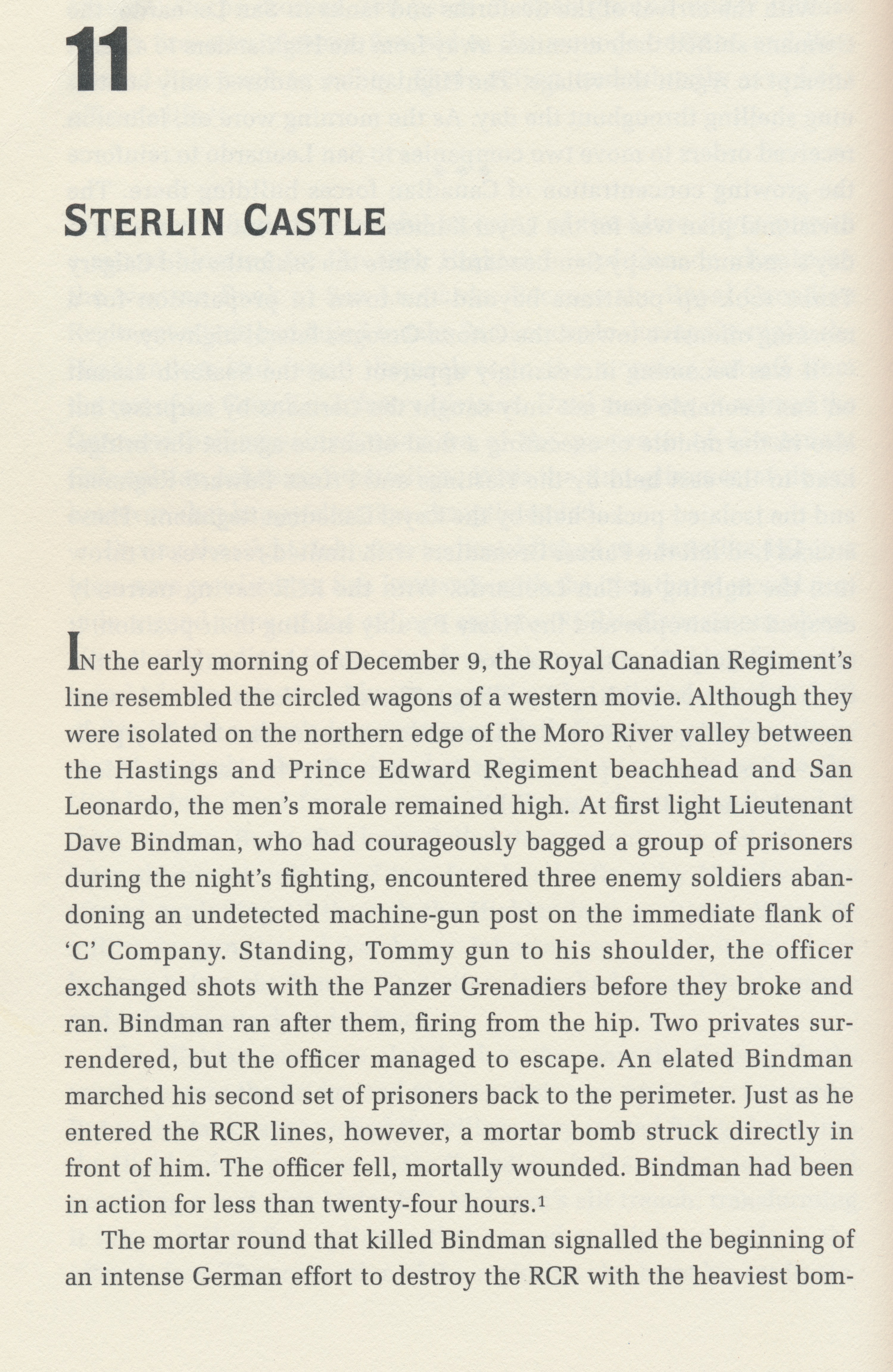
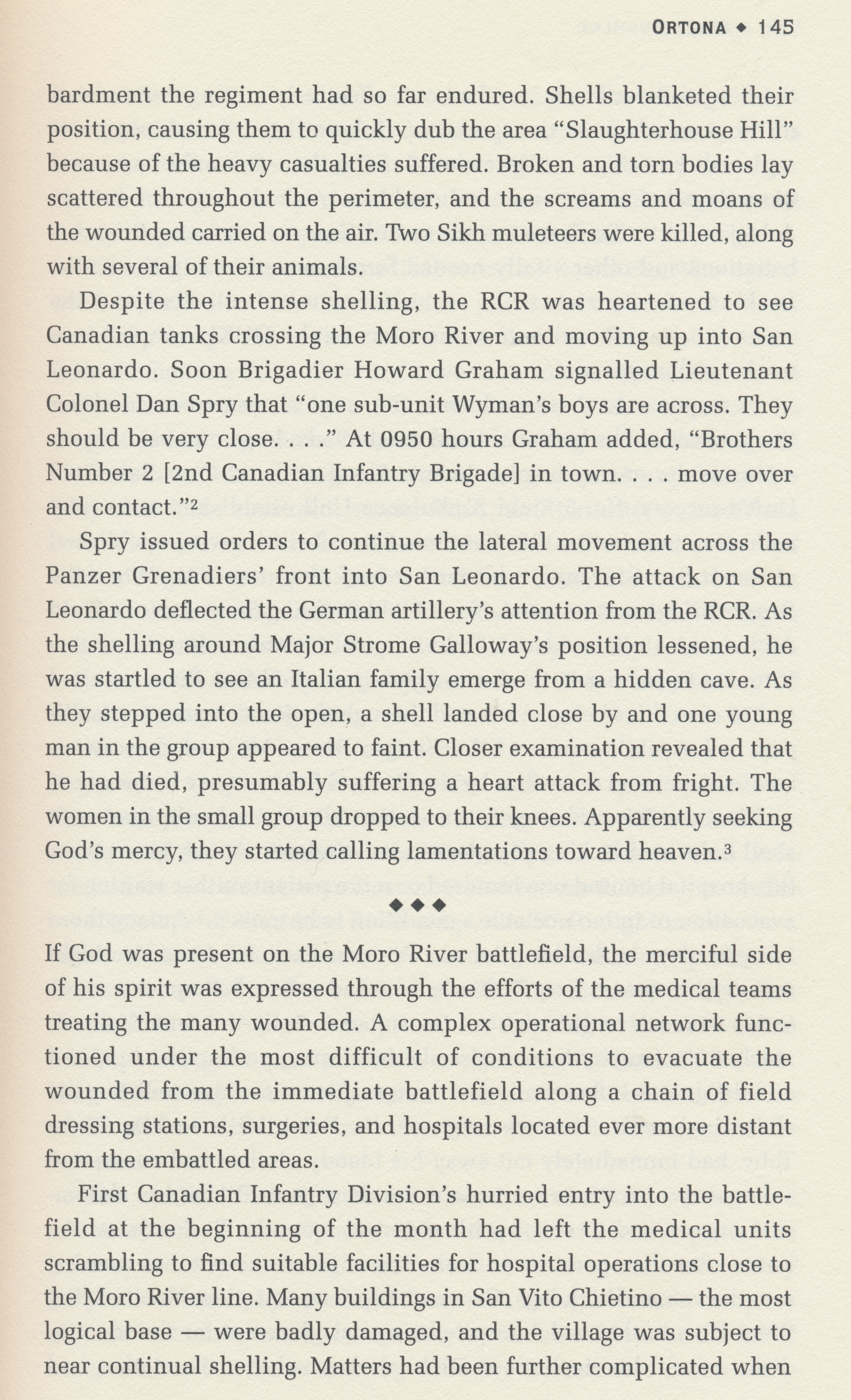
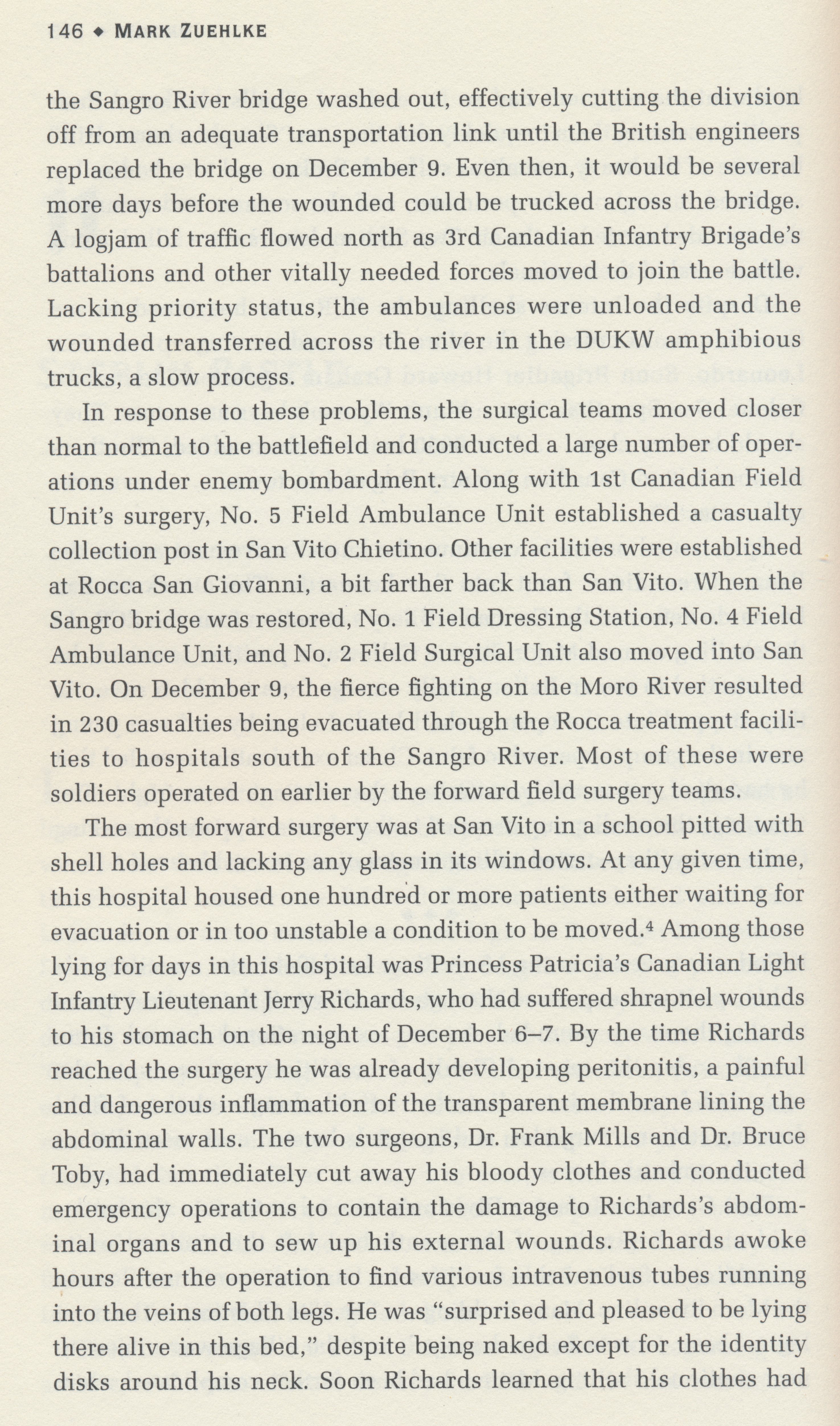
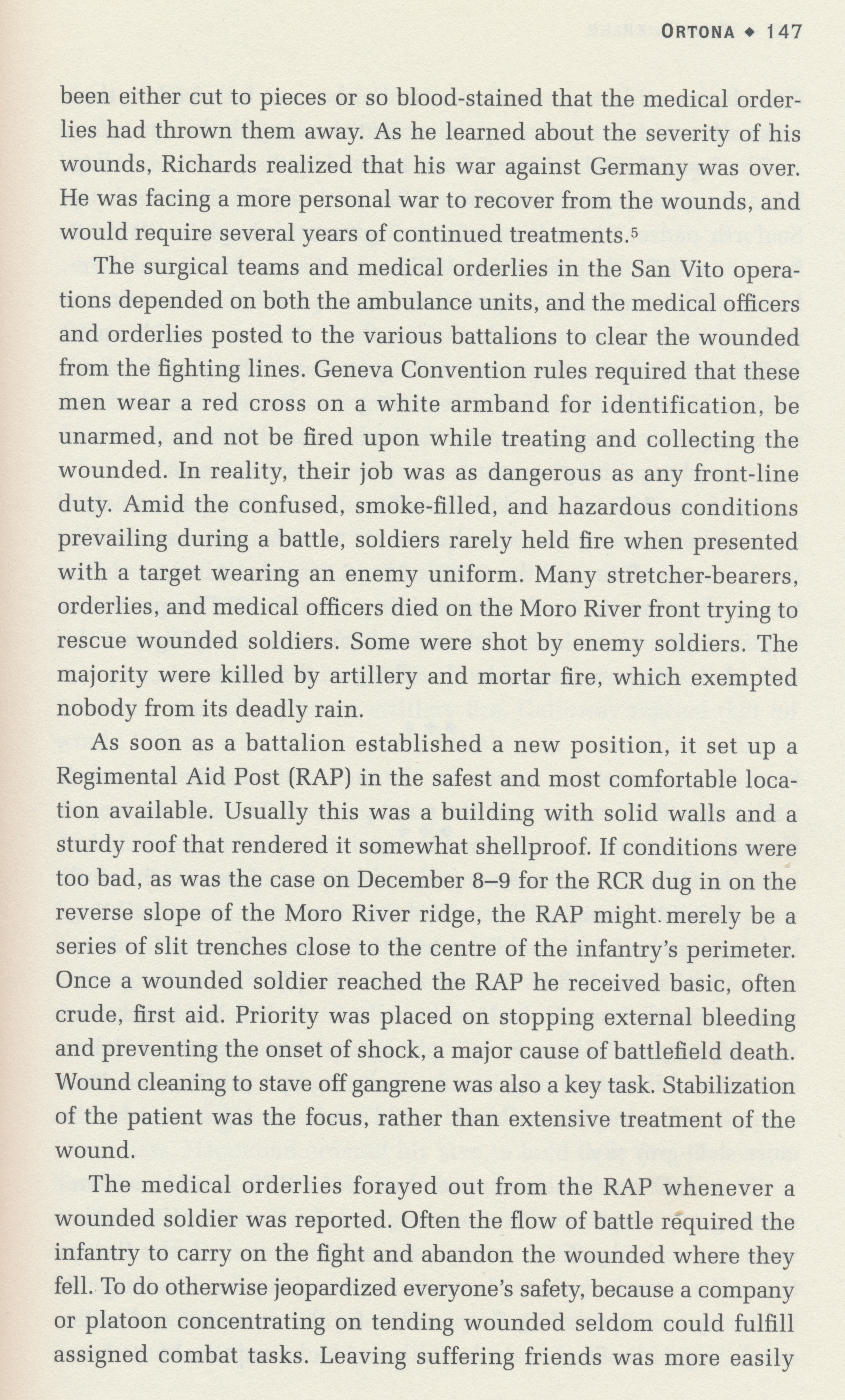
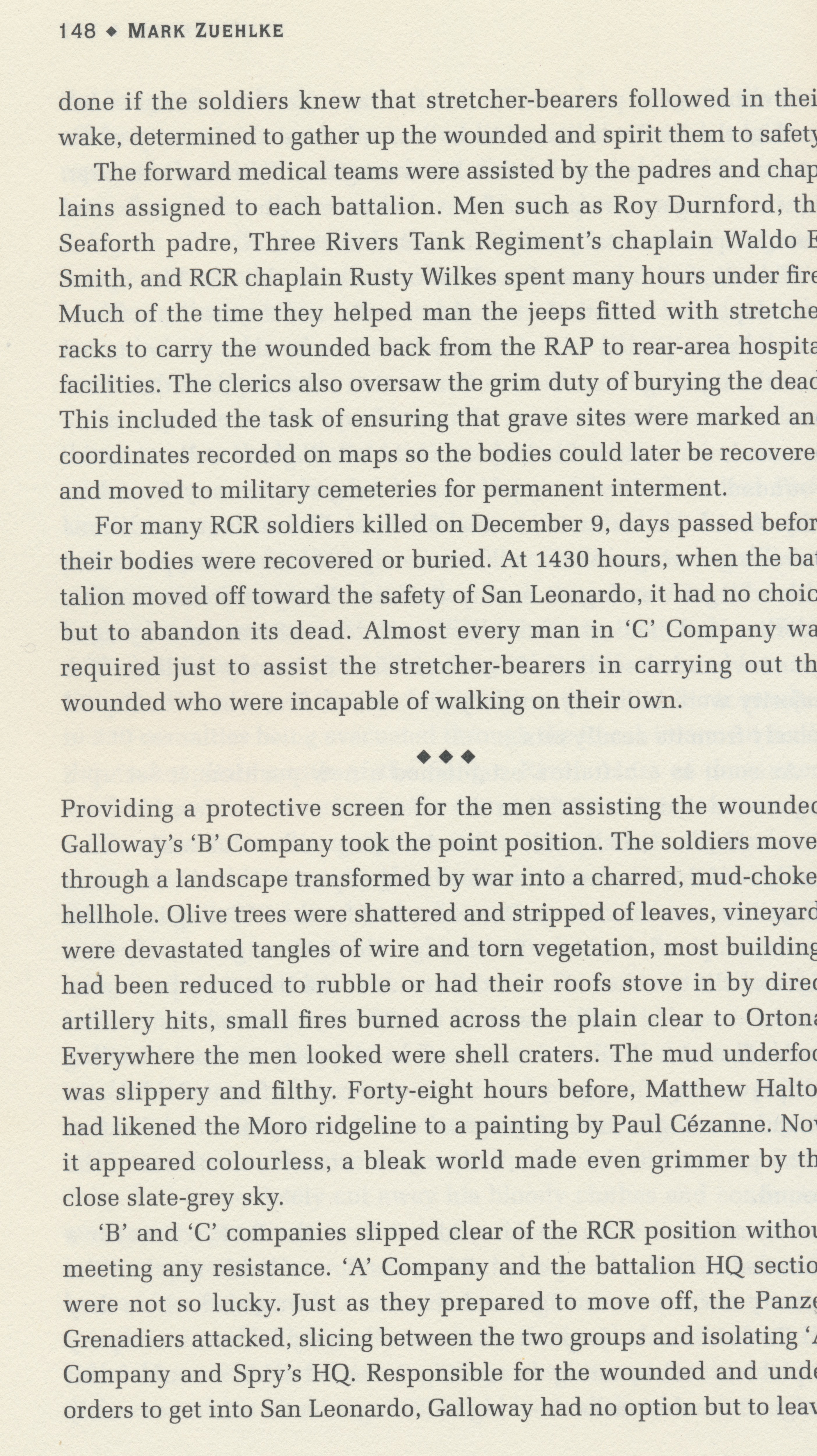
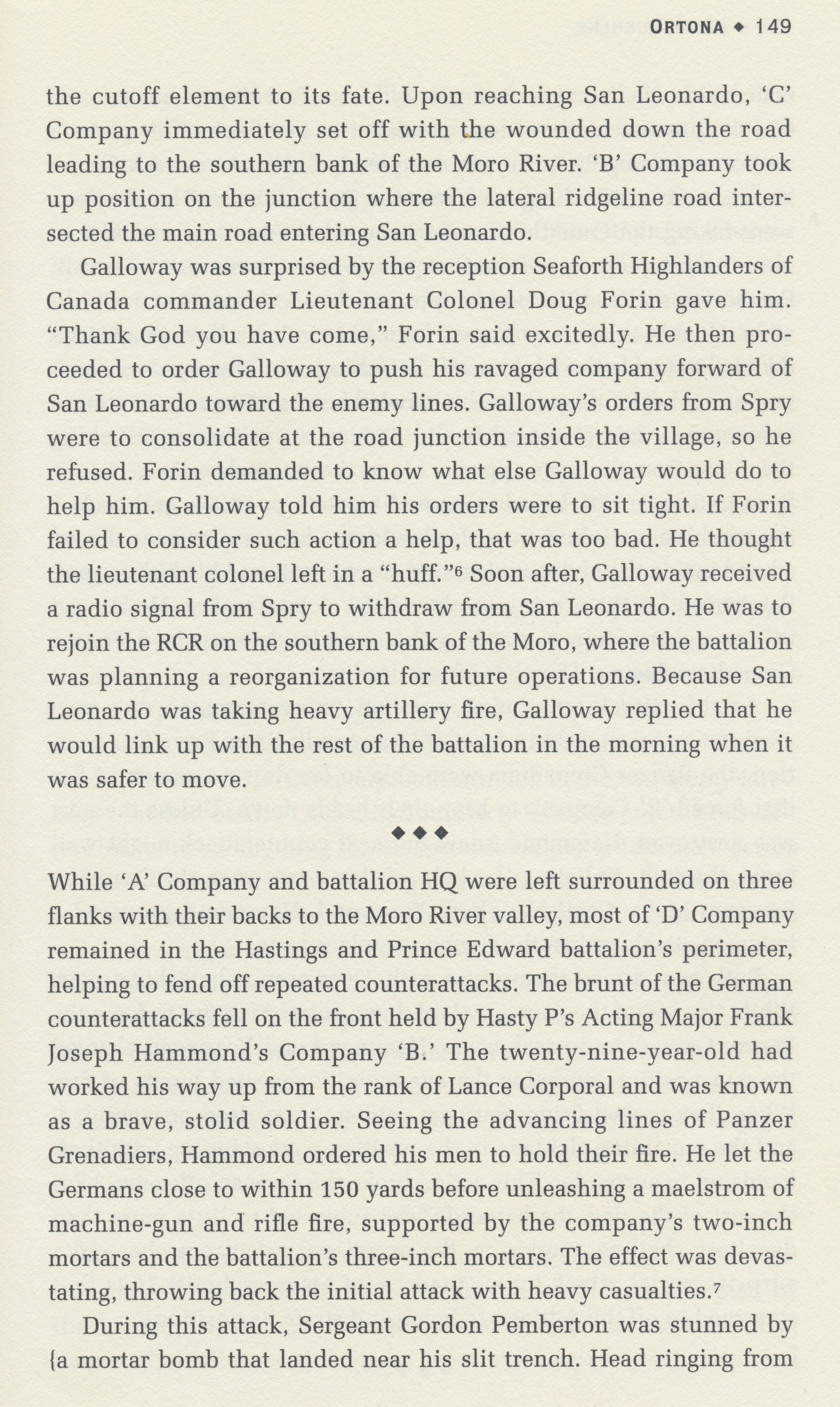
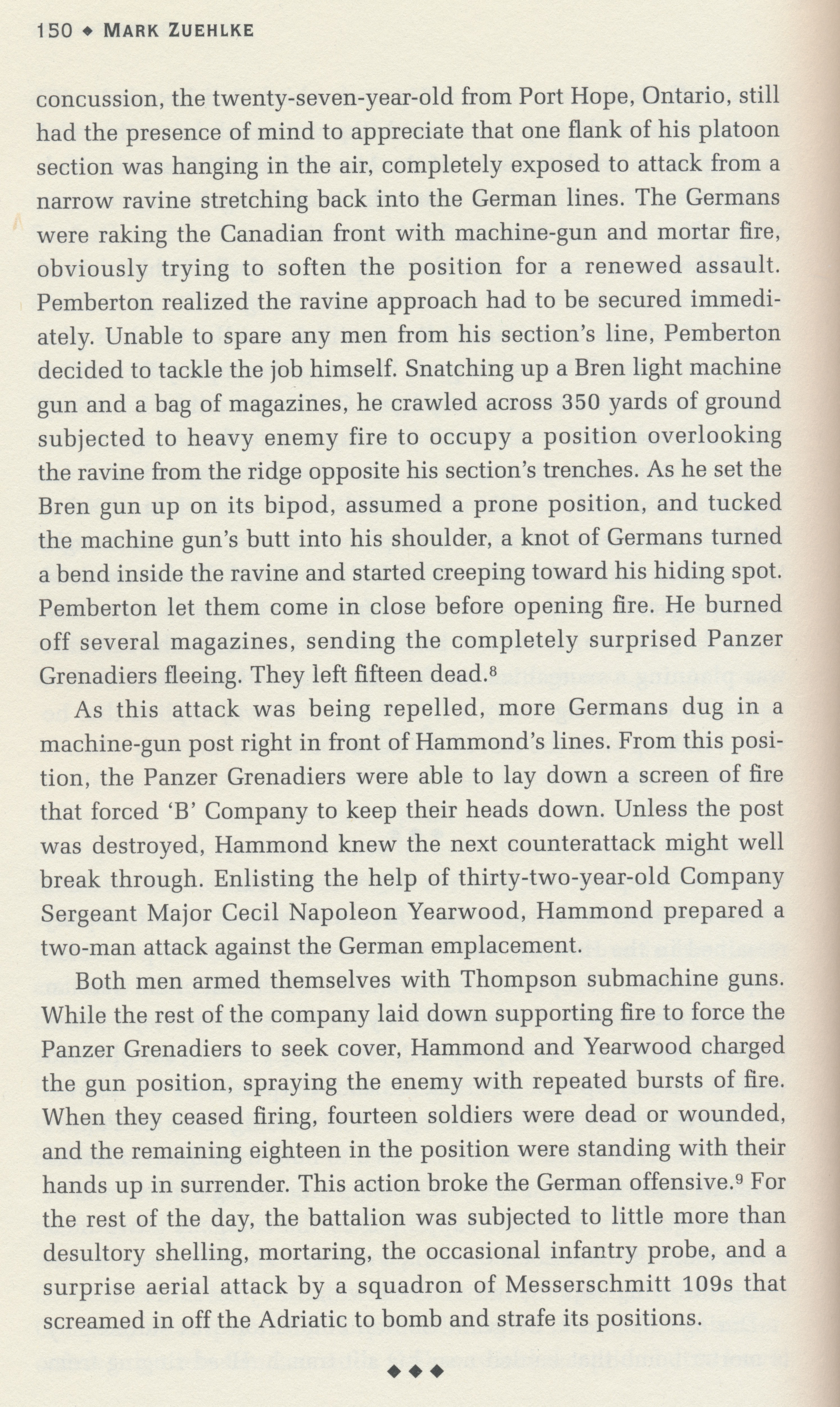
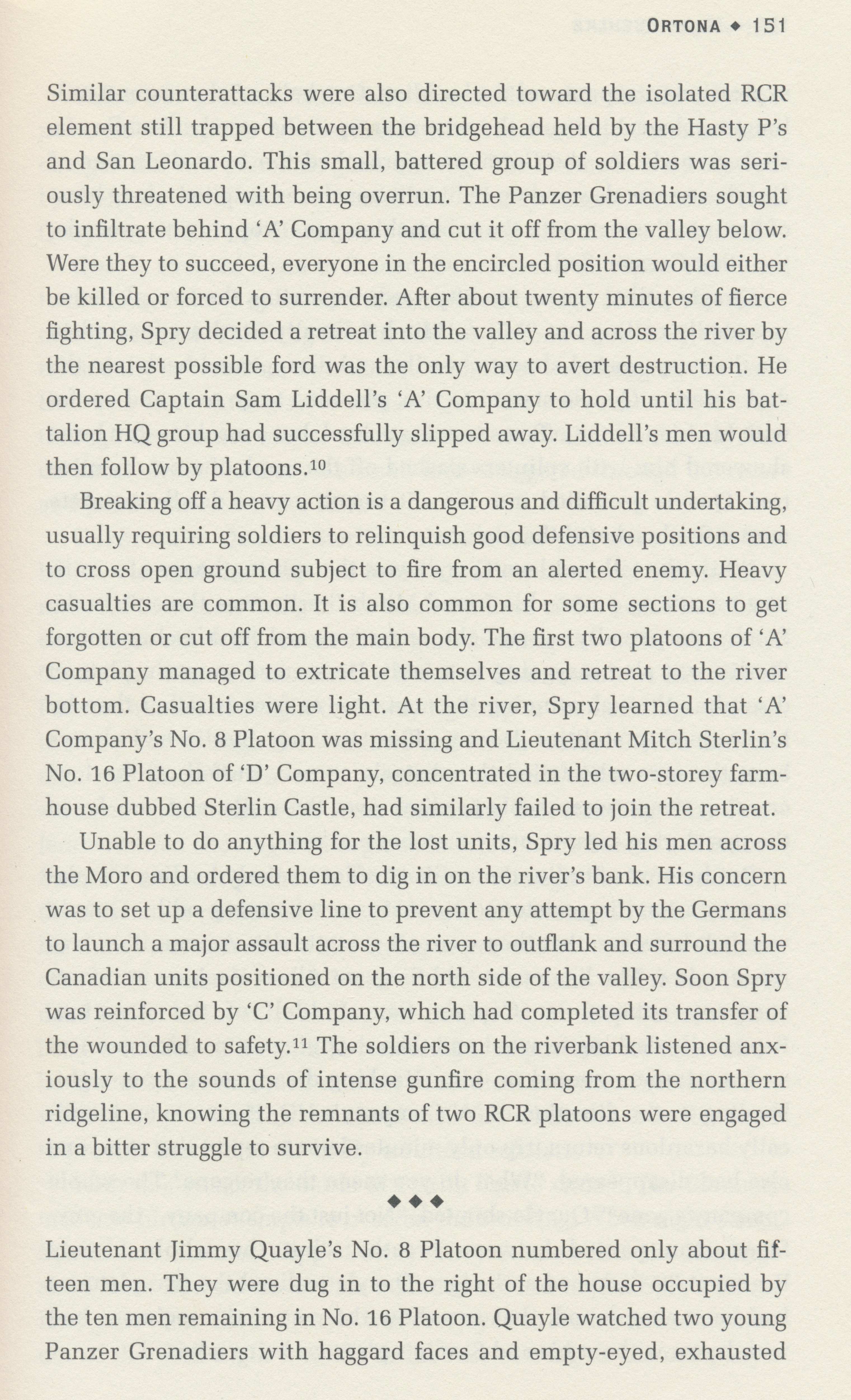
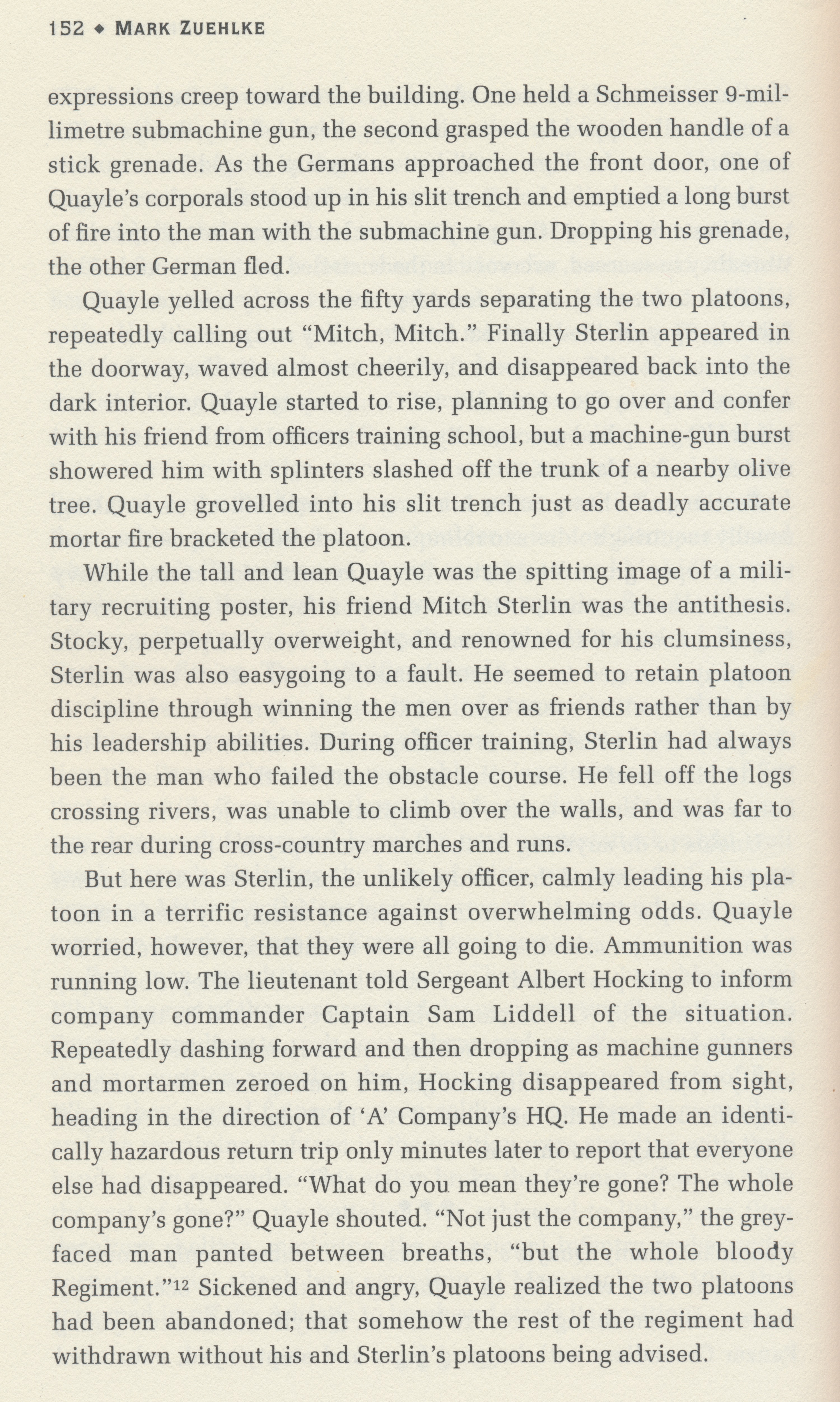
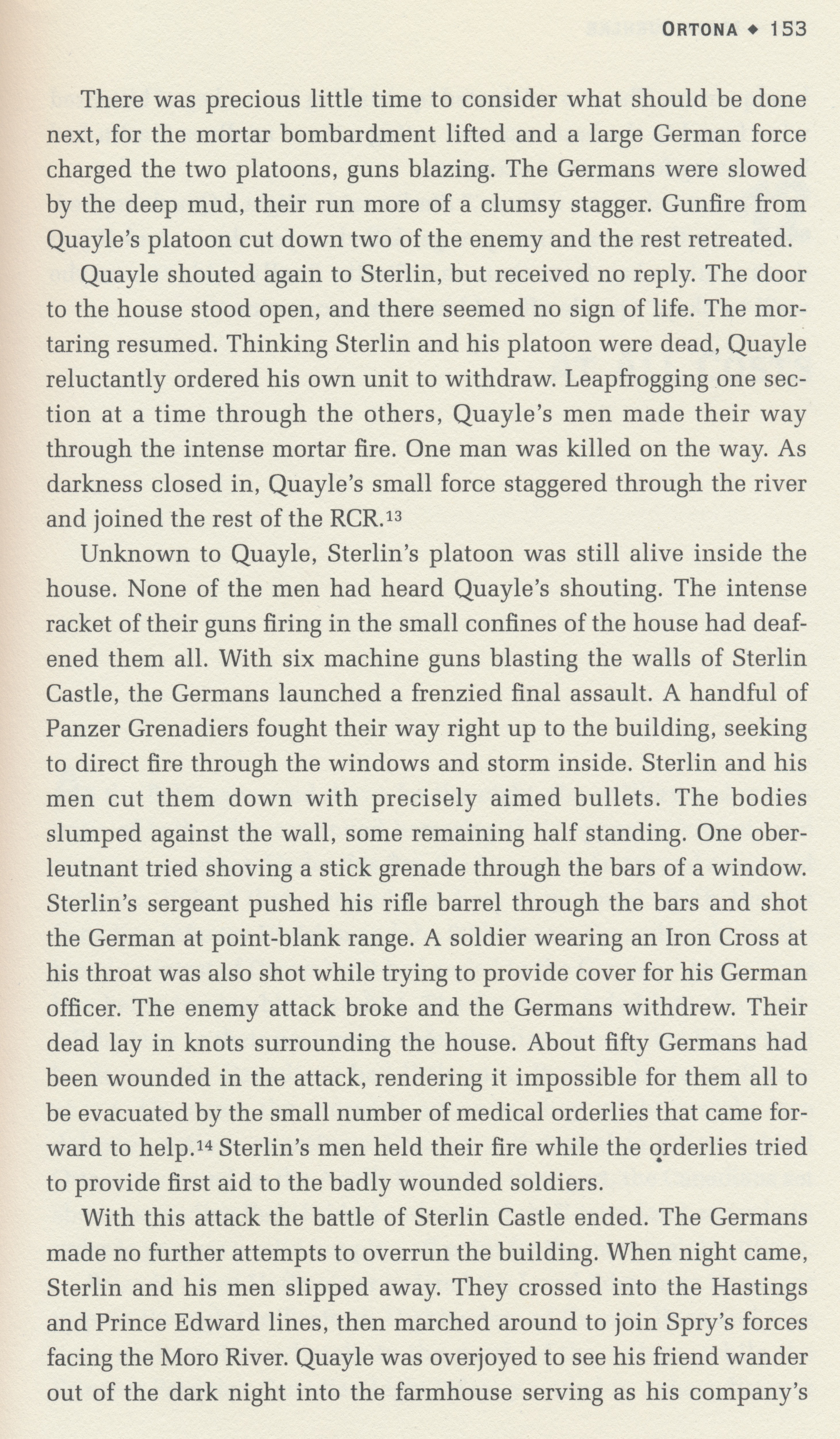
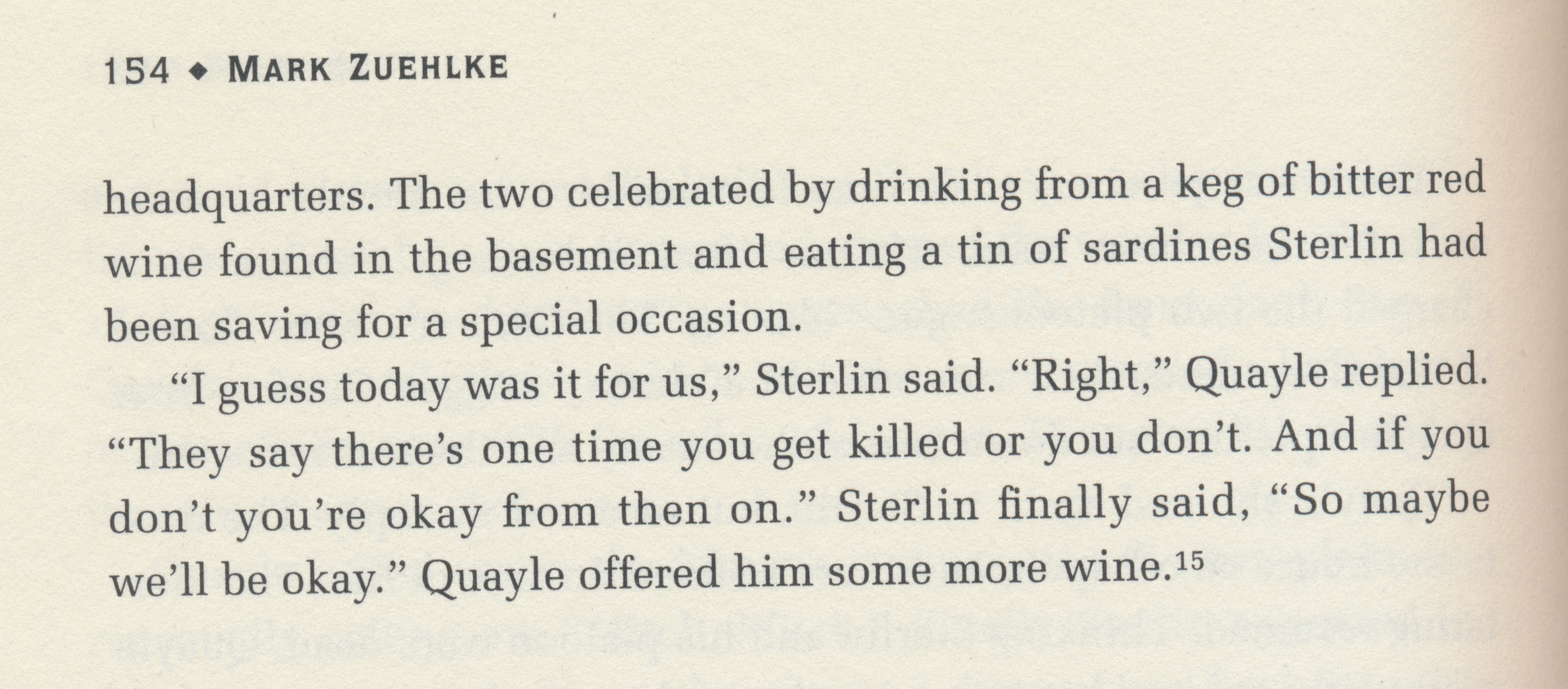
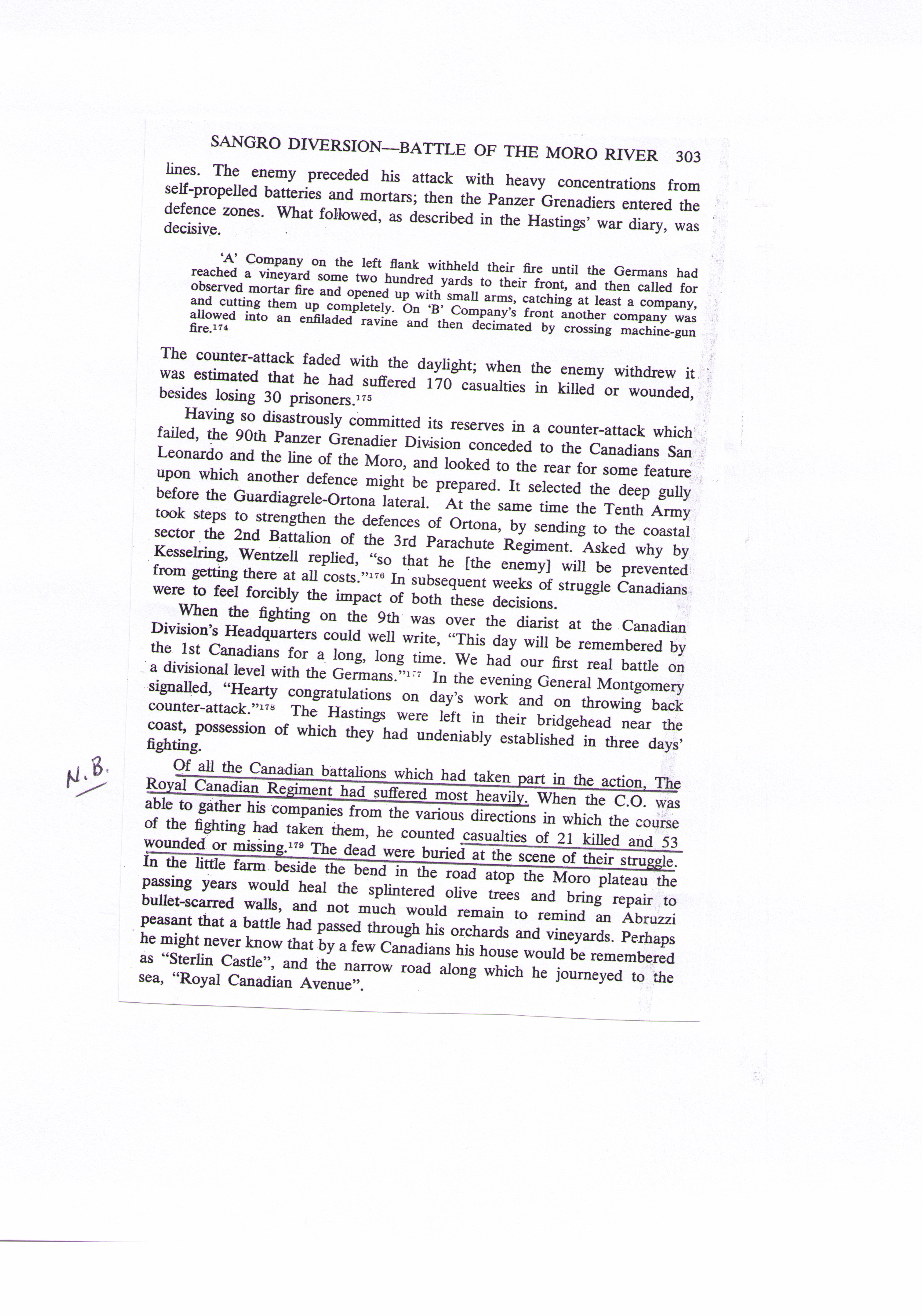
The Royal Canadian Regiment had 21 men killed over the two days of this thrust. Private Edmund John Holliday, of Strathroy, Ontario, was one of them.
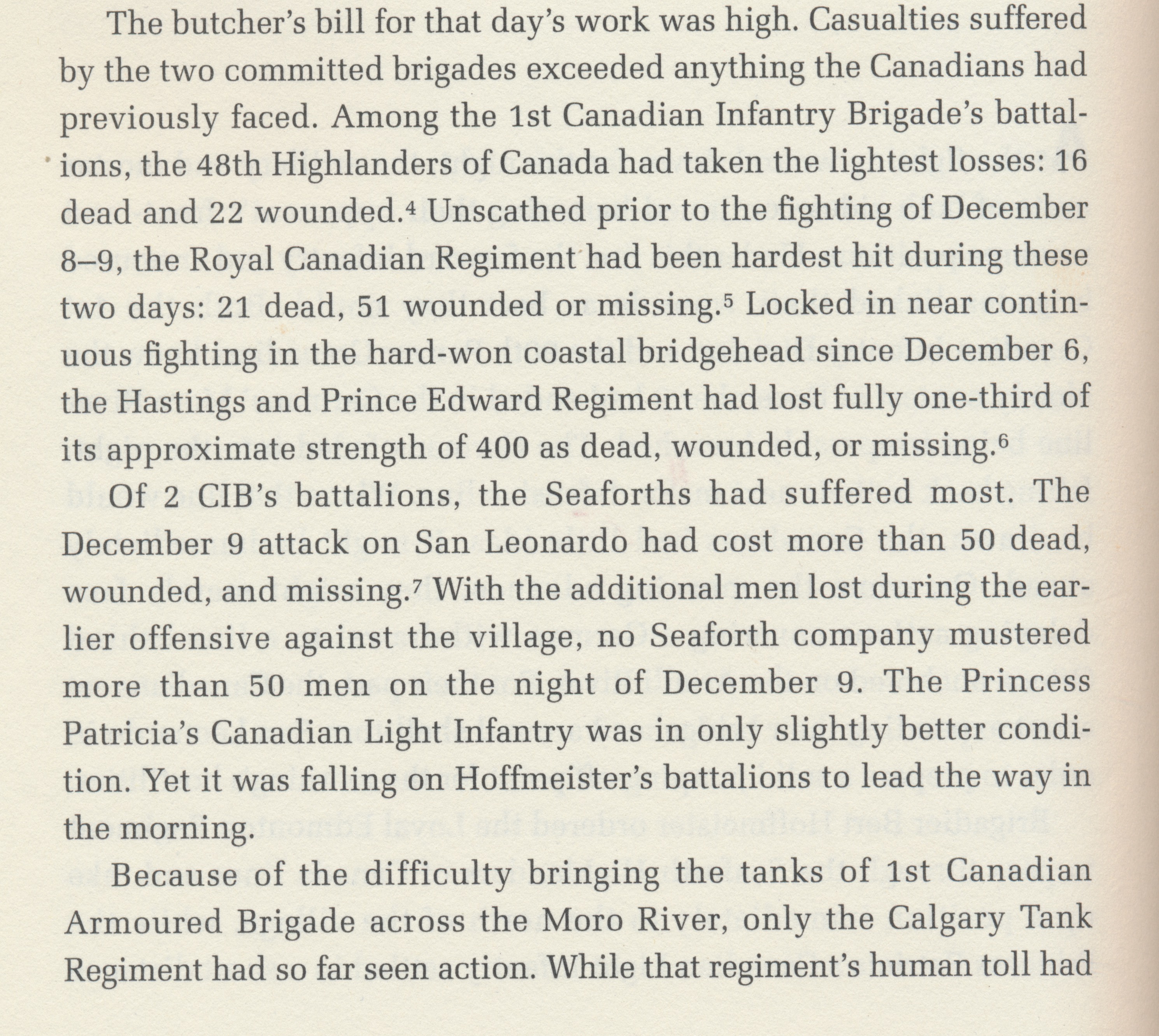
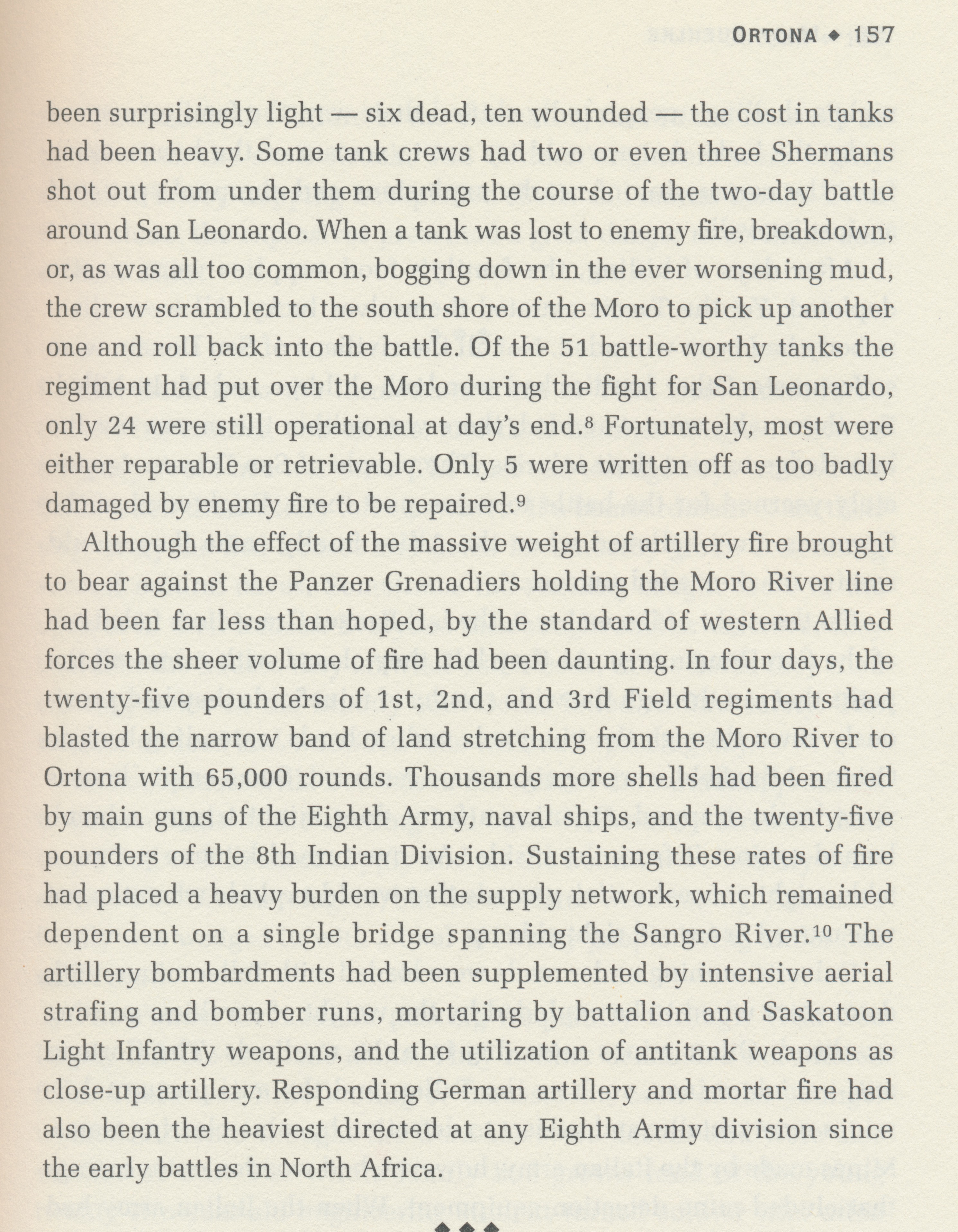
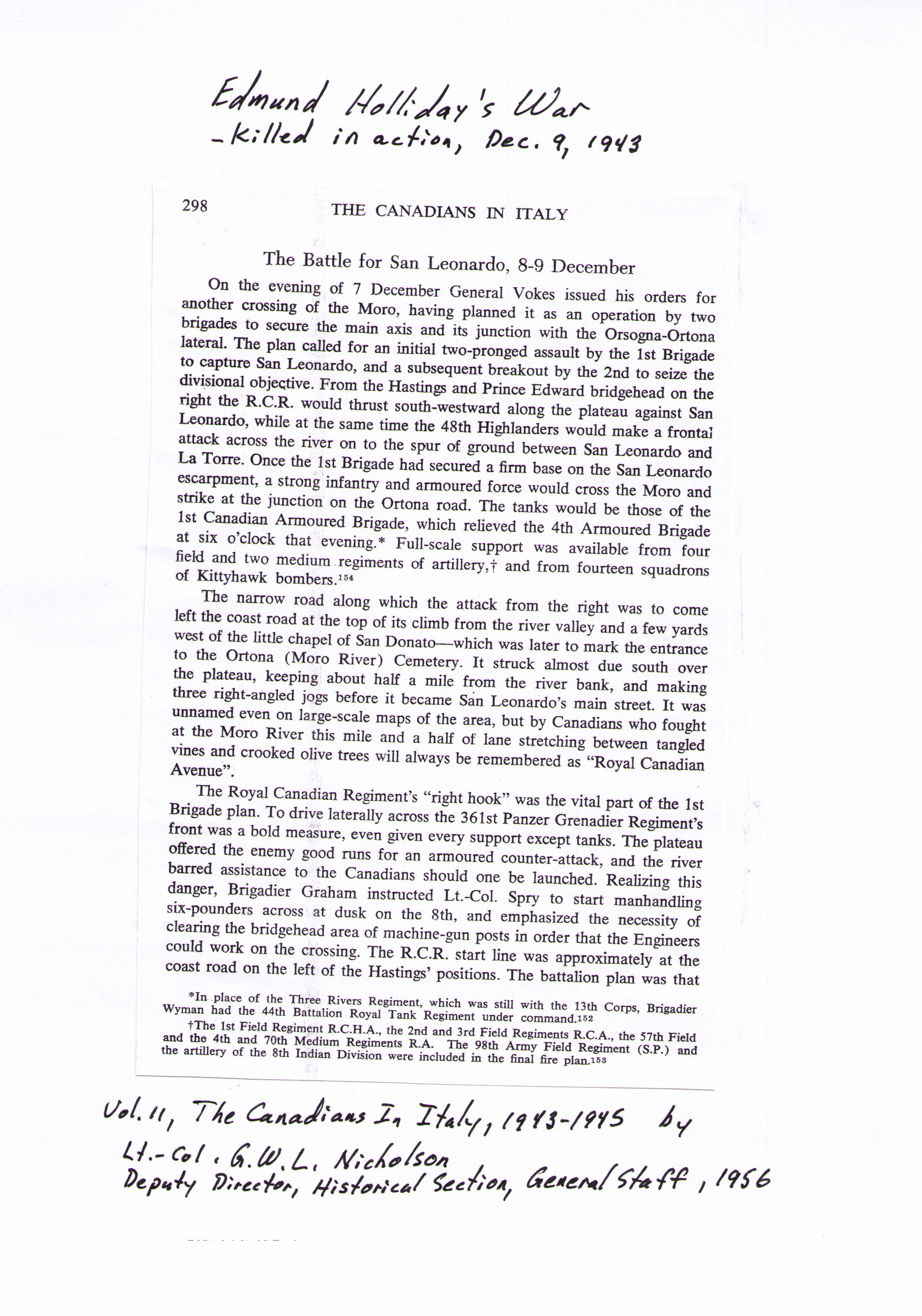
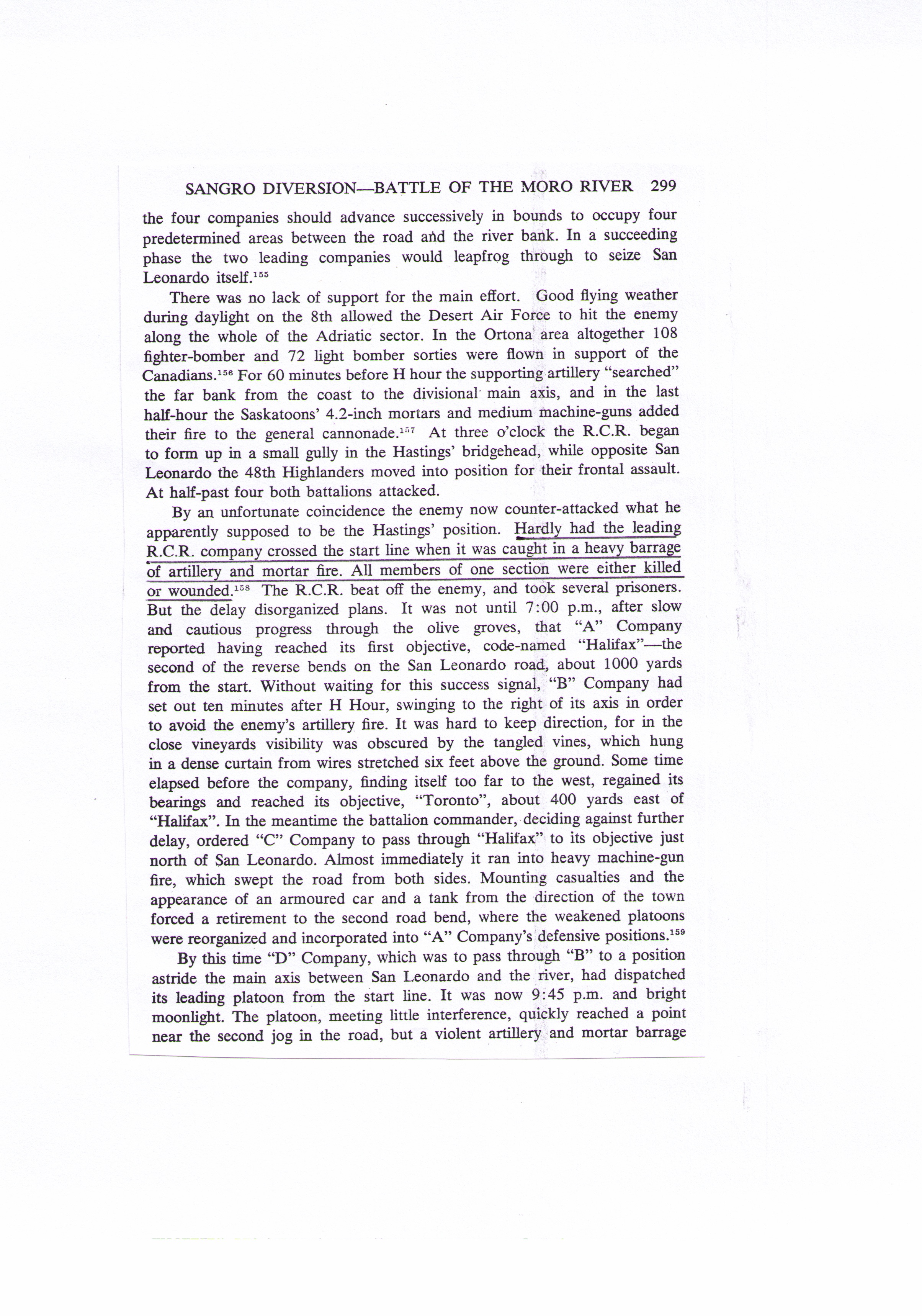
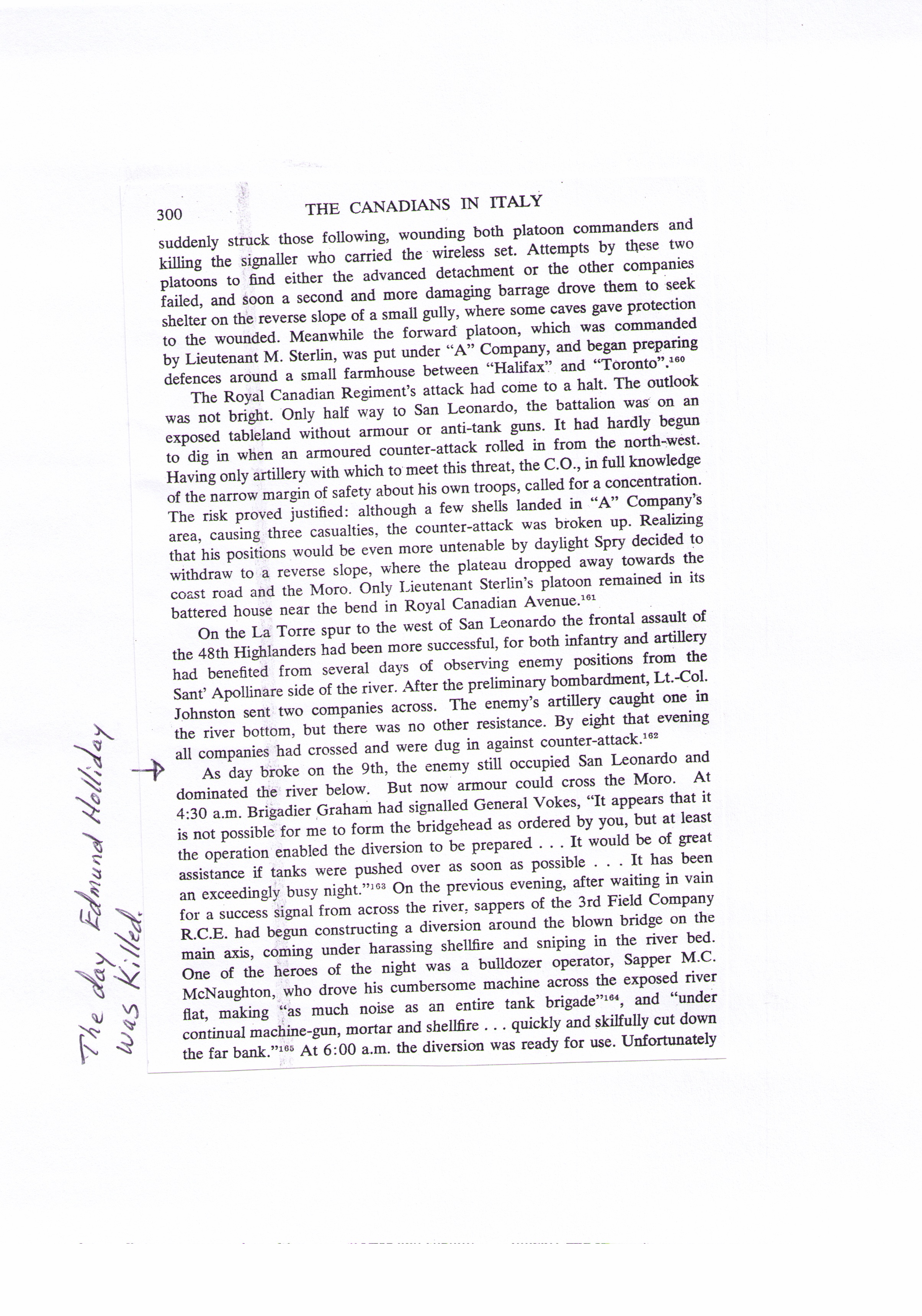
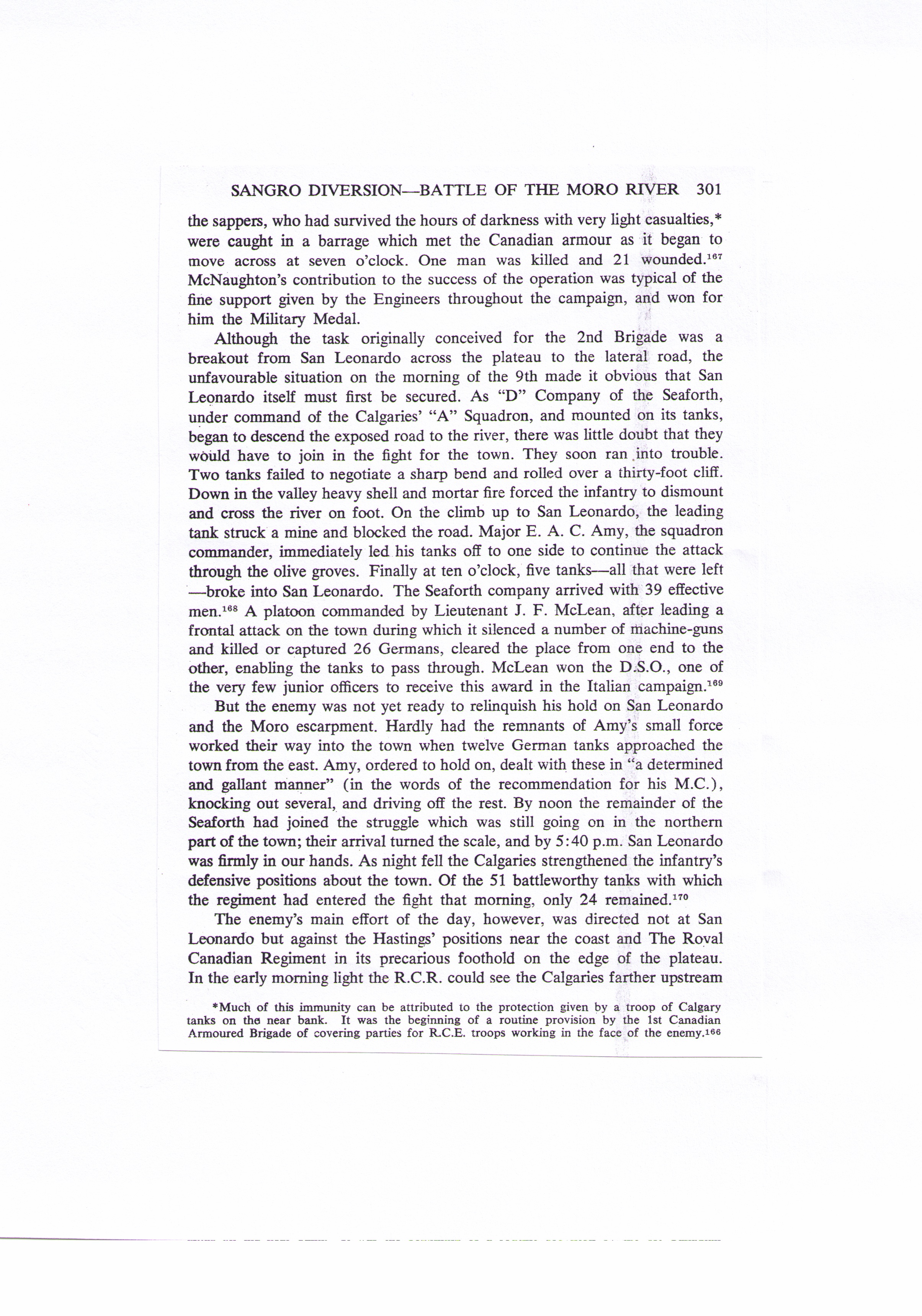
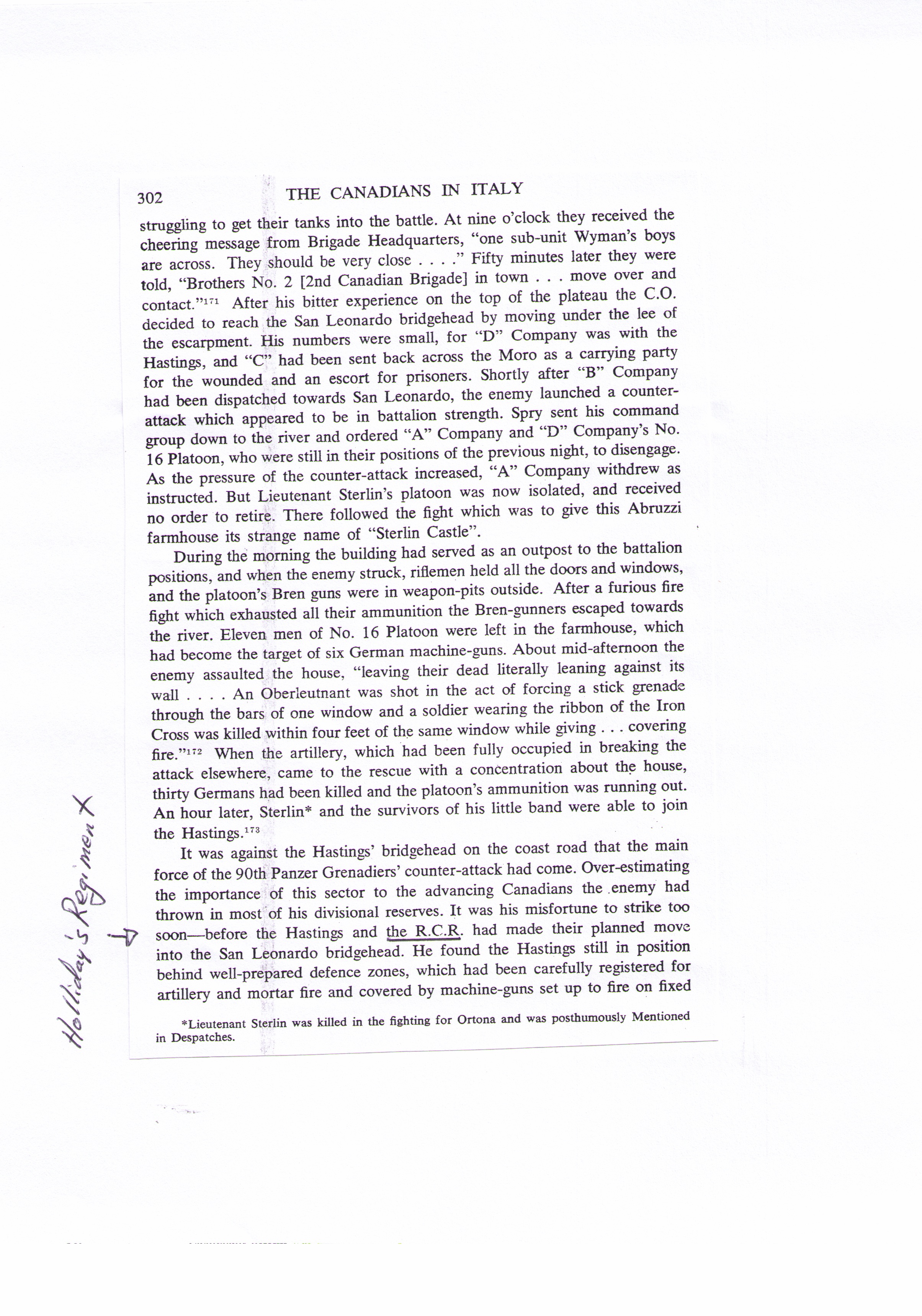
The following is an excerpt from the book,”The Canadians In Italy – Vol. II” by Lt.-Col. G.W.L. Nicholson, Deputy Director, Historical Section, General Staff, 1956.
This book is one of a set of three that I received from my mother-in-law. My father-in-law served in the Army during the second world war and saw action in Italy. The following excerpt is Lt.-Col. Nicholson’s account of the events of that day, December 9th, 1943, the Battle of the Moro River, near Ortona, Italy.