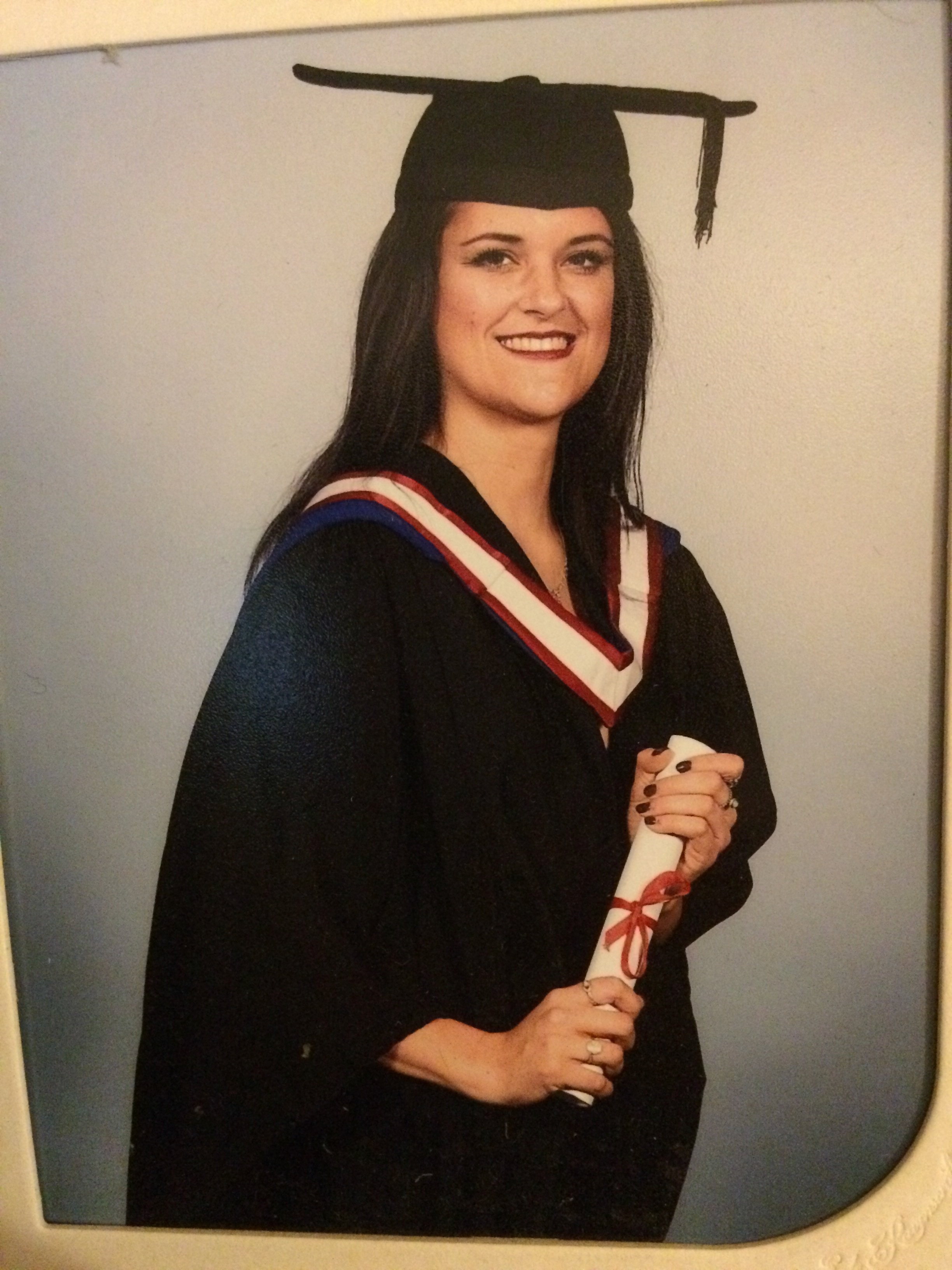
Corporal Morant
Before experiencing the tribulations of war Clive was just a young man living on a day-to-day basis in war-torn Britain.
“We’d had a very bad raid in Portsmouth, early in 1940 and my pal and I were helping the auxiliary fire service clear incendiary bombs on a large building. He turned to me with a revelation that we’d probably be safer in the”damn Forces!” Therefore, we thought about it and decided to volunteer. My pal considered the Army and suggested I join with him or the R.A.F. or Navy. There was no way I was interested in the sea so I joined the Air Force.
“My family life encouraged me to join the service. It is not a happy story though. My stepfather and stepmother were both in the Navy. My stepfather was doing duty in the Shetland Isle, based at Stornoway and my stepmother arranged to join him, so most of the time I was left on my own, so why would I want to stick around? I was working a the dockyard during the time, and a week prior to my joining theR.A.F. Portsmouth was bomber again. So, I thought, “To hell with this, I may as well join the Forces and hopefully, I will be sent somewhere safer than Portsmouth”, which being a Royal naval base was a favorite target for the Luftwaffe.”
Daily Struggle
But daily life was a bit of a struggle each morning. The trams were not running regularly so you either had to cycle or walk. Although there were exciting times such as during the “Battle of Britain”, where we would watch the air battles for hours, or watch the German bombers flying in from the channel, challenged by a bombardment of gunfire, to attack the ships in the dockyard.
“One particular raid was very heavy on August 8th, 1940. I was a trainee electrician working on a repair of one of the battleships, HMS Warspite, with a group of electricians. More often than not I was used to “fetch and carry” for the “Gang”. I was on a “go for” trip to a warehouse when an air raid started and quickly intensified. We were not allowed back on the warship on which we were working while the raid was in progress and we were forced to take cover in the nearest air raid shelter. The shelter was hit by a bomb. The door went flying and sea water started rushing in because the shelter was partly underground. There were a few casualties and a lot of panic as water came pouring in from the dock alongside. Fortunately, it was only up to knee level. After about an hour, the navy and dockyard workers came to our rescue.
“On the corner of every street, there was a brick air raid shelter built for families to take cover during the nightly air raids. Of course, the young lads had their eyes on the teenaged daughters, so the mothers kept a close watch on them. The lads would linger around the doorways and if their mothers permitted them, the girls would be allowed to keep them company while the air raid was in progress, which in turn boosted the morale. During this period I met my first girlfriend, Joyce Hackett, and after 70 years we still keep in touch. But, the joke was on me because when I left Portsmouth to join the R.A.F. she married my best friend!
“The camp I was posted to was in Scotland. One day I was called to the office. A female typist asked, “Why is your name Olive”? It turned out on one of my documents she’d read ‘C’ as in CLIVE as an ‘O’ which is why she’d questioned it. This was not the first occasion that this problem had occurred but, I made up my mind it was going to be the last case of mistaken identity. My duties in Scotland were fairly mundane, so when I was given an opportunity to join the Special Services’ Commando Unit I jumped at the chance. During training, they were administrating roll call, and low and behold I heard “Olive Mordant!” being called out. I knew the game they were playing, so over the course of time, I chose to change it. I had to stick with ‘C’ owing to the fact that my first initial was ‘C’, so I decided on Christopher to avoid any further confusion.”
Airfield Confusion
The media daily stated praises on the effort and organization of the “D Day” preparations for “Operation Overlord” and it was generally a great success, the result of lessons learned in the wake of the ‘Dunkirk’ landings. There were problems, but as history records, the result ended successfully.
“To give an example, the pilot of our aircraft carrying my unit, landed on the wrong airfield in Normandy and we had to take off and fly around for about 10 minutes to locate our selected airstrip. We were the only Dakota out of 14 in our group to land on the wrong airfield. The Commanding Officer swiftly “sorted out” the pilot, reprimanding him with a severe, but well deserved, verbal lashing.”
Max Hastings criticizes Montgomery’s strategy in “All Hell Let Loose”, which echoes Clive’s opinion, and continues to highlight some of the Operation’s errors. For example, the fact that the British Army did not break out and advance sooner than critics thought he should have done is still debated to this day.
Tender Goodbyes
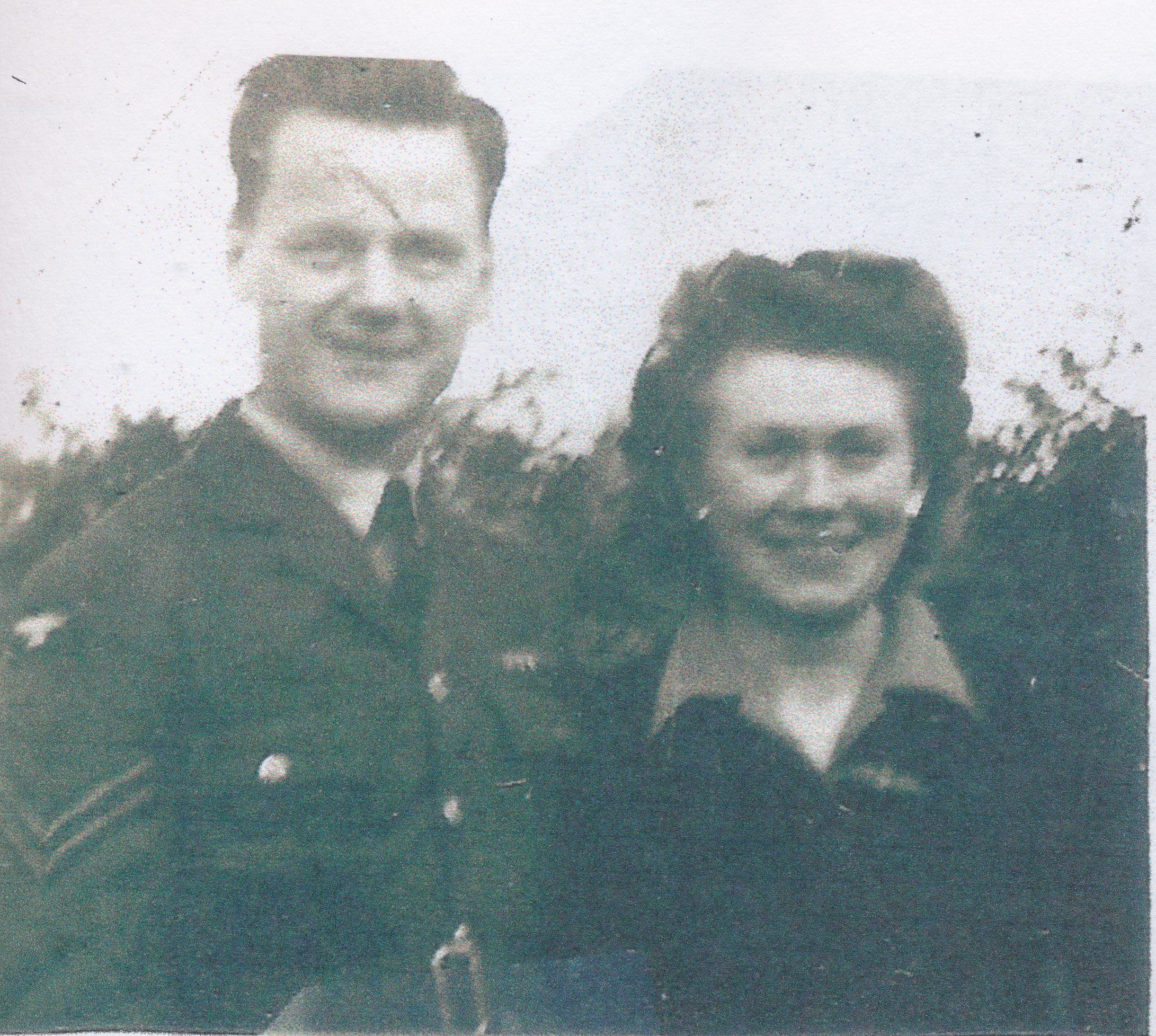
My grandmother was also involved in the war, serving in the R.A.F. as an electrician in the battery charging section in R.A.F. Weston Zoyland. It was her job to ensure all batteries were fully charged at all times. She was determined to give her husband a suitable sendoff to Normandy. She was able to take advantage of the job she had and her closeness to my grandfather to know what was going on. She should never have been anywhere near the compound, but she was a stubborn one. So once again she managed, with the help of the crew, to join him until the final takeoff warning with a “kiss and cuddle” before boarding his allotted aircraft which was one of the Dakotas. All had a number chalk marked on each side of the aircraft. HIs plane was number 14 so my grandmother knew which plane my grandfather was on. 14 was a very memorable number as it happened to be the date of their wedding day.
“We said a hurried goodbye and I clambered into the aircraft with my crew. I sat face-to-face with a man whose apprehension mirrored my own. We were the last plane to take off. The lad turned to me and said, “Look down there.” To my astonishment, looking out the small window, I saw your grandmother running along the runway, waving frantically. I smiled to myself as I was one of the few guys who were lucky enough to have his wife wave him off to Normandy.”
Squadron Changes
Commando unit, 3207, sailed from Portsmouth and operated the first airfield in Normandy. The first week in June, unfortunately, one of our vessels was hit by a torpedo and caused casualties. The result was we were returned to Portsmouth while the main unit landed successfully on the beach. The end result of our reorganizing was that I was transferred out of 3207 to 182 Typhoon Squadron
“The first week in June, unfortunately, the vessel I was to go over on was hit by a torpedo and caused casualties. The result was we were returned to Portsmouth while the main unit kept going and landed successfully on the beach. The end result of our reorganizing was that I transferred out of 3207 to 182 Typhoon Squadron because they had “lost” an N.C.O. This meant the end of my time with 3207 Commando Squadron who were operating the airstrip, B.2, in Normandy without me. Because the 3207 had B.2 airfield operational, the 182 Squadron was then sent to B.2 in Normandy to relieve them, and I went over to B.2 with the 182’s. The 3207 returned to England to reform, but they went without me. But I was very lucky that I was reposted to 182 because 3207 were finally shipped off to Burma!
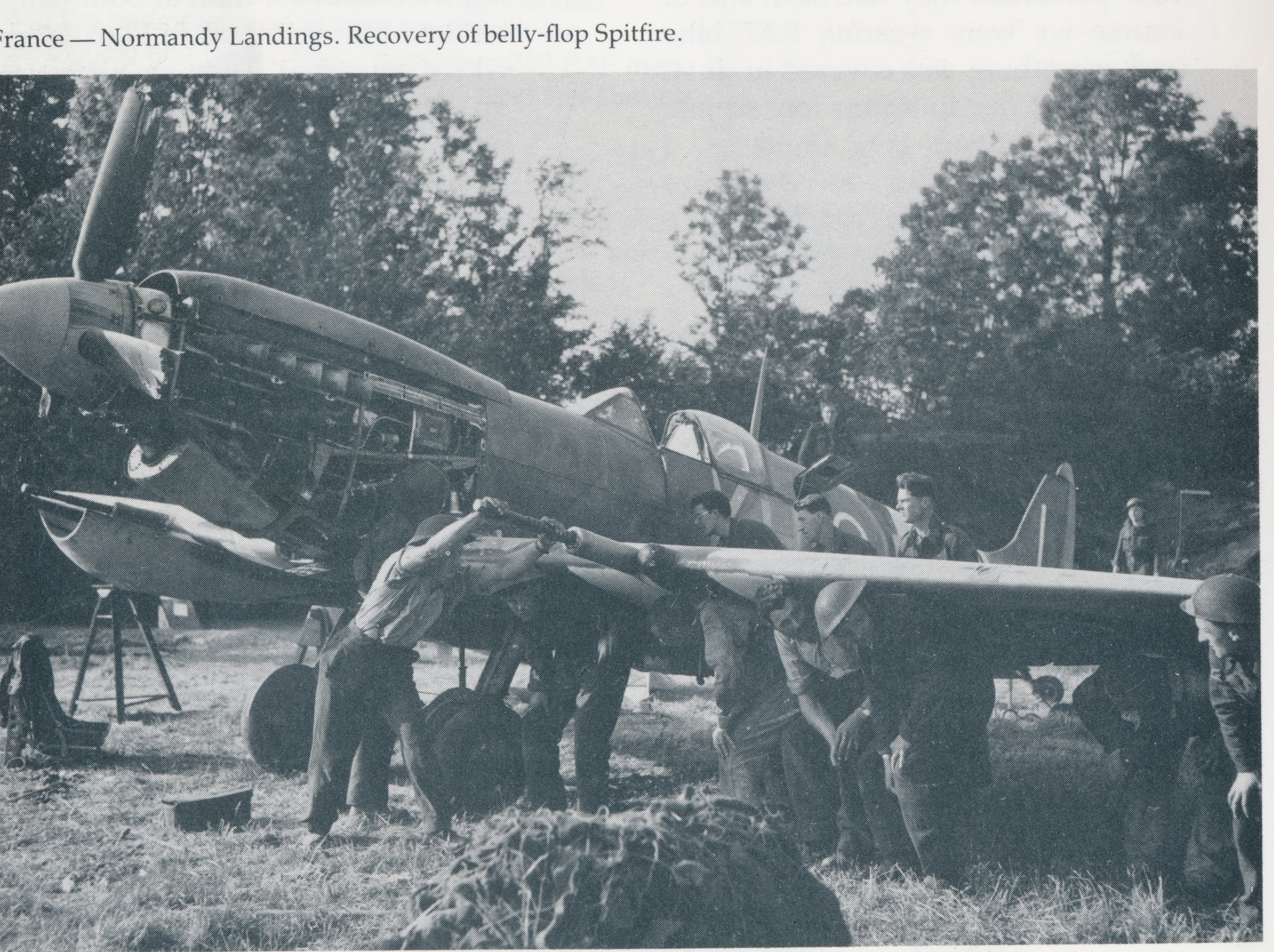
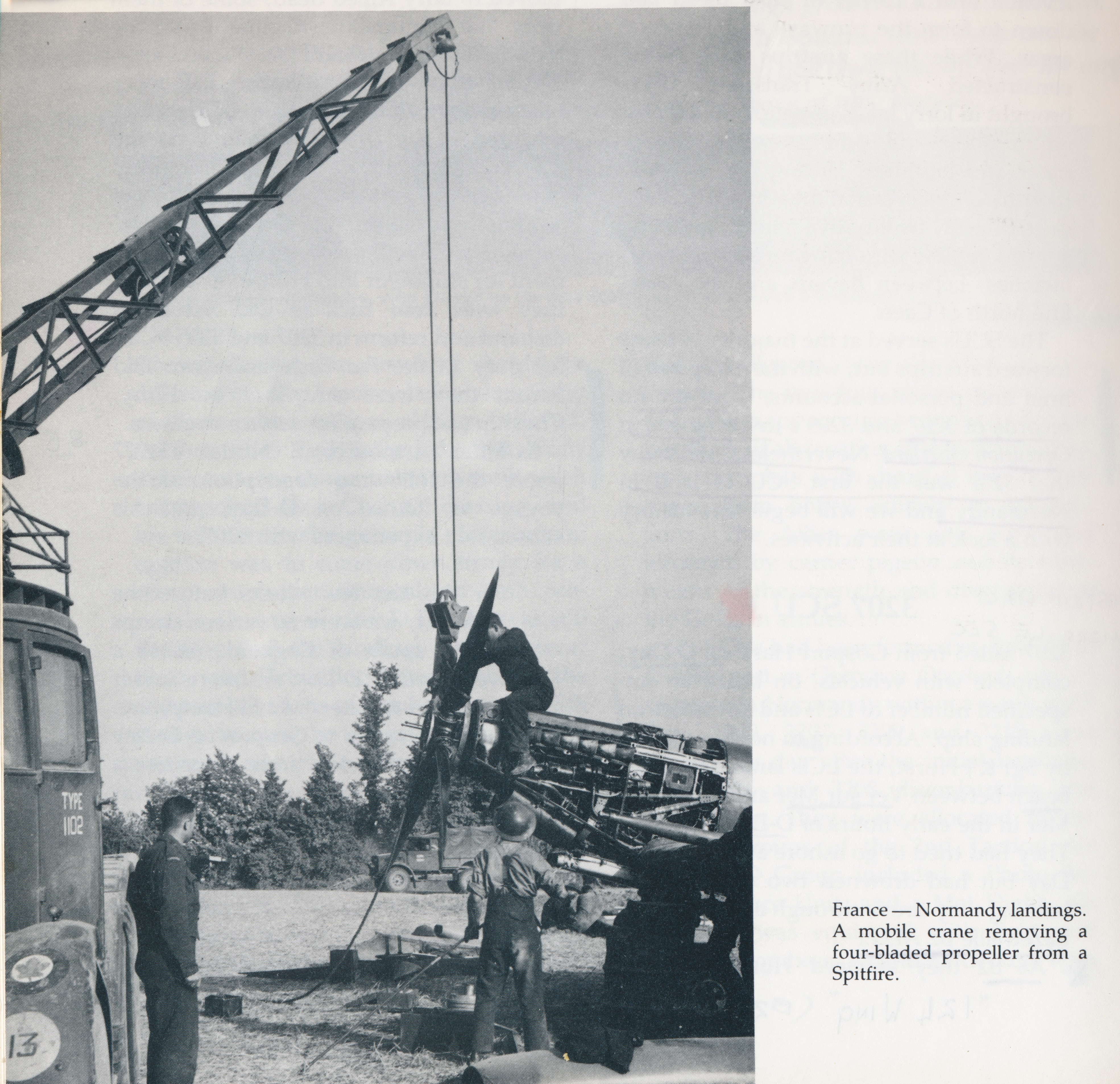
“That day I said goodbye to my old unit and embraced the new Squadron, and shared the responsibilities with the resident NCO, Cpl. Rabbit, in charge of the electricians. The ground crew were all different tradesmen maintaining the aircraft, plus were able to protect the airfield, refuel and assemble the rockets, and rearm the aircraft, etc. My previous commando training proved to be of paramount importance for my new role due to the fact that throughout 1943 we had traveled all over England to many R.A.F. Stations to learn how to repair most of the different types of aircraft. Thus, I was familiar with the rocket firing Typhoon aircraft and that was the main reason for my transfer to 182. The idea in Normandy was that, in addition to the Squadron’s aircraft based at our airfield, any aircraft in trouble, and could not fly back to England, could land on our airfield, B.2, and we would attempt to repair them. If we could not carry out the repair to enable them to limp back to England, the damaged plane was left on the airstrip.”
Advancing and Operating
There was not much time for Clive to adapt to his new Squadron though.
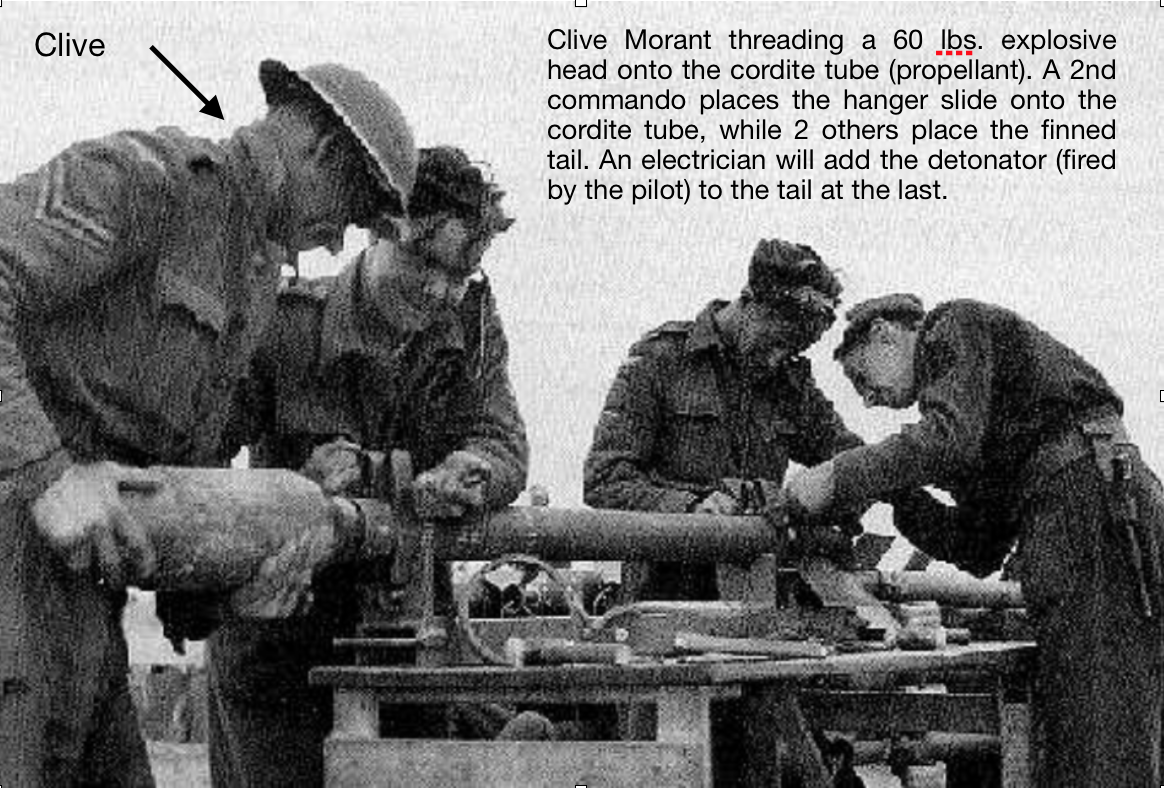
“Not long after we arrived our airfield was attacked and we were forced to scuttle back to the beach. German tanks attacked the airfield and we headed to “stand down” and leave it to the army to shift them back. We retreated onto the beach to await orders to return to the airfield while the army handled the problem! Eventually, we were able to return to the airfield and operate that airbase. When the army advanced we also moved forward. Finally, we entered Belgium and celebrated the capture of Brussels on September 3rd. We established ourselves at Brussels airfield and proceeded to operate from there. The Typhoon’s main operation was to support the tanks’ attack and to attack anything that moved: transport, tanks, trains, etc. Typhoons fighters were equipped with 8 rockets capable of destroying the infamous Tiger Tank and any time German tanks were identified, the “Tiffy” would dive to attack and attempt to destroy them. [Note: see the picture above showing Clive during the assembly of a rocket that would be mounted with 7 others onto a Typhoon fighter.]
“When the army advanced and captured any German airfield or an area large enough to prepare an airstrip, we would move up to the new area and give close support.”
When asked about his feelings on the campaign as a whole, his brow crinkled in thought,
“Really, we have to talk about comparisons. History will tell you that the Normandy campaign, as I said before, was a great success. We had a few problems operating as a forward airfield. Some small, some not so small.”
His expression soon changed as he conjured up a fond memory or two, and with an impish look in his eye, related. . .
“Although Normandy was mostly doom and gloom, I have to mention this story to you. One of the duties on an airfield was to dig a trench and erect a pole across it to form a toilet seat. To use it you had to balance on the pole which was about 10 feet long. A cover was erected around the area to give some privacy because there were often French girls working on the field or milking cows. The airstrips were usually a farm captured by the army or just flat areas of fields. Part of our ‘kit’ that we always carried in our back pocket was a flat tin which contained sugar, milk, and tea, plus toilet paper. Tne R.A.F. were very hygienic! We were often attacked by German aircraft who would “swoop in” with a rain of gunfire. On one particular day, a flight of German fighters came diving and firing across the airfield and the Spitfire Squadrons on the other side of the airfield took off to challenge them. At the time, someone had been ‘occupying’ the toilet. A cry for help came from the area. We all rushed over thinking some poor devil had been shot. We approached the pit and looked down, only to see a pilot officer at the bottom. He had overbalanced in panic. Nobody wanted to go anywhere near him.”
My granddad sat there chuckling to himself.
“The poor guy had little bits of paper, “plus” stuck all over him. Fortunately part of our equipment was a 300-gallon water truck which was used to hose him down.”
Corporal Stowaway
In terms of anecdotes of comedic value, my grandfather had no shortage. He had a grin on his face as he told this tale of persistence paying off.
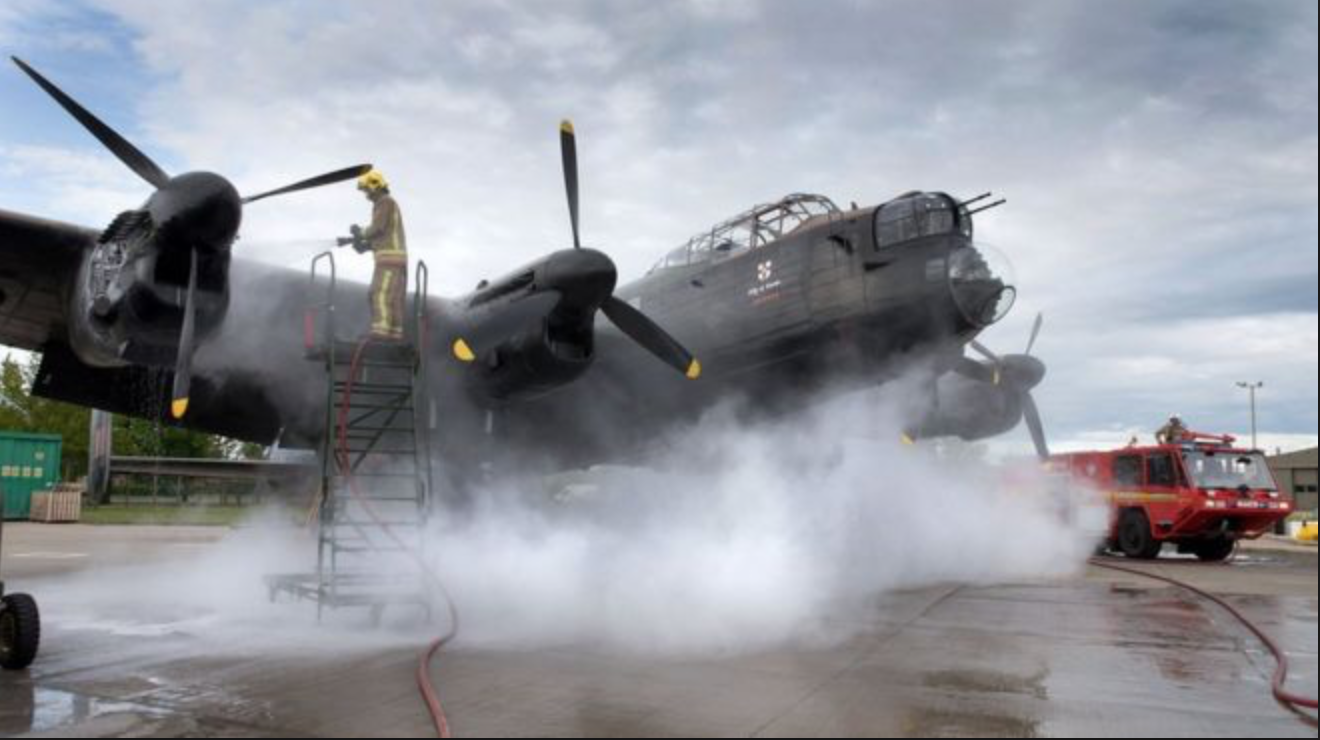
“One day a British Lancaster bomber landed on our airstrip in trouble with its hydraulics. We were unable to repair it. I overheard from one of my pilots with whom I was very friendly, say that they were going to fly the Lancaster back to R.A.F. Warmwel, in England, for repairs, and he was going to fly back with them. He was going to return with a small aircraft the following day that the squadron required. I was on 24 hours stand down and thought about this. I asked him if there was any chance of a lift over and back? He replied that he knew what I had in mind, and would not give me permission but said, “You know where the door is. You’re on your own.” So I made my move. It seemed a good idea at the time, but, in hindsight, it was the most stupid move I could ever have made. I hate to think what would have happened to me if I had missed the return flight. But, we were living in dangerous times living on a day-to-day basis, and I did not think very clearly at 21 years old.
“There was a small problem on our arrival. When we were about to land the pilot remarked that the undercarriage was faulty, which was why the aircraft was going to the maintenance station in the first place. (A hydraulic problem.) They were all officers in this plane except me. I was just a corporal, completely overwhelmed by the situation. The pilot suddenly turned to them and asked, “Have any of you flown a Lancaster?” One officer said “Yes” and the pilot replied, “Have you ever landed with a damaged undercarriage?” The aircraft began to shudder as the pilot took control and landed the plane with an abrupt jolt on the grass, hurling everyone forward. The response teams were immediately on hand with a fire engine, ambulance, etc., and cups of tea to help calm the situation. The only thing keeping me calm was the thought of surprising your grandmother.”
Warm well Welcome
“After we managed to get out of the aircraft and settled down, my friendly officer gave me a stern warning to return to the airfield at 5 a.m. tomorrow, sharp, for our departure back to Europe. I embarked on my journey to R.A.F. Netheravon where I knew my wife was stationed. I had no English money so I was going to have to be resourceful to reach my destination. I was still in grubby working uniform, but I left the camp and proceeded to the local bus station and discovered a bus was going to a Salisbury R.A.F. camp to “bus” the troops into Salisbury for the evening. I explained to the bus driver, going to Salisbury, my situation and my aim to visit my wife at her camp. He was quite amused at my story and offered to take me. The journey took about half an hour and as we approached the R.A.F. Netheravon camp to pick up the troops for the evening, Vera was standing in the line-up waiting for the bus.
“I was standing on the platform at the rear entrance of the ‘double-decker’ bus when she noticed me standing there, and went berserk. She boarded the bus, and after I had explained to her how and why I was there, to the amusement of her pals, she scolded me for my recklessness and settled down. We rode the bus together into Salisbury with the rest of the troops and spent the whole evening together at the bus station restaurant, just happy enough to be in each other’s company.
“At the end of the evening my wife had to return to her camp on the return bus and I had to travel back to Warmwell, and back to Germany. I had lost track of time and it was now about 11 o’clock at night. There was no way in hell that a bus service from Salisbury would travel to Warmwell at that time of night, so I started my arduous return by foot, Jeep, and hay cart.
“When I finally approached the camp entrance the sentry questioned me with, “Who the hell are you?” I tried to explain my circumstances. I told him there was an aircraft going back to Germany and I had to be on it, which he found difficult to believe. While he was in deep conversation with his sergeant I ran like hell out of the guardroom, eventually reaching the hangar where my friendly pilot was waiting for me. Fortunately, he managed to convince the guard room sergeant and officer about the situation. His mention of Germany etc. seemed to work wonders. We were allowed to proceed.
“On landing at our airstrip, I quickly scrambled out of the plane and into my tent. My sergeant spotted me and suspiciously questioned my absence, to which I replied, “What do you mean, where have I been? Where on earth can I go? I was around here and there, I chatted with tank crews and other folks.” Fortunately, he did not push the issue and my escapade remained a secret between me and the pilot officer. It was quite an exciting experience. Thankfully, I never screwed up. Had I missed that flight back I shudder at the possible result. I will be ever grateful to the officer who collaborated and helped me. He was a Canadian Typhoon pilot!?
Johnnie Johnson
Over the years Clive had a few memoirs of the legendary Johnnie Johnsonand even acquired his signature on a print ofThe Canadians Over Normandy. Johnnie Johnson finally ended his R.A.F. career as Air Vice-Marshall.
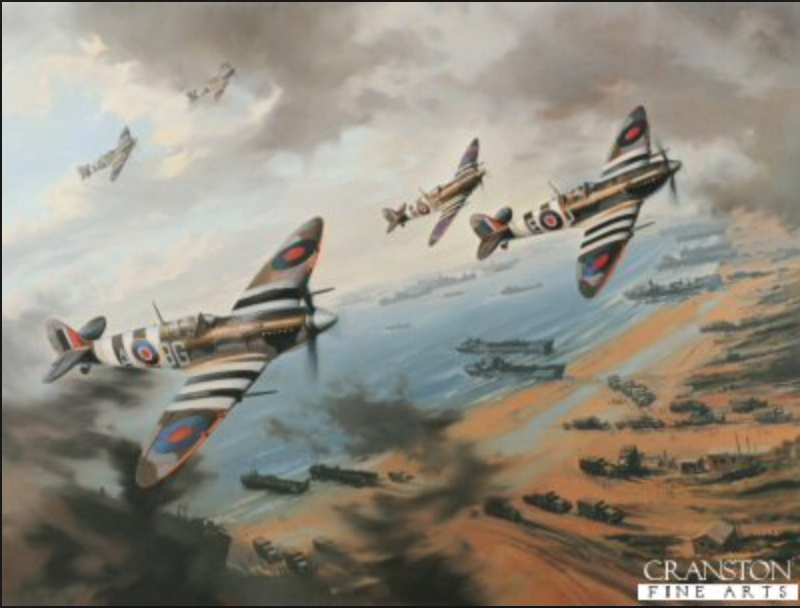
“I first became aware of him at R.A.F. Warmwell, back in 1943. I remembered he had his initials on his own aircraft. As mentioned previously, our Commando unit used to travel to carious airfields as part of our training, to learn about the variety of aircrafts. We were then shipped up to Inverary, Scotland, to complete our Commando training. So, there was a lapse of time before I saw him again, until his arrival to take command as Group Captain of 124 Wing, which consisted of Spitfires and Typhoon Squadrons in Eindhoven, Holland, and then later in Copenhagen’s airdrome to celebrate the liberation of Denmark. The event consisted of the largest formation of Typhoons ever assembled to that time in a “flypast“.
His Encounter at Bastogne
“It was New Year’s Eve, 1945. Our airfield was southwest of the American area, and it was a particularly sorrowful time for me. Our ground crew was organized into duplicate units. We would work in alternating shifts, 12 hours on, and 12 hours off. One unit would service the aircraft and “protect”, while the other was at “rest”, and vice versa. I was having a drink to get me into the New Year spirit when my counter-part, Cpl Rabbit, came up to me and said, “Chris, I’m Guard Commander tonight. How about changing shifts?” I realized that he wanted to swap duties so he could go to town and celebrate with his girlfriend. He pestered me until I finally gave in, and exchanged duties with him. during the night German aircraft were flying overhead taking photographs. We knew what they were doing.
“Normally, I would be on duty on the airfield the following morning, but owing to the fact that I had exchanged duties with “Bunny” Rabbit, it was his responsibility to take my duty on the airfield at first light. I dismissed the guard and retired to my bivouac for some “shut eye”. Suddenly, swarms of enemy aircraft swooped in over the airfield shooting everything in sight. History has recorded the raid as “Bodenplatte” involving hundreds of Luftwaffe aircraft attacking all the advanced (closest to Berlin) airfields to assist in their attack of Bastogne. With 124 Wing being one of the most forward airstrips, it took the worst “hit”. In about half an hour of the attack, all the aircraft in our Squadron 182 were destroyed or damaged. Also, destroyed were the ammunition dump, the rocket dump, petrol storage – everything. we were absolutely slaughtered, and suffered casualties. Smoke and fire and devastation were everywhere.
“Aircraft were being shot up in the air and on the ground, fuel, bomb, and rocket dumps were exploded, buildings bombed and strafed, hangars set on fire and motor vehicles and fuel trucks wrecked and left burning. Smoke and flames were everywhere. The thunder of bombs and rockets exploding mingling with the rattle and thump-thump of machine guns and cannon fire, the blasts from the Bofors ground defence guns, the whining and whirring of aircraft swooping and swerving, and the explosions of planes crashing into the ground or being blown to bits in the air, added a deadly cacophony to the already frightening spectacle of the field under relentless attack.”
[“Destruction at Dawn”, Arthur Bishop]
Bodenplatte British Propaganda film
“On top of all that I had one of the most disturbing events in my life. When the raid was over and we set about reviewing the damage, I could hear everyone shouting, Corporal Morant!” I was ordered into the marquee in front of the C.O., who accused me of deserting my comrade while under fire, which is a serious offense. Understand that some of our pilots were “none the worse for wear” from having celebrated the night before, which I guess the Germans had anticipated and took advantage of. It is my opinion that’s why they chose New Year’s Day for this major attack.
“I tried to explain that I was Guard Commander the night before the attack, and therefore was not on duty in the airstrip area where the alleged desertion had occurred, but rather was in my bivouac. The C.O. demanded to look at the duty sheet. I was praying for a hole to crawl into because I knew it would have Cpl. Rabbit’s signature and I tried to explain the situation.”
Death of “Bunny”
“He asked me to repeat myself, and I replied again that I was Guard Commander and was not in action at the moment of attack, but in my tent, asleep. He told me that was untrue as the duty sheet showed Corporal Rabbit was Guard Commander which would be correct because he had signed the report before we exchanged duties. A stretcher was carried in bearing Cpl. Rabbit. The C.O. asked an officer for his version of events. He replied, “I was approaching the airfield, Sir, when the attack began. I had to make a necessary dive into a nearby trench. I saw Cpl. Rabit lying in the trench, wounded, saying, “Don’t leave me, Chris, don’t leave me!“. Everyone shared a solemn silence. I managed to murmur, “Sir. It was not me. I was not anywhere near the airfield. Cpl. Rabbit must have been disoriented.” I was then escorted to the compound and sat there holding my head in disbelief at the last hours’ events.
“I then heard my lads scuffling around and peering through the barbed wire. They knew “Bunny” Rabbit was dead. I asked them to get every member of the guard into the Marquee and explain the situation of my change of duty with Cpl. Rabbit to the C.O. Everyone on the guard marched into the tent and explained to all concerned that I was the Guard Commander and that I had changed duties with Cpl. Rabbit.
“After a short time the gate was opened by an “M.P.” and I was told “OK corporal, you can go!” No explanation. No apology. The misunderstanding was never mentioned again by the C.O., and no apology was offered, but my sergeant gave me a few rough words regarding our unofficial change of duty. I declined further comment on the situation as the C.O., unfortunately, became a victim of enemy fire soon after the incident. But, on every New Year, I relive the memory of the 1st of January, 1945, acknowledging the fact that it could so easily have been me on that stretcher if I had not changed duty with him.
Coffin Bed
Clive, like many others during WW2, went long periods of time without the luxury of a warm bed to sleep in.
“I was in Eindhoven in Holand throughout the brutal winter of 1944 – 45, and as an N.C.O. I was able to use a “Jeep”. One day when the snow was particularly bad, I drove through the village and noticed a damaged coffin standing outside a bombed funeral home. It was in pretty good condition, but no lid. I loaded it into my Jeep, drove back to my tent. I installed my blanket in it and slept in it through the rest of the winter, which kept me warm at night until we had to move forward, and I had to leave it behind.
Booby Trap
“I have a very prominent story from my time in Normandy. One day the C.O. approached me saying that he knew I had done a booby trap course while serving in the Commando training and he had a job for me. I had no idea what he had in mind, you never did with these guys, so I set off with him in a jeep. We went directly up to the front line, which was about 5-10 miles ahead, and drove through the troops’ lines. They weren’t very happy and started swearing at us because it was summer and our jeep was making dust. The troops did not like dust around them because it alerts the enemy of their location. Undeterred, my C.O. drove straight through the gate of an abbey. What he’d discovered as he was flying back to our airfield from a ‘sortie’ was a half-track vehicle in the abbey grounds and wanted it to add to our limited transport. So he drove up alongside it and, as he did so, more British troops arrived followed by an officer who voiced his displeasure. After a short discussion, he gave his permission for us to approach the vehicle. Now, for me, it was show time. I had been trained in Scotland to check for ‘booby traps’, but I had never had to put it to a real test. I was sweating like hell and not because of the summer heat. I raised the side bonnet checking for any connections to the starter motor or explosives. Germans had been known to set a booby trap that when you started the vehicle it would blow up. I was really nervous. The rest of the guys stood and watch my endeavours. When I was satisfied that there were no wires or explosives connected to the ignition I considered it safe. I signaled the all clear. My officer shouted, “OK corporal start it up.” I got into the driver’s seat, and honestly, I was more frightened that day than any other day in Normandy. I sat there numb. I put my foot on the accelerator and said a prayer. It did not blow up, but it did not start either, which was a minor problem. Meanwhile, the army officers were giving my officer a hard time. They wanted to get rid of us quickly. My C.O. put a chain on the front of the half-track and told me to sit and steer in it while they towed it out of the abbey with his vehicle. So, back to our airstrip.”
Clutching a Crucifix
“It did not end there. While my C.O. and the army officers were exchanging comments I was waiting to be towed. The Germans started to shell the abbey. We were forced to take cover. I dived down alongside the abbey was when the shells hit the building just above me. The attack went on for some time. All of a sudden a load of debris fell down from the second floor and by this time the panic had started.
“The army officers were telling us to get the hell out of there. My C.O. was shouting that we needed to move quickly when I realized that I was clutching a crucifix in my hand. It must have fallen during the shelling on top of me and I had picked it up subconsciously in panic. To this day I do not remember picking it up, but I have carried it with me ever since. It is now mounted on the wall of my den.
“We towed the half-track back to the airfield. Everyone gathered around as the sergeant raised the bonnet on the far side and took one look before giving his verdict. What I had not noticed in my blind panic was that the Germans had disabled the vehicle by smashing a hammer into the bottom oil sump. If I had opened the other side in the first place, I would have seen it and saved myself a lot of grief. You live and learn.
[huge_it_slider id=”25″]
Royal Treatment
Clive’s time abroad eventually came to an end, but the tales continued, and myself, I had to laugh at the absurdity of some.
“182 Squadron celebrated the end of the war in Lubeck, Germany on May 6-7and met the Russian army there. We stayed a few days before being moved up to Denmark for the liberation of Copenhagen. Our celebration was spent between these two places. The city had gone mad with the thrill of freedom. During the celebrations, I had befriended a young woman in Copenhagen, whose family took it upon themselves to entertain me for the duration of my stay. Her mother owned a pastry shop which sold beautiful cream cakes, bread, and pies. Ulla, the daughter, worked part-time in the shop. During the war Denmark was the bread basket for the German army, providing bread, milk, fish and necessary provisions. The family lived in a lavish condominium which clearly indicated their comfortable lifestyle. Her father was the orchestra leader of a small band in a large hotel and always had a special table reserved for his daughter and me. We would walk through the room full of officers of all types, Colonels, and Majors, to our seat. Her father would see us coming and indicated to one of the waiters to look after us. The little Corporal was getting VIP treatment.”
Mixed Signals
“One particular night Ulla, the daughter, came to the air station to pick me up in her car. She said there was a big party her father was arranging at a cottage house, that he owned on the lake a few miles from the city, which had been commandeered by the German army during the occupation. Now the British army had returned it to him.
“Ulla, like so many Danish people, spoke perfect English which is why it made it so easy to bond with her. I told her I could not attend the party at the lake because I was returning to the U.K. the following morning. She then suggested that I stay that night in the condo. and she would drive me to camp the following morning. I accepted the invitation and joined her in the condominium. After an evening of chatting and eating it was time to call it a night.
“I had never told this girl I was married as it was none of her business. The subject never came up as there was never any romantic association between us. When I stayed at their apartment overnight it was always in the library on a bed that pulled out from the wall, similar to those on trains. On this particular night, I was starting to turn down my bed when she came flouncing in, wearing a skimpy dressing gown and stopped me in my tracks. She offered me the choice of sleeping in her bed. I firmly informed her that I would be sleeping in the usual bed. She turned and left slamming the door behind her.
“The next morning I sat down to breakfast she had prepared and I found her crying. I asked her why she was crying and what was wrong. She asked me if I thought she was “sick”, which was her lady-like interpretation of having a venereal disease. She was humiliated by my assuming she had the problem. I explained that was not the reason. She was still confused as to why I rejected her advances. So I finally told her I was married which she accepted with amusement I might add. We did not discuss it any further and I left on my trip home to my beloved wife. Back in Portsmouth, a few weeks later, we received a very welcome parcel full of butter, cheese, and pastries. We were suffering from rationing. It came from Ulla and her father, who had clearly taken even more of a shine to me when he realized that I had no “intentions” with his daughter.”
Love and War
I was keen to know how my grandfather managed to find himself a wife during all this wartime mayhem, and he was keen to tell me.
“The very first time I met Vera we had a dispute. I was a young corporal and she was working in the electrical section in charge of charging batteries for the fighter aircraft. My unit arrived at her base in Somerset. Part of of the exercise of my duties as an N.C.O. was to make sure batteries were available for my squadron, and they were fully charged by dawn the following day
“The first day we arrived at the camp I did not know where the battery section was and I asked an officer for directions. The Technical Officer pointed to the area and off I went to the hut. I walked straight in and there was your grandmother. She looked to see who I was and seemed fairly perplexed at my Command uniform. She was used to dealing with her own R.A.F. personnel. I informed her who I was and gave her instructions for batteries for our aircraft which I expected by dawn the next morning. She turned and said, “Who are you? You can’t give me orders!” I gave my name and unit and repeated my orders. She continued to refuse to take orders from me. I stormed out and asked the Technical Officer, “Who in hell is running this damn section?” He took me to see the sergeant in charge of the camp electrical section, who admitted that he had not alerted Vera to my squadron’s arrival, and “That’s where the confusion lay.
“Why go out with a boy like him, when you can go out with a man like me?
“We were operating on that station for the next three months. The usual routine was we would go off on ‘Exercises” in preparation for Normandy and always return to this camp as our “Rest” area. We did not get on with the local R.A.F. personnel as they felt we were stealing all the female attention. Our Commando unit was very popular with the W.A.A.F.’s in camp! Even one of my officers was paying a lot of attention to trying to court Vera. I often entered her battery section and saw him talking to her. Other times though, when he was absent, I saw my chance to make a move.
“He quickly realized the competition and asked her, “Why do you go out with a boy like Corporal Morant, when you could go out with a man like me?” (This was Vera’s favourite war story.)
“While I was away from camp on exercises he took advantage of my absence to gain her attention. The result is history. One evening I invited Vera out and on this occasion requested that she meet me outside the local church, which she did. She thought it was an unusual date, but joined me for the service none the less. When they came around with the collection plate she clumsily dropped all her coins on the slate floor which made one hell of a racket. That was the very first and only time I took her out to church.
“Over a period of six months following our date our romance developed, and I did invite her to church again, this time to be married, on March 14th, 1944. This was three months before D-Day and I’m happy to say, it was the beginning of 70 years of a loving, happy marriage. We never had a serious row. A few disagreements? Yes, which I genially lost, every one.
“My wife knew why we were there, but the worst never entered our minds. I never asked Vera how she felt about getting married, it was never an item we spoke of. I guess the old saying. “Love is blind.” is true.”
Post War
The was had completely devastated Britain, and Clive’s opinion upon returning mirrored the general morale.
“When I was discharged from the R.A.F.and arrived back home, I was disgusted and demoralized. During my travels throughout Germany, I had seen women and old people attempt to rebuild their lives by cleaning bricks, taken from the rubble, to rebuild with. I felt really sorry for them only to find out it was the first and only miserable job I was offered back in Portsmouth. When I returned from Germany, filled with pride and honour, my job was cleaning rubble. Other ex-servicemen and I would sit on boxes cleaning bricks ready for rebuilding. It was very disheartening. I was so demoralized that within about a week I decided to ‘pack it in’. It was not for me.
“Vera’s father and mother came to our rescue and invited us to live with them in Torquay. I didn’t hesitate to take them up on the offer. I had my back pay to subsidize our living costs while we stayed with her parents. It was not a lot of money and the government was not very helpful.
“The second job I was offered was sticking unemployment stamps on cards for discharged servicemen’s records. Needless to say, I didn’t stay there for very long either. My next job was with the Mayor of Torquay’s company as a labourer mixing cement for building local houses. I then moved on to work at the local cinema as a projector operator/electrician for a limited time, before applying for a job at D.C. Engineering where I obtained a position as an electrician with Cow and Gate, a large dairy organization. I was sent to Cornwall, which I hated, mainly because I was living in ‘digs’ and away from home. The work was rebuilding dairy equipment in a number of dairies near Penzance, as well as in Liskeard and Saltash. Eventually, I was promoted to chief electrician at Dawes’ Creamery in Totnes Devon. After a few years, I decided to end all traveling and obtained a position as maintenance engineer at South Deon Coop Dairy in Torquay to be near home and family at last.”
Next Generation
I couldn’t leave my dad, Alan Mordant, out of this as he followed his father’s footsteps, so to speak, and joined the R.A.F. himself in the 1960’s. Being the son of an R.A.F. veteran, his upbringing contributed towards his decision to join the forces. He reflected upon what influenced such a life-changing move.
“He took me to air displays, although he didn’t really discuss t war too much. He was relatively strict towards me and my sister as he probably carried some of his military training into our upbringing. He sometimes spoke about fighting for freedom for mankind from the oppressors, which in turn instilled pride in me. I found it admirable that he gave up his youth.
“Having undergone such discipline in the forces, his ingrained team spirit and reliance on his fellow man in battle conditions reflected onto me, giving me reassurance, confidence, and a sense of responsibility. At a young age, it was sometimes difficult for me to accept the strictness, but as I got older I began to understand the values.
“I joined the R.A.F. in 1967when I was 17after dad decided to move the family to Liverpool for work. I was forced to leave my school and friends behind and found myself in unfamiliar territory. My loneliness is part of what influenced my choice, coupled with my lust for adventure, and interest in aircraft. The Force had built up quite a ‘flashy’ reputation, which also appealed to me. Unfortunately. I discovered I was colour-blind, which quashed my dreams of becoming a pilot, and limited my choices of trades within the force.
“After the war the squadrons steadily depleted. I started off at R.A.F. Weeton and was involved in communication signaling in the U.K. as well as abroad. Primarily, the job consisted of maintaining the striking force as a deterrent against any enemy threat. Although we were at peace, post-war, the stations that were operational were ready for action if needed.”
Starting a Family
I was interested to know how Clive, himself, felt about introducing children into a post-war Britain.
“Your grandmother was mostly involved in bringing up the kids. There were points where I did not have a lot of input because of my continued working away from home. Economically we did not have the money for luxuries. We lived week-to-week. To buy your child a bike for Christmas was a big sacrifice, although we never let on to the children our plight. We just tried to do our best. Life did improve when the children left school because their mother also went to work for a doctor in his private retirement home. I was earning approximately £25 a week at South Devon Coop and that was considered good pay! The children found part-time jobs and we managed our first family vacation to Minorca. Alan was approximately 14 years old, Carol was 16. Two kids, two adults, there and back for £19. We were not rich, but we were happy!” Unfortunately, not as beneficially as I would have liked to enable us to provide them both with a better education.
Reflection
My grandfather’s ability to recall such detailed, captivating memories during such a somber time is a marvel in itself. He went from dockyard worker to R.A.F. member for want of a better option in a country ravaged by war and lived to tell the tales. For this opportunity, I am grateful, as there are not many left now of those who came out the other side. Clive Morant: “A Little Corporal, Big Adventurer.”
Chloe Morant: Clive’s granddaughter