
Private # 280210072
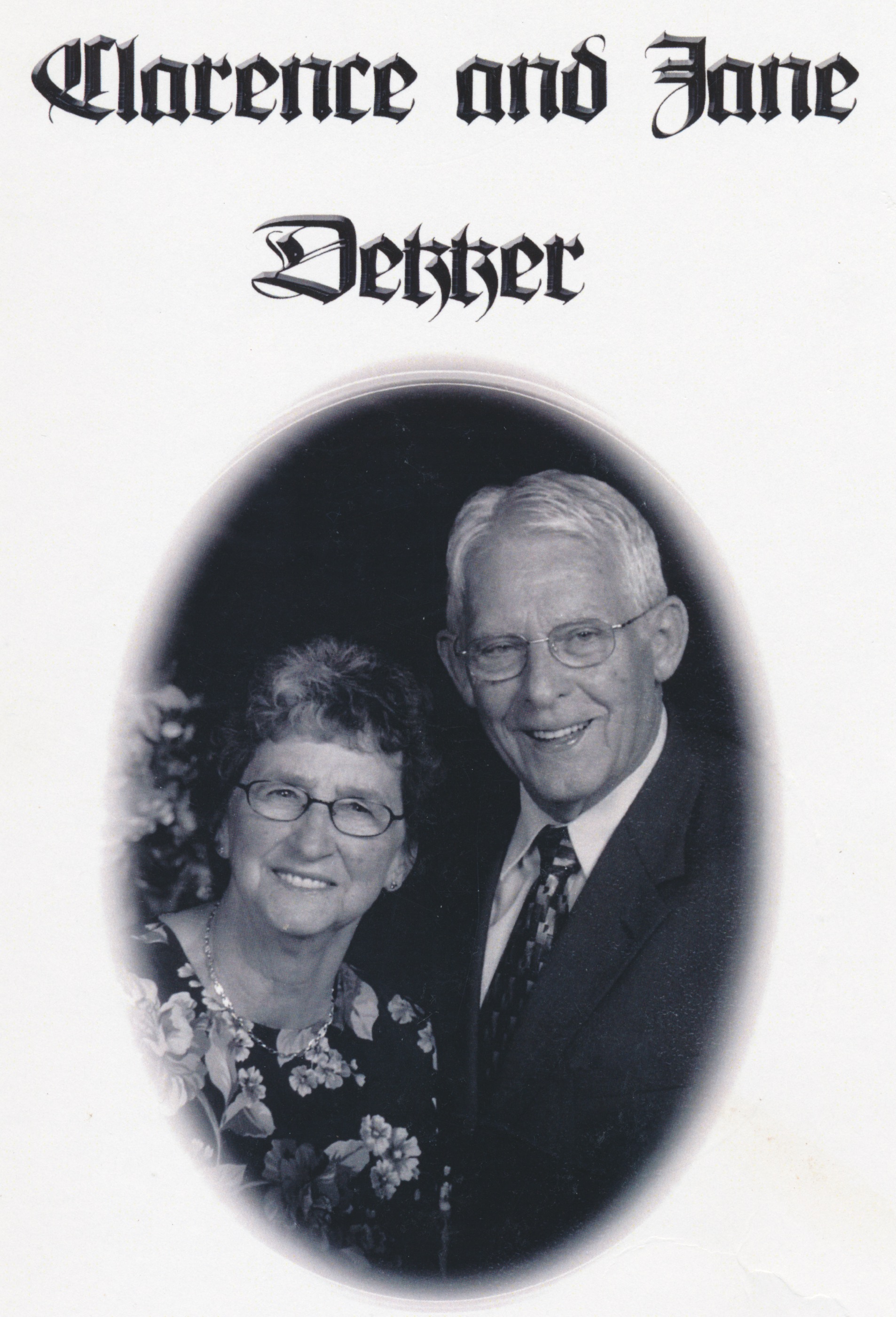
Klaas (Clarence) Dekker now lives comfortably in Strathroy with his daughter Barbara, granddaughter Andrea, great-grandson Derek, and his dog Max.
But, getting here was an adventure starting in the Netherlands, an interlude fighting in Indonesia, and then emigrating to Canada.
The information here is the family story as recorded by Clarence’s daughter, Barbara. “Clarence is the narrator” of his own story. Because the focus of this section of the website concerns experiences around the time of the Second World War, I have stopped this family story when Clarence and his new bride left the Netherlands for Canada after the war. If you want to hear the “rest of the story”, contact Clarence or Barbara. “Thank you!” to Clarence and Barbara for sharing this story!
Klaas was born February 10, 1928, in Warffum, the Netherlands. He was one of eight children that lived. A ninth child died in infancy.
March 18, 1952, Klaas married Janke (Jane) Straatsma who was born in Ferweerd, Friesland. They had 6 children.
The family Klaas grew up in.
Klaas as a youth – far right.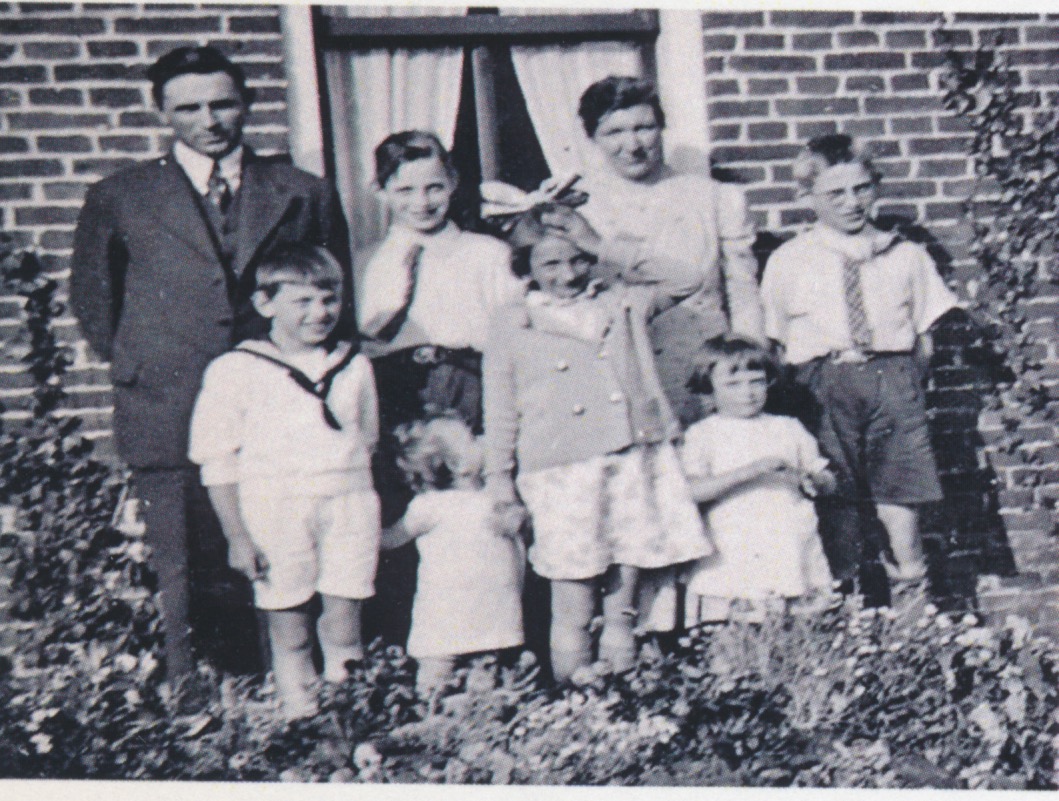
Klaas’s grandfather and father were in the nursery and greenhouse business growing vegetables and flowers. HIs mother’s family had a small dairy farm and his father-in-law like to “wheel and deal” in buying and selling small tracts of land. Klaas says, “Both my grandparents retired before the second world war. They were “rentiers”, which means that they could live from the interest they earned from their investments. Opa and Oma Dekker moved to Paterswolde, a small retirement community close to a lake. Opa had a small rowboat and when we went there, we made good use of the boat. Opa Dekker died on 24 Nov. 1938. I am not sure of his age but it must have been around 65 I think and I remember that he was brought to our home in Warfum, where he was laid in the casket for I think 2 days. I don’t know anything about the funeral, I was 10 years old then. My grandma then sold the house and moved to an apartment in Groningen. She dies on 26 Aug. 1964 at the age of 92 years. I remember when her mother died. This was Oma Tilbusscher. I still see her laying in her bed, she had a rolled up towel under her chin and I think she was 94 years old.”
“The first years was a hard time for the people all over the world, you have heard of the Dirty Thirties, but my parents survived and slowly they together worked hard. Opa started with a few cold frames and then he had 5 greenhouses built where he grew grapes. One of those greenhouses was heated, they could have an extra crop, which fetched a better price. My dad had all his produce shipped to the market in Groningen. This was expensive so he bought his own truck . . . a brand new Chev.”
[huge_it_slider id=”26″]
“My Dad was really a flower lover, so he had 3 greenhouses built by Kees Wiebenga, who later emigrated to Chatham, Ontario. These were very modern greenhouses for the time. There was central heating and so on. We used coke for fuel in the boilers. I think that we had 2 boilers for the flowers and one for the grapes. Before the war, we had all kinds of coal for heating purposes, but that came to an end. My Dad would buy bean straw from local farmers and when geat was required we took a turn to feed straw into these boilers; Henk, Jaap and myself. When the war broke out in May 1940, the Dutch government needed all the transportation they could get a hold of, so that truck was sold to the army.”

“I never forget the first day of the war. We, as kids, had to help in the business and we got up early on May 5, 1940, and were busy harvesting head lettuce from the cold frames. We heard airplanes in the distance and were wondering what was going on. At 6 o’clock AM a neighbour came over and told us that Hitler had invaded Holland. A week before that Hitler had promised that he would never attack Holland. We continued harvesting and loading the lettuce on the truck. My Dad did manage to deliver the lettuce to the veiling [auction], but in Groningen, his truck was taken away from him. We all thought this was for a good cause, but then the war only lasted 5 days I believe.”
“We had lost our freedom and that was hard to swallow. The Germans had rules and we had to do what they told us. At first, we had to give them whatever copper we had, then radios so that it was impossible to listen to Radio Holland which was broadcast from England. Later they would take bikes, farm wagons, whatever they needed they took.”
“The following years were hard on everybody who lived in the big cities. We had lots to eat and drink. My Dad always had a pig and father Straatsma came early in the morning to butcher him. This happened a few times and we also had a cow and I was chosen to milk her when my Dad could not do it.”
“This was also the time I became attracted to Janke Straatsma. As young people, we would walk in a big group and somehow we started to notice each other.”
“Near the end of the war Mom’s bothers, Sietse and Poke had to go underground. Sietse was in Assen and Popke in Laren (Gelderland). Mom decided one nice summer day to visit Sietse in Assen, about 40 km. from Warfrum. I think this was in early spring of 1944. We met the night before and we made plans to meet again 2 days later at 7:30 PM. Mother pedalled to Assen and had a good visit with Sieste and she decided then and there to go on to Laren.”
“She was topped by Germans once and was let go again. She made it to Laren. This is 160 km. from Warfum. She stayed there for the night and made it back to Warfum exactly at 7:30 PM. We had a very short time together because at 8 PM we had to be in. There was a curfew from 8 PM to 5 or 6 AM.”
“I am sure that Mom’s parents were worried when she did not come home that first evening, but I never heard too much about that.”
“We had fireworks every night. I can still hear the steady drone of airplanes flying into Germany. Quite often they were chased by the Germans and when that happened the Lancasters would drop their bombs (always in an open field). I found some shrapnel and I gave a piece to Ben.”
“I was going to a high school in a town 8 km. from Warfrum. We biked that every day and had to pass a German post.”
“One day they stopped a bunch of us and I had to see the Commandant. He happened to be a good man. I was brought into his office and he closed the door behind me and asked several questions. He took out his wallet and showed me a picture of his son, who was the same age as I was. This son of his was somewhere on the battlefield and he told me to stay out of sight because the next time I might not be so lucky. I was very thankful that I got off easy.”
“When looking back on these war years we can only be very thankful that none of our immediate families lost a loved one. I finished high school in Sept. 1949 and then went to Indonesia.”
My Indonesia Time
“I really have to get my brains to work – an awful lot happened and I have blocked the really nasty things out of my mind and try to dwell on the experience I gained. When you are in the army you don’t ask questions, you just do as you are told.“
“I had to come up for my number already in 1948, but I got an extension so I could finish high school. I think that it all started in Sept. 1949. We were trained in Schoonhoeven, a very old military town. There was a bunch of guys who had high school education and they were supposed to go to Breda, this was a military academy where soldiers were trained to become officers. I was one of the lucky ones. However, the training never happened. At that time a lot of soldiers were coming back home after a long service of 2 years or longer. We were told we had to go to Indonesia at the end of Oct. This was not good news for those at home. We were sent home mid-October. We all got smallpox vaccination a day before we came home, so most guys were pretty sick from that.”

“We had about one week to say goodbye to our families and loved ones. I think that we got engaged on 18 Oct. 1949, and 5 days later we had to report for duty again. On October 28, 1949, we boarded S.S. Zuiderkruis and sailed for Nederlands Indie, now Indonesia.”


“We had very rough weather in the Gulf of Biscay. This lasted 2 days because we had a broken rudder, so we finally made it to Lisbon, where we were in drydock for a good day. From there we sailed through the Mediterranean. This was a beautiful voyage, no storms, just lots to see. When we came to Port Said we had to change into our tropical uniforms. We then sailed through the Suez Canal which was a beautiful experience. We could see Mount Sinai in the distance, where Moses dropped the 10 Commandments.”
“At the end of the canal, we made a stop in Cairo, Egypt. After that, we sailed into the Indian Ocean and did not see land for about two weeks. At the front of the bow, we could see dolphins, one or two on each side.”
“Everybody had been given an assignment, some had to clean the rooms where we slept. This was a terrible job, during stormy weather a lot of guys were seasick and the hallways and stairs were slippery from all the barf. My job was peeling potatoes, about two hours a day and the rest of the time we played cards.”
“After 4 weeks and 2 days, we arrived in Tandjong Prick, the main harbour of West Java. From there we were transported in open trucks to a large camp in Batavia (now called Djakarta). We had to get used to the food, rice three times a day, with some fruit. After a few weeks, we had a choice where to go and brother Henk was stationed in Medan on the Island of Sumatra. I got very lucky that I was sent there. We were transported there on a small Indonesian ship, there were only a handful of soldiers on board, most were Indonesians who came with their families, livestock and everything else they owned.”
“We slept wherever we could find a spot. There was lots of commotion going on all the time; kids fighting, pigs squealing, etc. We had to pick up a load of tin on the Tin Islands, I think the name was Bangka, and I bought a smoke tray there, which I gave to George and Amy.”
“After about one week we arrived at Belawan Deli, the port of Medan. It took me a few days to locate Henk and it was great to be together on some evenings or weekends.”
“All good things come to an end and before we realized it Henk went home on S.S. Kola Inten. I was assigned to a large warehouse from where we had to supply all the outposts. This was very interesting, but also dangerous enterprise. A number of boys never made it back. We mostly used Studebaker trucks and a lot of Dakota airplanes.”
[huge_it_slider id=”27″]
[huge_it_slider id=”28″]
“Sumatra is a beautiful island. Henk and I were very fortunate to be able to spend some time together at Lala Toba. This is an old volcano crater. It is high above sea level and on a clear day it was possible to see the oceans on both sides of Sumatra.”
“After Henk left a lot of soldiers were sent home and most of the outposts were vacated and then our work there was finished there. They treated us to a dinner I will never forget. It started in the early afternoon and lasted ’til midnight.”
“We had all kinds of Indonesian treats, like birdnest soup, shark fin soup; everything was excellent. The drinks were made from all different types of fruit – it was a real experience.”
“Anyway, we ended back on Java. After a week we were stationed in Tandjong Priok where we were made part of port security. We saw many men go back home in poor shape. I remember one hospital ship where men were loaded on stretchers and brought in the sickbays. Some men were totally insane. We called it Tropen Colder. One man from Warffum came home like that too. He was put in an institution and died there.”
“At night we quite often woke up and heard a whistling noise, these were bullets outside the camp.”
“One morning I woke up and found that the camp was on fire. I made the rounds and woke as many guys as I could. I still had some souvenirs in my own barracks and hoped to save hem from the fire. I went in and grabbed a few things and then the burning roof fell on me. I spent about 6 or 7 weeks in a hospital in Batavia. I was in poor shape. Herman VanDyke was one of our medics and he helped me get in the ambulance. I was out cold most of this trip to the hospital in Batavia. I woke up a few times because the sirens were going full blast in the bust sections of the city.”
“In these days communication was lousy. My back was burned, I was unable to write and nobody in Holland knew that I was in the hospital. I had a wonderful nurse and she finally wrote home I think.”
“I enjoyed my stay on the Island of Sumatra. One night we ventured into the province of Atje. This is east of Medan, and I am thankful that we came out of there alive. This tribe has always been at loggerheads with the Indonesian government. They do not tolerate outsiders in their territory.”
“We went back to Holland on the S.S. Nelly. This is another experience I’ll never forget: poor accommodations and lousy meals, and always short on food.”
“We arrived back in Rotterdam, and as was the custom, a band was ready to play the Dutch Anthem. Some guys started to shout “HUNGER” and everybody on board shouted hunger, so the Reps. from the Higher Ups just opened the gates so we could disembark.”
“I am thankful that I have been there. Indonesia is a beautiful part of the world. I would not have missed this adventure for any money. The Lord protected me and He brought me home in one piece on 18 March 1951.”
Editor’s Note / Observation: Clarence is my neighbour, in his 90th year, and still does not want to talk about his experiences in Indonesia. It brings back bad memories of things he saw and heard about. The Dutch government was widely condemned by other nations of the world over its “police actions” and tactics used in its attempts to maintain a colonial territory in Indonesia. Young men like Klaas Dekker were conscripted to fight in an action which they were told was ‘heroic’ and in the country’s best interests. However, when they returned their fellow citizens sometimes shunned them for doing what they were told was their ‘duty’. It’s not surprising that many of these veterans emigrated elsewhere. I’m pleased to have Klaas Dekker as my Strathroy neighbour!
Back in the Netherlands
“I came home from Indonesia on 18 March 1951. I was given a long Furlow on 16 April 1951, and was officially discharged on 1 Oct. 1963.”

“I worked for my father in the greenhouse. I did not like the work and applied to many different places. At that time I had a good education and was qualified for several jobs. The only drawback was I had been in Indonesia and for some reason, we were not wanted. We applied for approval to emigrate to Canada and this was approved. We then had to find a sponsor. . .” [which they did – edit.]
“In the meantime, we made wedding plans and we were not sure about our immediate destination.”
[huge_it_slider id=”29″]
“We got married on 18 March 1952, and about a week later I was told that the job I had applied for went to somebody who had a lot less education than I had, but this man belonged to the Labour Party and I belonged to the Christian Party (AR). This made it clear to us that we were not wanted. Our parents felt the same as we did. We then put the wheels in motion to emigrate to Canada. This was very hard for our parents to accept, they also knew we had tried to find work in Holland and that we, as many other young guys who had served in the army in Indonesia were given the cold shoulder. So, on 26 April we boarded the S.S. Sibajak in Rotterdam and headed for Canada. This was our “Honeymoon”.
