Flight Lieutenant / Pilot Officer (posthumously)
Service Number J/25463
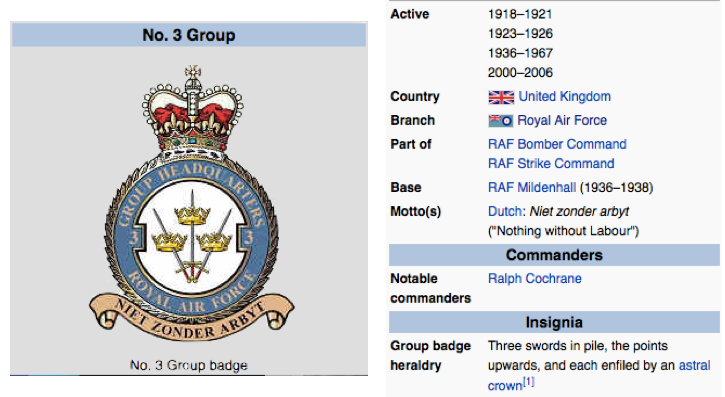
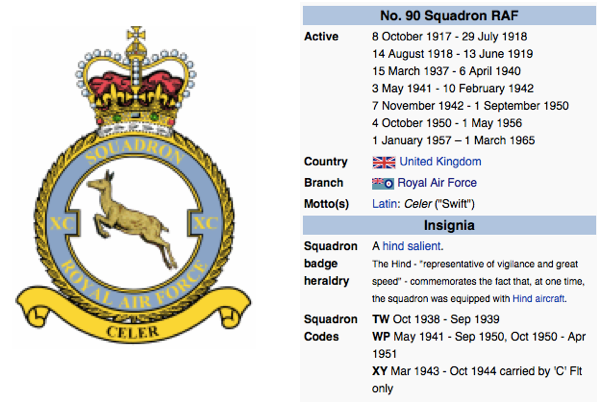
Royal Canadian Air Force / Bomber Command #3 Group / 90th (R.A.F.) Squadron (based at Tuddenham, England)

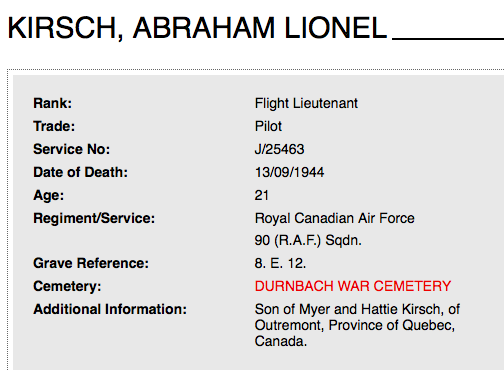
Abraham Lionel Kirsch was shot down over Frankfurt, Germany, on September 13, 1944. He was 21 years old.
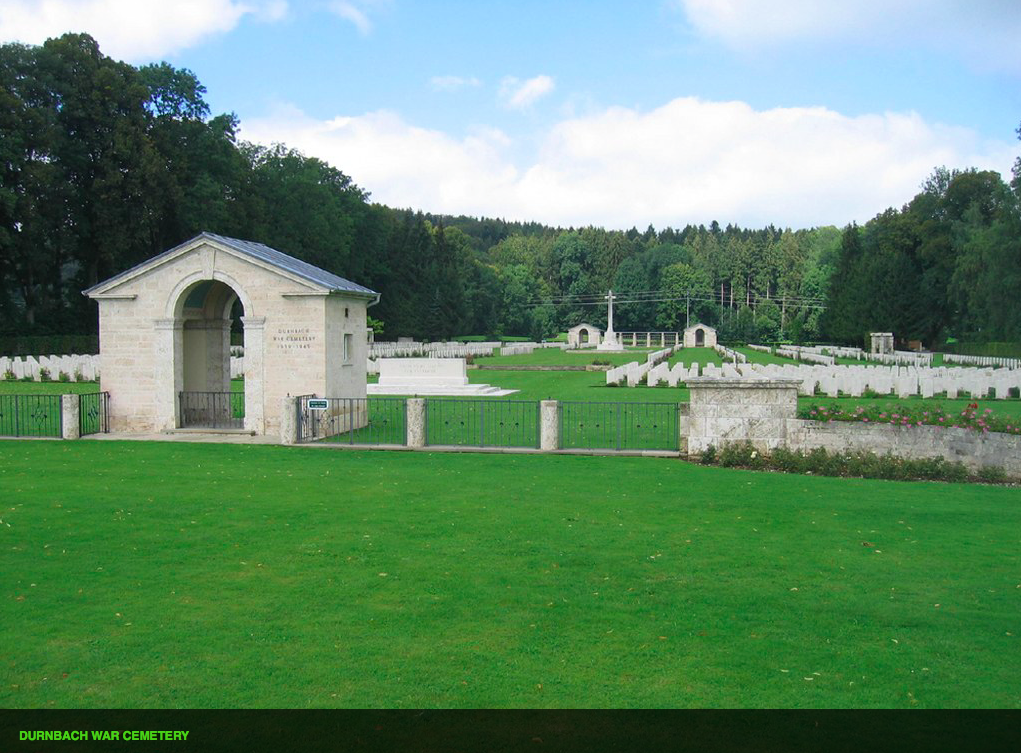
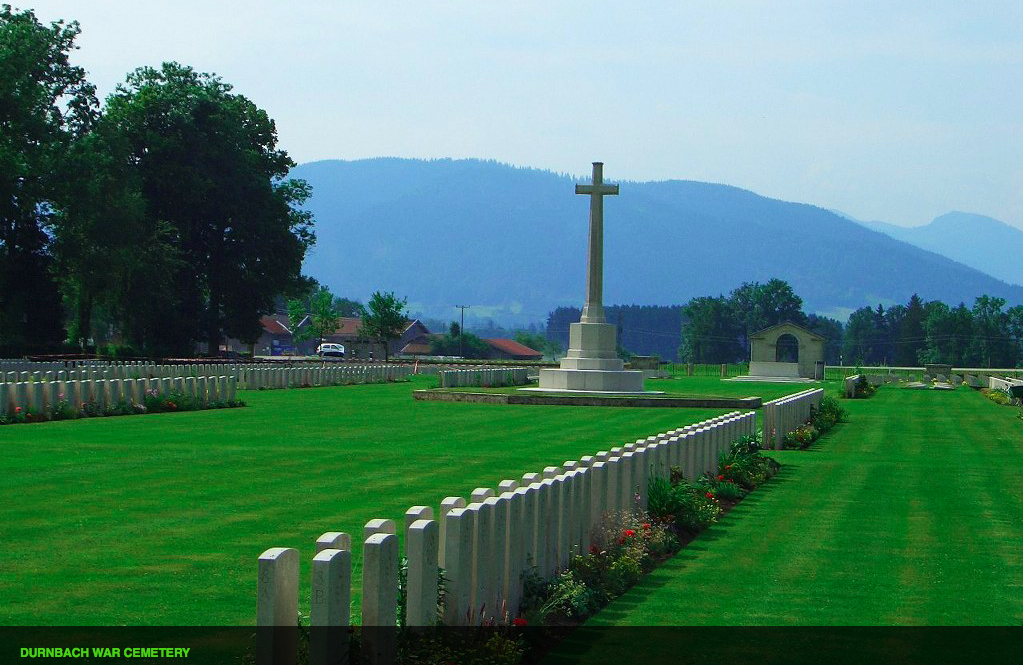
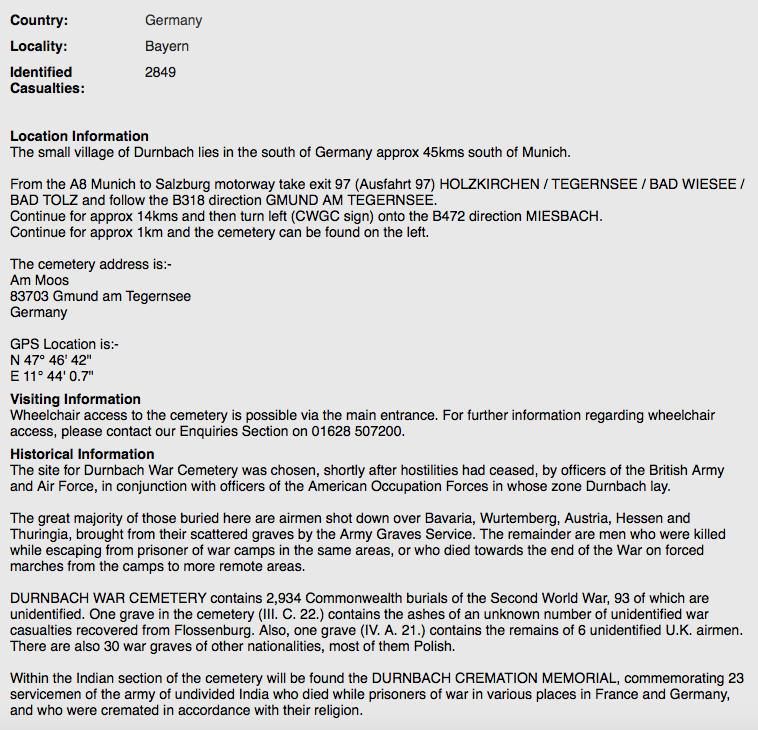
He is buried in Durnbach War Cemetery in grave 8. E. 12. (See details below)
Elma Dolansky, née Kirsch, had two older brothers, Sydney and Lionel. Elma now lives at Seasons Retirement Community, but at the time of this remembrance story, the family of five lived at 790 Bloomfield Avenue, Outremont, Quebec. There were mother Hattie, father Myer, Sydney, Lionel, and the youngest, Elma. This is Elma’s story of her next older brother, Lionel.
“MY BROTHER LIONEL
He was eight years older than I, six years younger than our oldest brother Sydney. But Lionel was still close to me as a sibling. He showed me anything that might interest me, he took the time to explain it; he protected me, and he taught me to love music. When he was in high school, my parents would leave him to babysit with me, which for some reason, always made me act like a brat, and for no good reason.
I remember one time he made me cocoa because I wanted some, and then I wouldn’t drink it because the cooling milk had a skin on top. So he removed the skin, but I still refused to drink it. Then I ran into the bathroom and locked the door, but it was only a hook and eye, and the door didn’t fit, so he took a knife and easily lifted the hook.
If the French boys on the street teased me, he went outside and chased them off. He introduced me to my life-long love of music, starting with the Classics. He had a collection of records and played them often on our phonograph – the old 78 r.p.m.s that you had to change every few minutes, even the 12″ ones.
Lionel had a few friends who came regularly to the house. One was a boy who had obtained a movie projector and a few cartoons. It had to have been quite unsophisticated according to later standards; it made clicking sounds and the pictures were jerky, bt it was a movie and I had never seen one. I was perhaps six or seven. We had no screen, so the boys brought the white enamel kitchen table out to the dining room, set it on edge, and we watched in awe as Felix the Cat and Pop-Eye came to life in front of our eyes.
Another visitor was Rudy Marcus, who many years later won the Nobel Prize for Chemistry. He was enamoured with chemistry even as a young boy. Lionel’s very best friend was Joe, who was a talented artist. When I was seventeen, Joe started to visit the house, and then asked me out. I went with him a few times, but he was serious about me, I was young, and he was Lionel’s age, and I was not at all interested. I liked him as a friend, but in those days, one did not have “platonic” friendships with the opposite sex! I always thought some of the attraction was my resemblance to Lionel, maybe I reminded him of his lost friend. Who knows?
Lionel wrote poetry and constructed various items with his Meccano set and did “fret” work, cutting out intricate designs out of this wood. He made my mother a bed tray, but we ended up using it mostly for me whenever I was sick. I remember one particular Birthday card he made for my mother – she was so proud, she kept it hung on the wall for months. It was on a thin piece of cardboard, the size of a post card, and with a drawing of a ship on top (this was his favourite drawing). I remember just the last two lines of the poem which read, “Mother dear, oh, mother dear, I hope I am the first / To wish you a Happy Birthday,greetings from Lionel Kirsch”.
He was active in the YMHA and edited the newspaper and won an award from that institution. He bought kits of model airplanes, containing this strips of balsa wood which he bent into shape, following a pattern, and then covered the completed frame in coloured tissue paper. I remember the glue smelled of banana oil.
He was very intelligent and sometimes very argumentative, especially regarding the war. It used to upset my mother greatly because very evening meal became a “battleground”, and as the war progressed in intensity, so did the heat of the arguments.
And yet, for all his out-spoken ways, Lionel himself was somewhat conservative. He did not smoke, or drink, or swear, and disapproved of girls who wore a lot of make-up. He was somewhat immature socially, which I only discovered many years later.
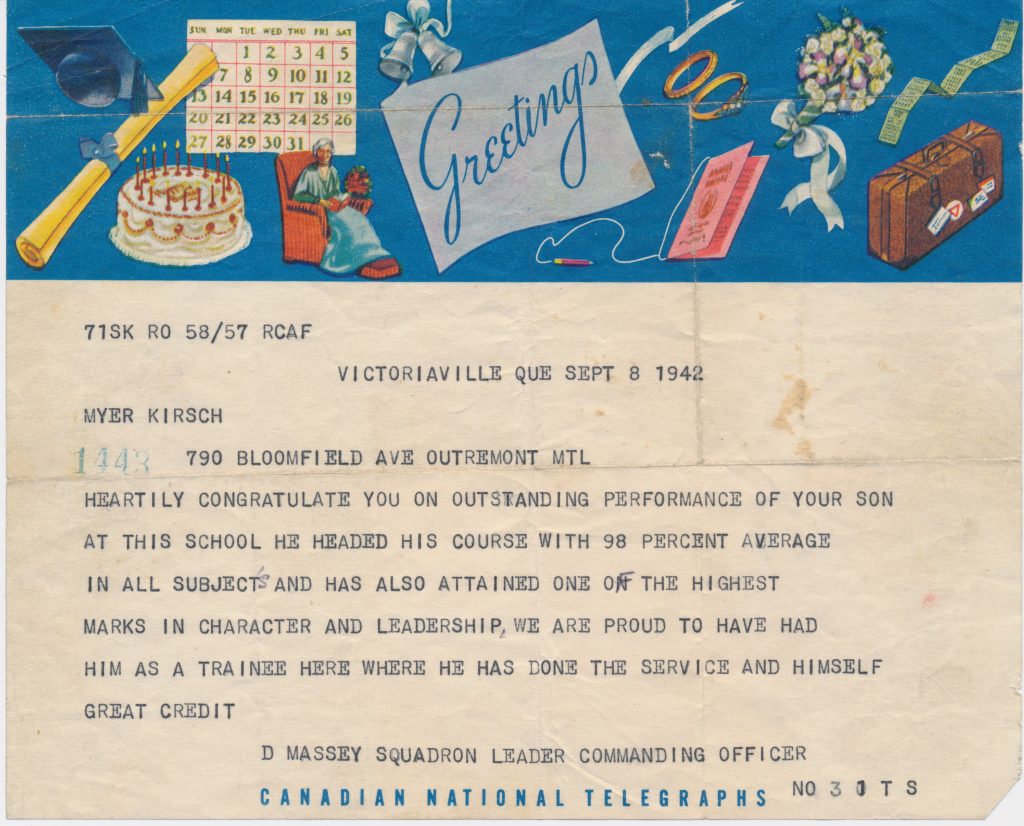
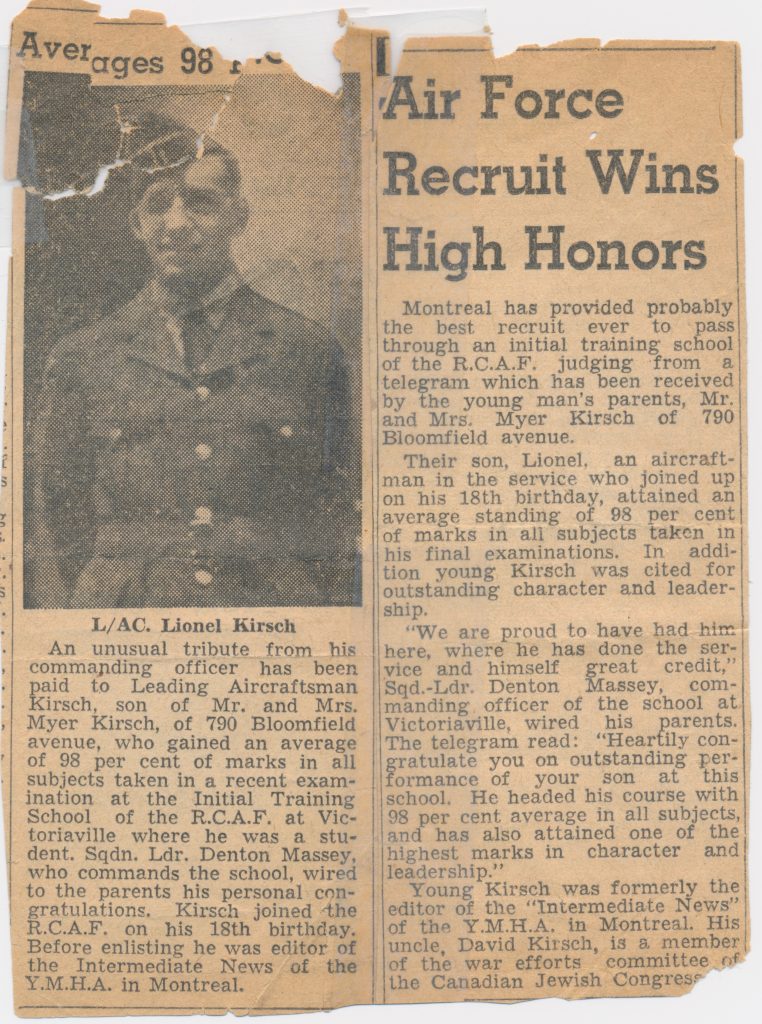
He loved airplanes and flying them was his dream. After high school, he went to work for my cousin Joe Rubin who owned National Typewriters, which sold office equipment. Lionel’s job was to repair Dictaphone machines. On his eighteenth birthday, he got on a streetcar, went to Lachine, and joined the RCAF, to train as a pilot. He did extremely well, of course. By the time he was sent overseas to England, he was already made an officer. He graduated from Officers’ Training school with the highest marks – 98% – ever achieved. My parents were sent a telegram from D. Massey, Squadron Leader, Commanding Officer, congratulation them on Lionel’s achievement. I still have it.
[Ed: See scanned copy below.]
Once, when he was on leave, Lionel took my cousin Ina and me to see the movie, “Women With Wings” which was playing at the Verdun Theatre. Montreal theatres did not permit children under the age of 16 into movie theatres because of a disastrous fire in 1927 at the Laurier Palace Theatre in which seventy-eight children were killed. It was a tragedy that made headlines all over North America. Verdun, however, being a suburb, did not enforce this rule, so we were able to go with Lionel. The movie was not for children; the plot being about a woman pilot whose plane went down in the ocean, and as she drowned, “Her life flashed in front of her eyes.” We didn’t understand too much of the story, but it didn’t matter. Just being in a theatre watching a movie was enough for us. We talked about it for days. And, I’m pretty sure he bought us candy.
The item I wanted most in those days when I was ten, was a pair of “ball-bearing” roller skates, which came with a key so one could tighten them to fit securely over the sole of the shoe. It was war time. All metal went into the war effort. It was around my birthday, and Lionel went downtown to Eatons’ department store, handsome in his officer’s uniform, and somehow got the very last pair, hidden in the back of the department. He put them in my doll’s pram, covered them with blankets, and told me to look in the pram for a surprise. I will never forget how I felt when I saw my dream come true, and I wore those roller skates for years.
The day he left to complete his training, and from there ship off to England, we all went out to the Esquire night club downtown. I was only ten, but it was lunch time, and with so many men in uniform, they looked the other way. When we left the club, Lionel went back to the base. Sydney, who was a Physical Training Instructor in the RCAF in Victoriaville, Quebec, returned to his base. My father, mother and I got on our streetcar, but only my father got off at our stop. My mother and I rode that streetcar back and forth perhaps four or five times, with me going up to repay the fare each time we reached the end of the line. She would never permit herself to fall apart in public, so when my mother felt she had regained control of her emotions, we returned home. Did she somehow sense she would never see Lionel again? I have always wondered.
Lionel sent letters home regularly. Since we had relatives in London, he would occasionally visit them. Sometimes the letters, written on thin blue airmail paper, would be censored and try as we might, we could not make out what was written under the heavy black lines. The letters stopped in April, some 5 months before he was killed. He may not have had the time to write; the Allies were sending out bombers as often as possible to raid enemy positions.
[Ed: Click here to read Lionel’s letters to his “Dear Grannie”]
It was a usual Saturday morning, that September in 1944. My brother Sydney happened to be home on a weekend pass and my father was at work. Both my mother and brother were enjoying a Saturday morning sleep-in and I was playing in my room when the doorbell rang. Being the only one up, I answered the door. A telegram delivery man stood there, looking uncomfortable, handed me a telegram and said, “If you have any problems, ring your neighbour’s bell upstairs.” I had no idea what he was talking about; we weren’t that friendly with them. I went into my parents’ bedroom and handed the telegram to my mother who was awake by this time. She didn’t open the telegram immediately but started wailing and rocking back and forth. She seemed to know what terrible tidings that piece of paper bore. The telegram began with the usual, “We regret to inform you…” and ended with “…missing in action.” Apparently, on his twenty-first or twenty-second mission, Lionel, who was by this time a Flight Lieutenant, was on a very intense bombing raid over Frankfurt, Germany. His plane was shot down over that city, and he and his crew went down with the aircraft. Of course, it took a while until we found out the particulars, such as they were.
I stood frozen for a moment, then ran to wake Sydney with the news. I shouted, “Lionel’s missing! Lionels’ Missing!” He shot out of bed and ran to my mother. I did what I believed to be the most comforting thing to do – I poured out a cup of tea for her. Anyone who lived in England knew that a cup of strong tea was the one thing sure to offer warmth and comfort in a critical situation. Hours later, it still stood on the kitchen table, cold and untouched.
The world as we knew it came apart that day. My father rushed home from work. Relatives and friends flocked to the house as the news spread. Everyone took what comfort we could from the words, “Missing in Action”, – not “Killed in action”. There was Hope; he would be found and rescued, perhaps he and his crew would return to base eventually, perhaps he was taken prisoner by the Germans, although being Jewish, this was not exactly a comforting thought. All scenarios were possible.
I remember little else of what happened that day, except for one incident. Sydney took hold of my arm at some point when we were alone in the kitchen and shouted at me, “Don’t you ever wake me up like that again!” A classic case of “Don’t shoot the messenger.” I did not understand this at the time. No one took the time to comfort me or even pay me much attention. Perhaps they figured I was too young to understand the gravity of the situation, but I was twelve years old. And my family believed in the “stiff upper lip” philosophy. On the following Friday night, Sydney having returned to base, the three of us sat around the dining room table for the Sabbath meal. My father started to recite the prayers, but began to cry and left the table. My mother ran to the kitchen, and I just sat there. We did not think to comfort each other. Today there are grief counsellors and other mental health aides, but in those days, one just coped as well as one could. And I think it scarred us to some extent.
The days went by. I returned to school, my father to work, and my mother to wait for a telegram that never came, saying Lionel was alive – somewhere, somehow. Coming home from school, I would run the final block, burst through the door and Shout, “Did you hear anything?” The answer was always “No”. Eventually, I just stopped asking.
Then the letters and parcels from the RCAF started to arrive; all of Lionel’s personal effects, listed item by item (so bloody efficient), and of course a stream of government forms and letters. After a year, the letter came stating that Lionel was now officially “presumed dead”. The war was over by then. Sydney sent to RCASF a letter requesting that this correspondence to my parents stop immediately and anything further should be forwarded to him. My parents could no longer abide these reminders of what they had lost.
I really have so few memories of Lionel – a life so cruelly cut short in his prime. My son, Eric, made a shadow box with his picture and his medals, so I could display it. And for many years, I felt no closure because I didn’t know what happened to him, or if his body was ever found.
Let us now fast – forward sixty-six years. Around November 11, 2010, Veterans’ Day, my son Eric and his daughter Lyndsay went online and discovered the website of a man, Scott Johnson, whose father kept a diary of his time in England during the war. Lionel was a close friend of his until they were sent to different squadrons. This website included some pictures of Lionel that we had never seen – some with girls he met in England. The diary painted quite a different picture of my brother than the one I knew. He was far from home, and risking his life daily, and it was wartime, and he was young, oh, so very young.
Through this source, I came into contact with Mark Chandler, in England, and Chuck Tolley who lives in Yellowknife, NWT, and Chuck’s brother-in-law, who did some sleuthing through the archives of the RCAF in Ottawa. Through Mark and Chuck, who incidentally were involved in writing the history of another squadron, I discovered what actually happened to Lionel and his crew of six.
On September 12, 1944, many bombers were assembled to fly a mission over Frankfurt, Germany. It was, apparently, a pretty awful trip, and many did not return. My brother’s plane was hit by flak, and either all were killed when still in the air or died when the plane crashed to the ground. The Germans, believe it or not, had a great respect for airmen, especially officers, and the bodies were quickly buried. In the late 40’s or early 50’s, the bodies of Lionel and his crew were discovered buried in Frankfurt, exhumed, and brought to be interred in the designated war cemetery located near a small town in Germany. This cemetery is considered part of Canada and the marker on his grave shows his name, rank, and religion. At first, it was a cross, but when it was discovered he was Jewish, a Star of David was put on in its stead.
My parents were advised of this in the early fifties. Probably, my brother Sydney got the notification first. For whatever reason, no one saw fit to tell me Lionel was buried in a proper grave, in a Canadian cemetery, albeit in a foreign country. I am forever grateful to the above-mentioned people who finally solved the mystery of Lionel’s death for me, and finally gave me the closure I sought for so many years.”
Elma Dolansky, née Kirsch, September 2016, Strathroy, Ontario
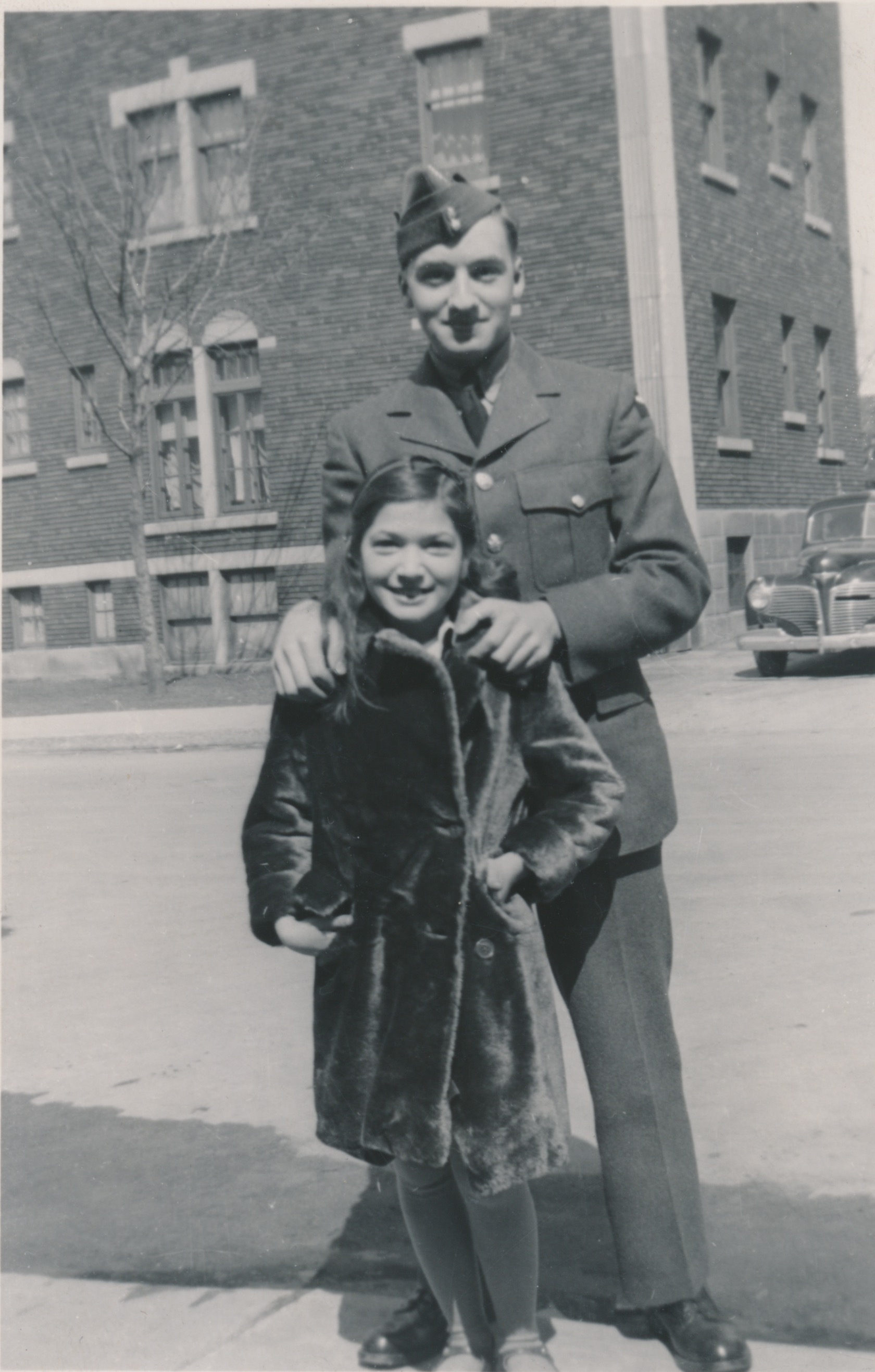
Elma and Lionel Kirsch in Outremont, Quebec
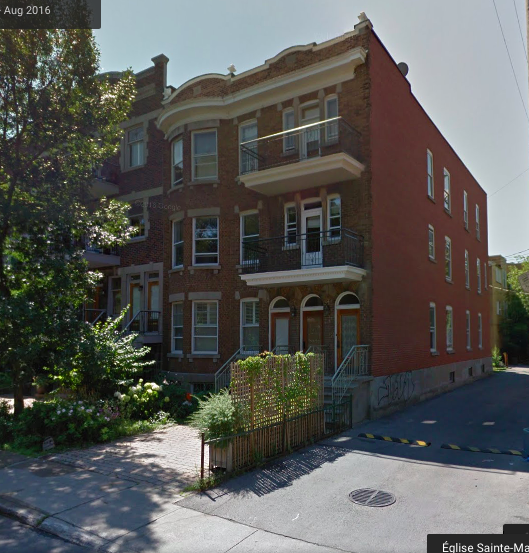
790 Bloomfield Avenue, Outremont, Quebec – today!
[huge_it_slider id=”10″]
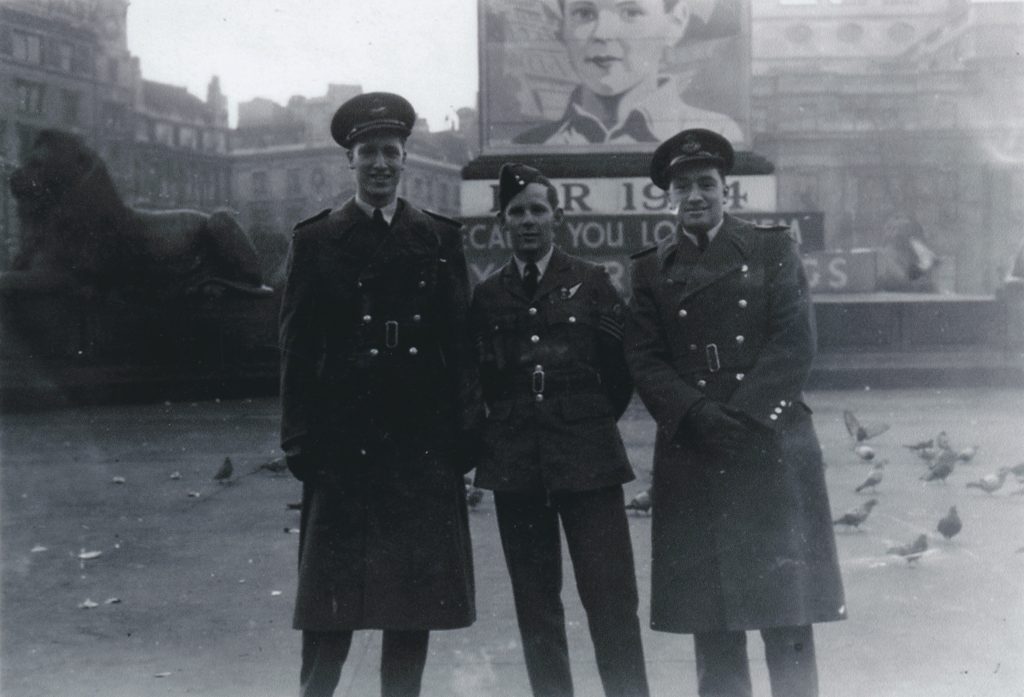
Bruce Johnston, Red Retter and Lionel Kirsch in Trafalgar Square, London
Bruce Johnston produced a WWII diary web page which has names arranged in alphabetical order. In his diary, he has 2 pictures of Lionel. We learn that Lionel’s girlfriend in England was ‘Mary’ – but no last name was given. There is also a story of the last flight of a pilot who was shot down but survived. It gives an excellent picture of what life was like for these airmen in war time.

Lionel and his flight crew – back L to R: Wilkie – navigator (an Aussie), Kirsch – pilot, Tank, Mat – gunner /
front L to R: Dick MacLaren – bomb aimer, Hurlbut
This picture looks like they’re standing beside a Halifax bomber, which was used earlier in the war by the 90th squadron.
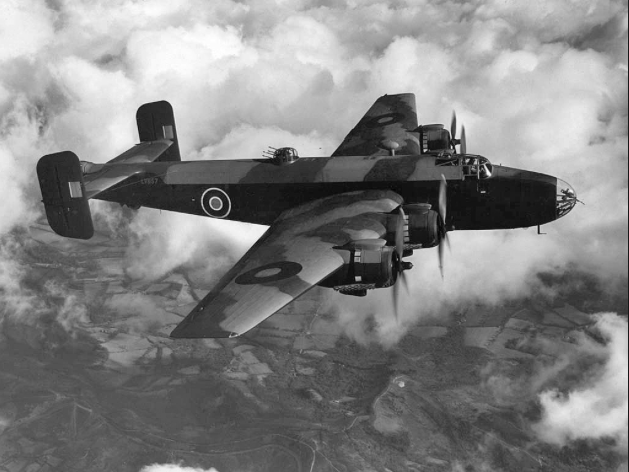
Halifax Bomber (above)
Lancasters (below)
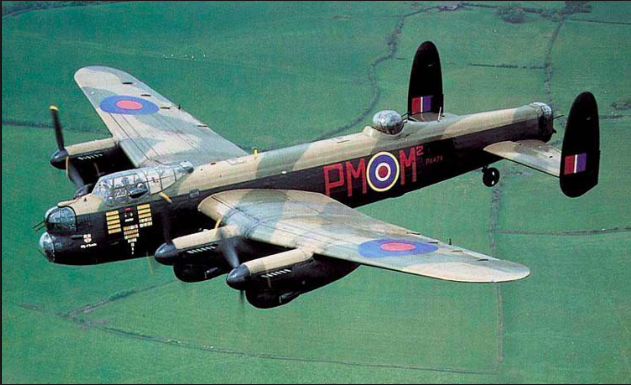

The 90th Squadron converted to the Lancaster bomber in May – June 19944. This is the type of bomber Lionel is reported to have been flying when he was killed.
90th Squadron, Royal Canadian Air Force (R.A.F.)
Lionel Kirsch did his initial pilot training in Canada at Victoriaville, Quebec. He was also placed at St. Hubert, Quebec and Summerside, P.E.I. This initial training then led to further training in Europe. Lionel’s European training was at Chipping-Warden, Edgehill, and Chedburgh. He was then posted to the 90th Squadron at Tuddenham.
Abraham Lionel Kirsch was shot down, on his 27th mission, over Frankfurt, Germany, on September 13, 1944. He was 21 years old.

Lionel was awarded his ‘Pilot Officer Operational Wings’, posthumously.

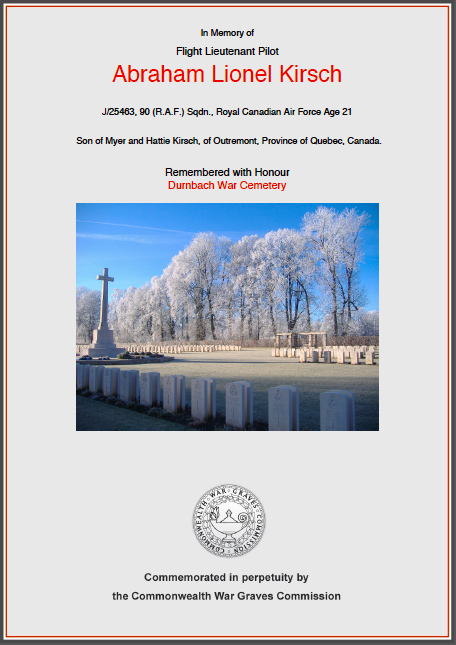
For several years after Lionel was “missing in action”, the family was not aware of where his body was. Here is the official record:
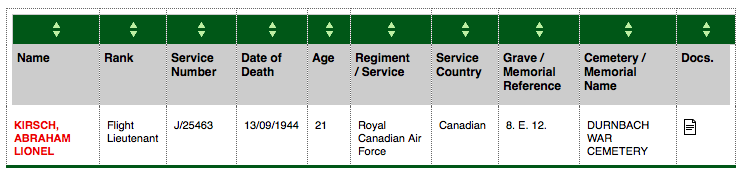
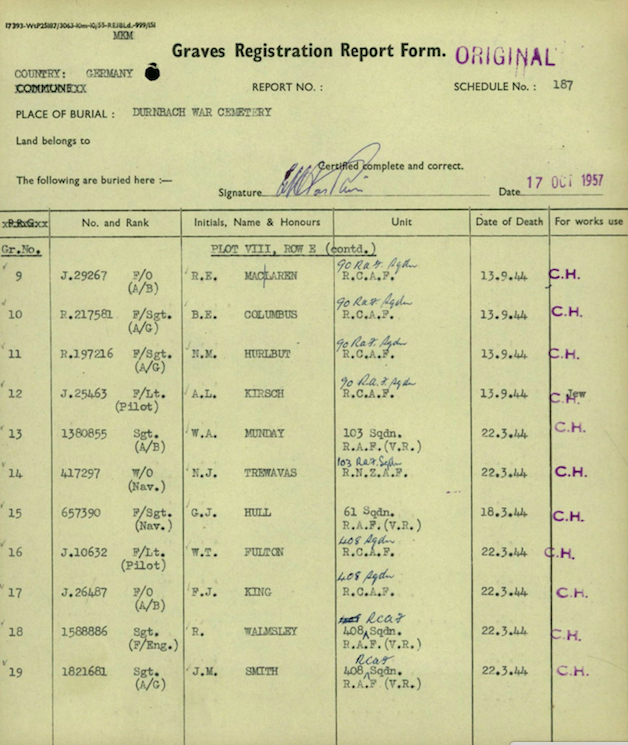
The first four names on this document are all crew members that were killed with Lionel Kirsch on September 13, 1944. It is appropriate that they all lie side by side.
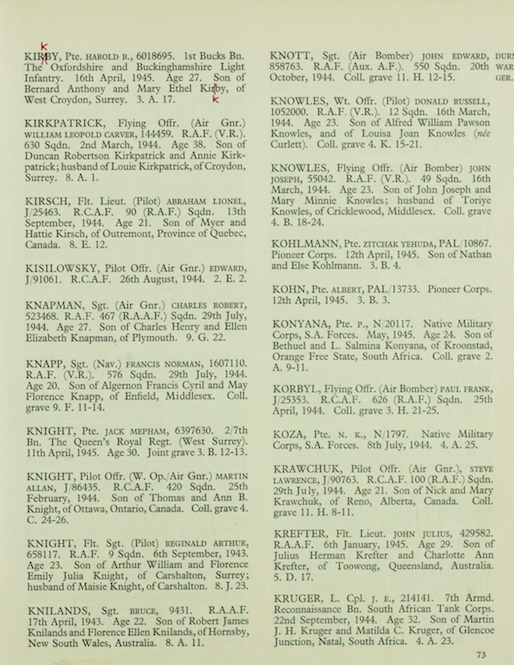

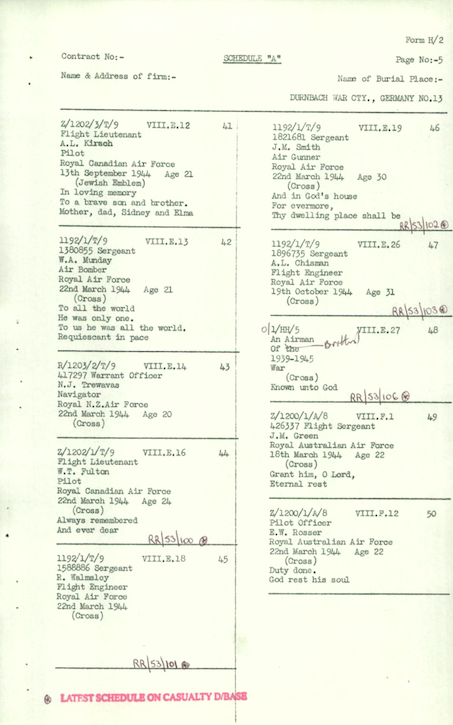
You will note that Lionel’s brother’s name is spelled with an ‘i’ instead of a ‘y’ on this document. Originally the headstone had a cross, but it was replaced with a Star of David to recognize his faith.
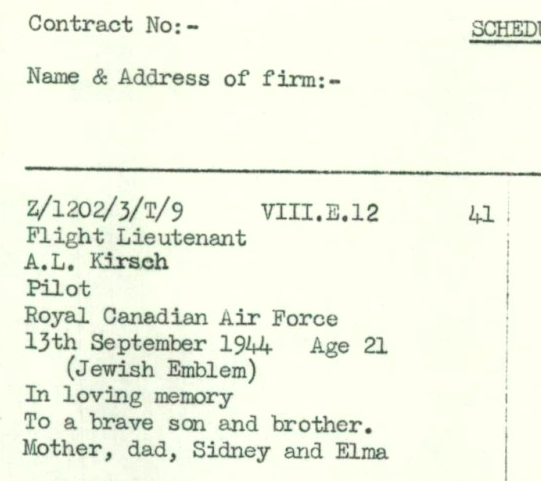
Lionel is buried with his fellow crew members in Durnbach War Cemetery, Germany.
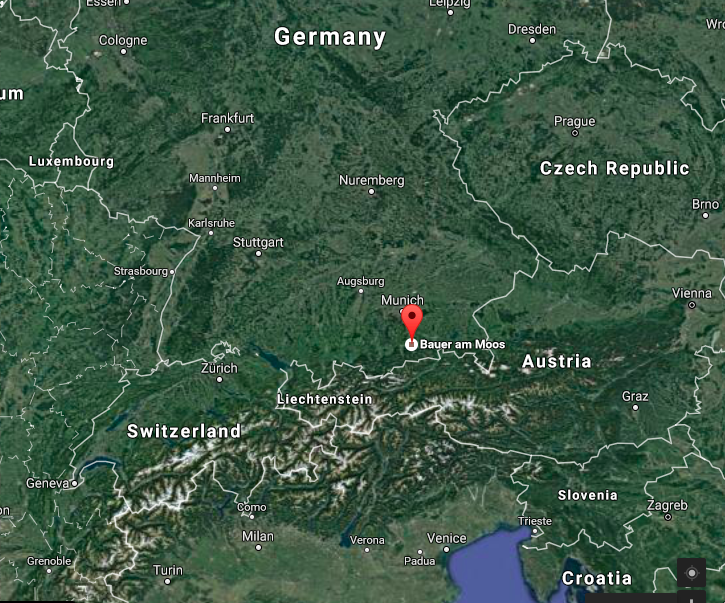
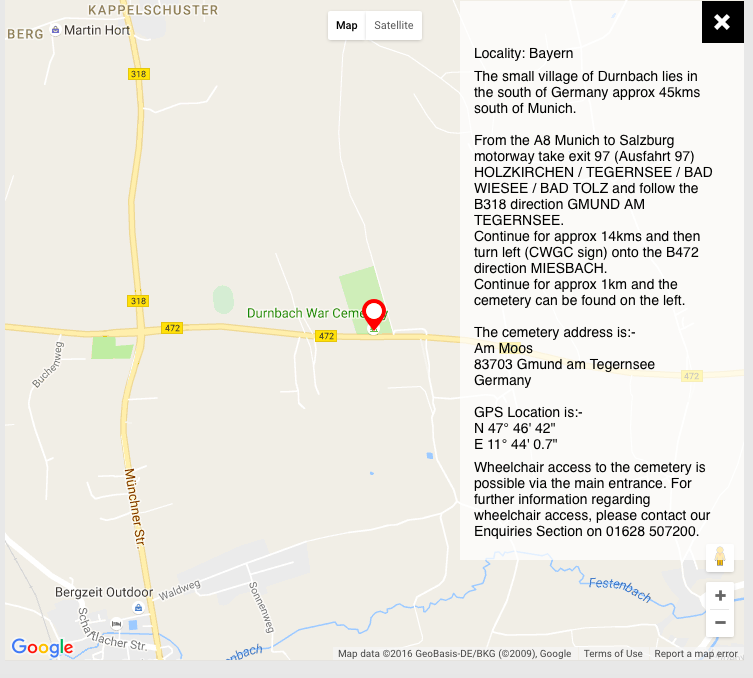
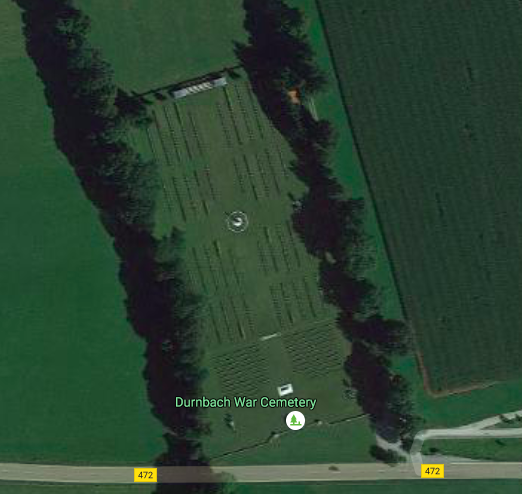
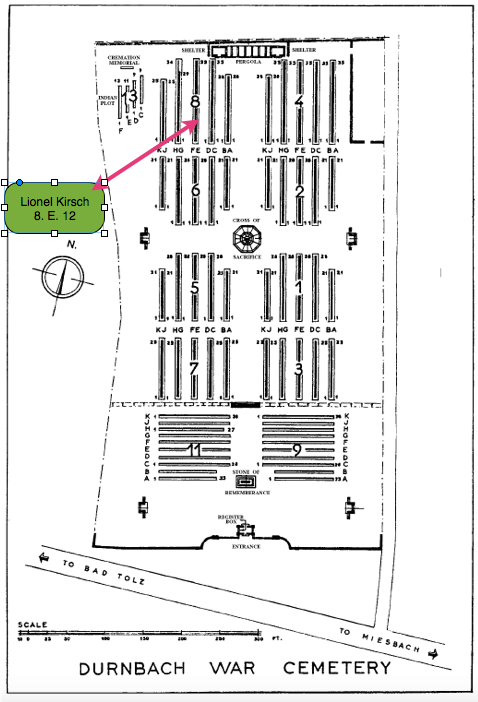
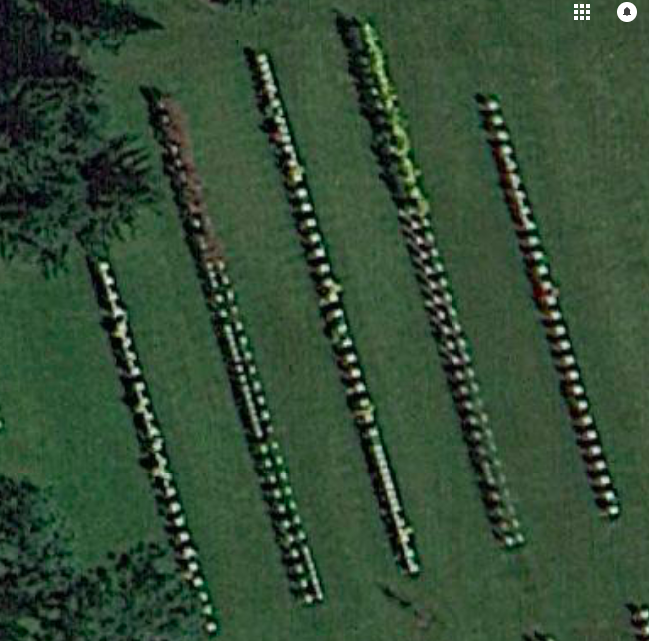
On Google Maps, you can almost pick out Lionel’s headstone.