
During war time, letter writing was the main form of communication between soldiers and their loved ones. Letters helped ease the pain of separation. Soldiers wrote letters in spare moments, sometimes on the front lines or in the calmer situations behind the front lines. Censorship dictated what servicemen were permitted to disclose in their letters. However, in practice, men often found ways to convey information, and their letters offer a powerful and highly personal insight into their experiences in war.
Sending and receiving letters was important to morale, keeping men and women connected to the homes and families they left behind.
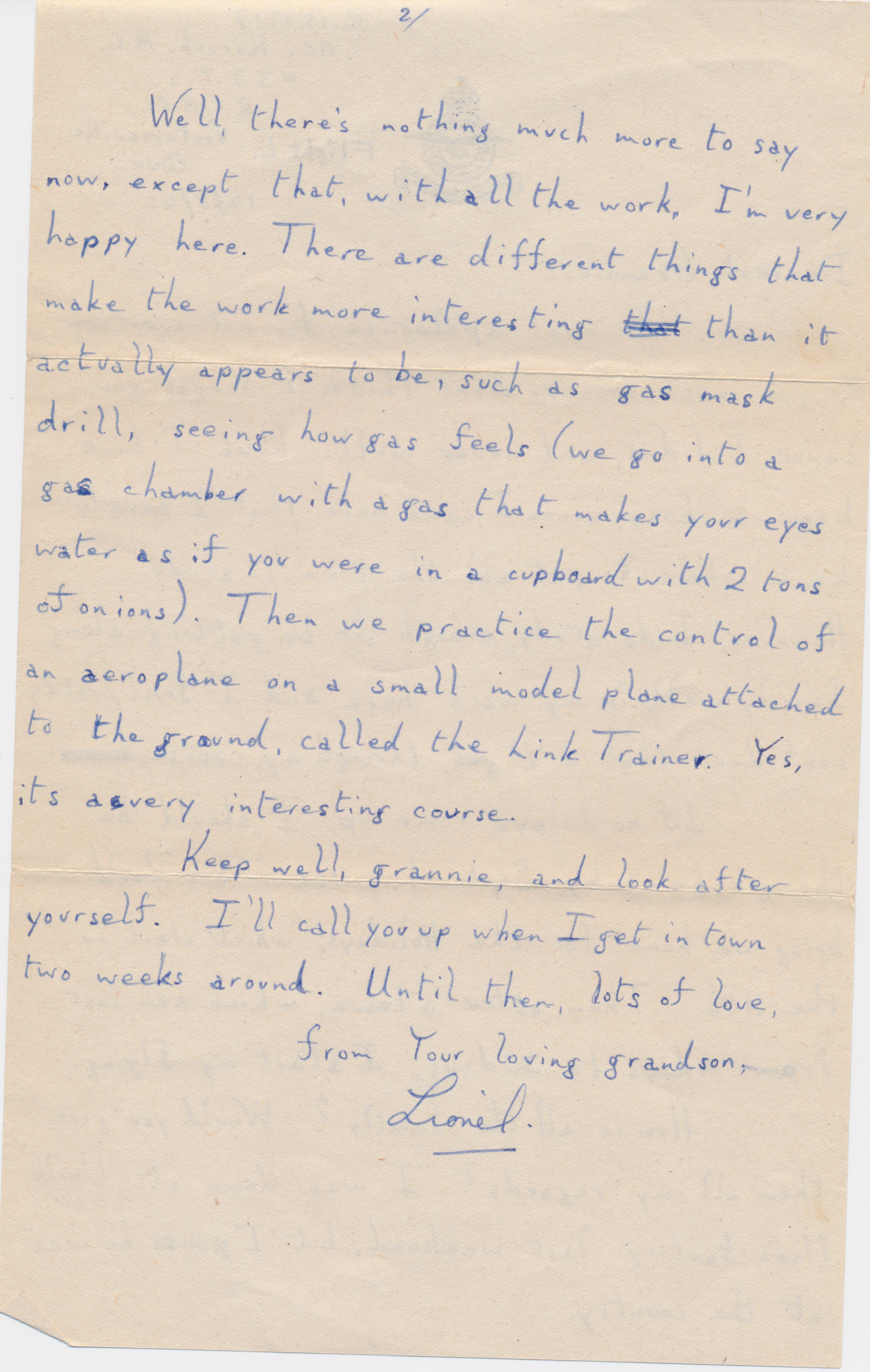
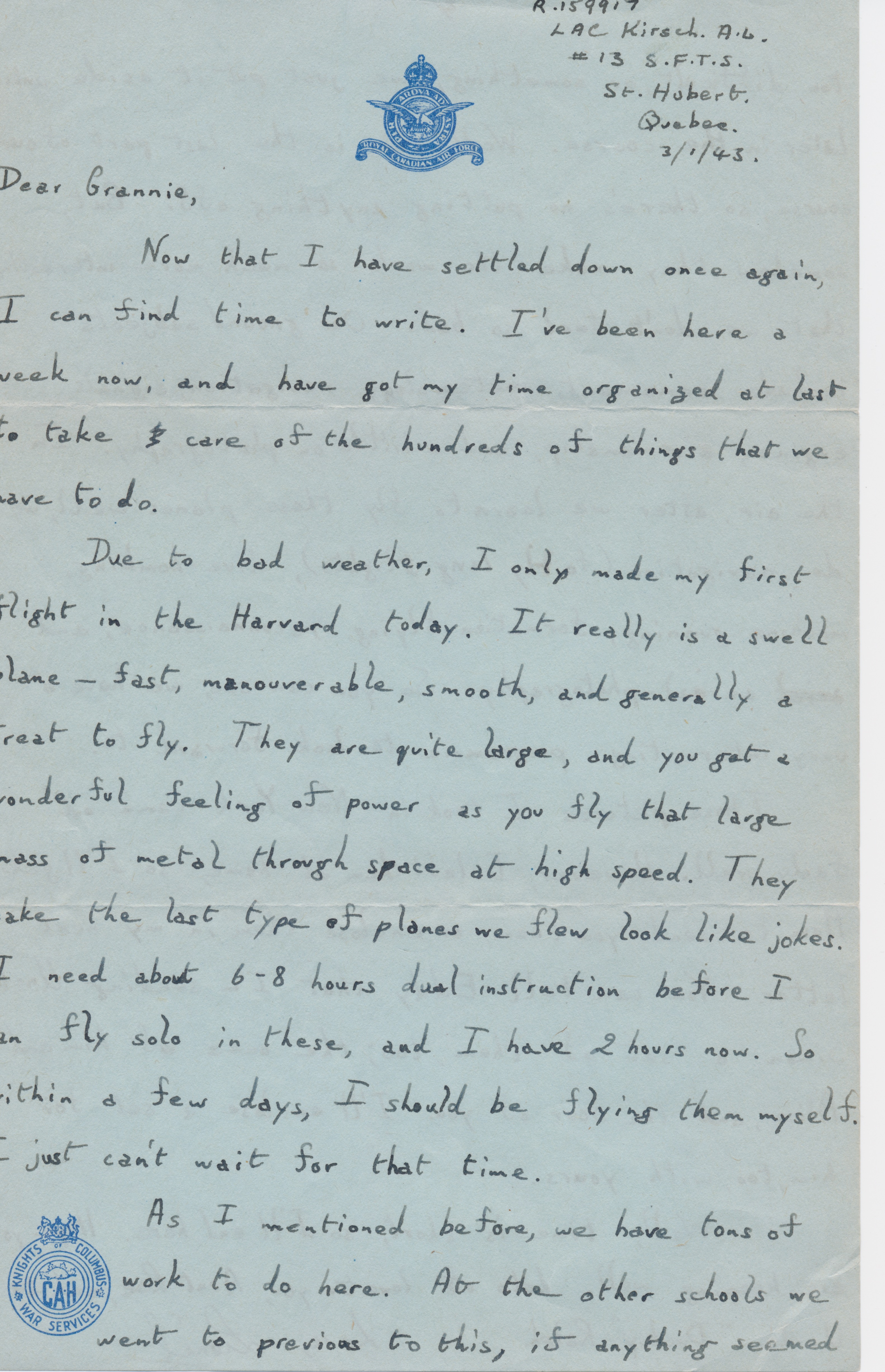
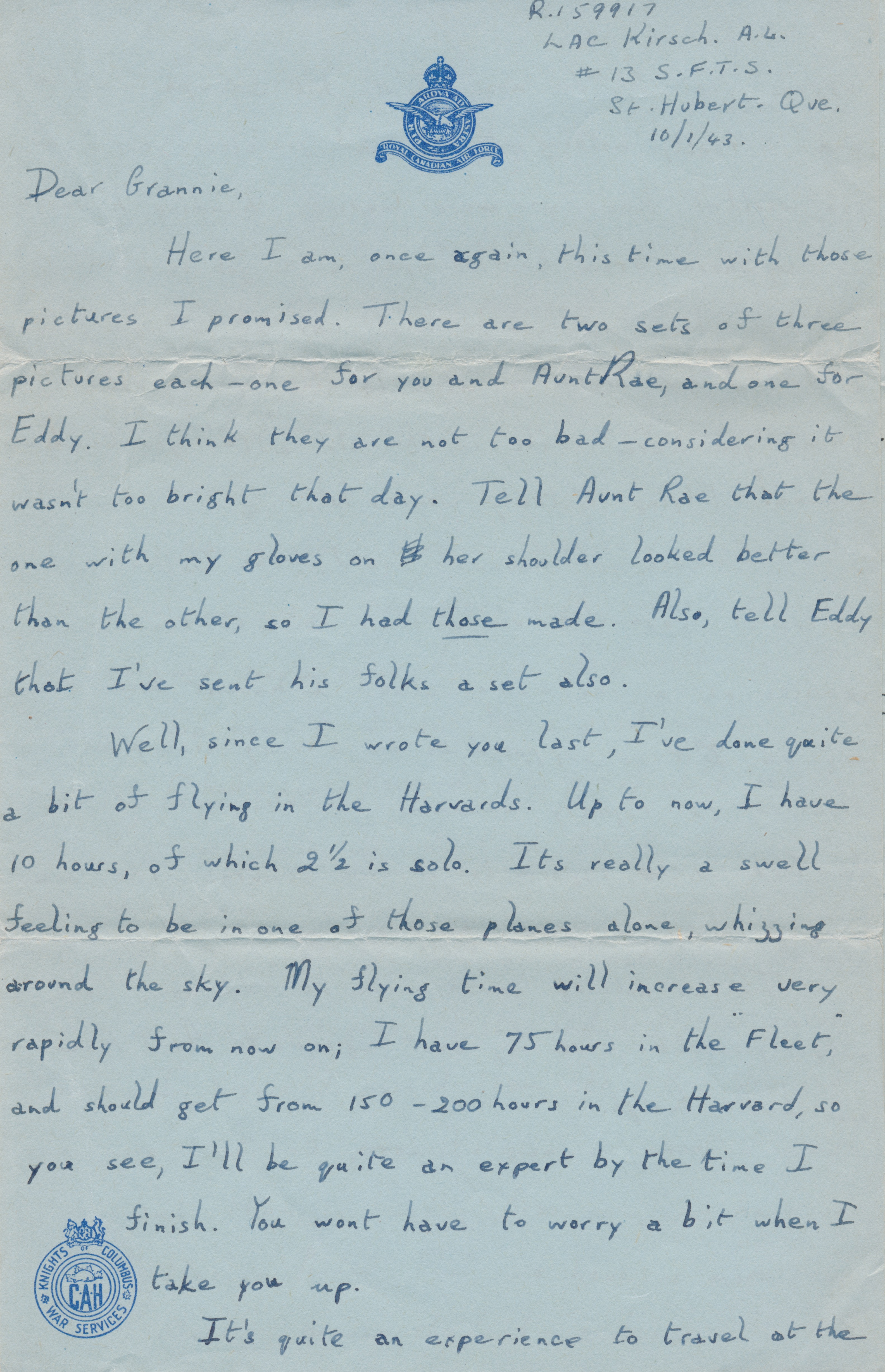
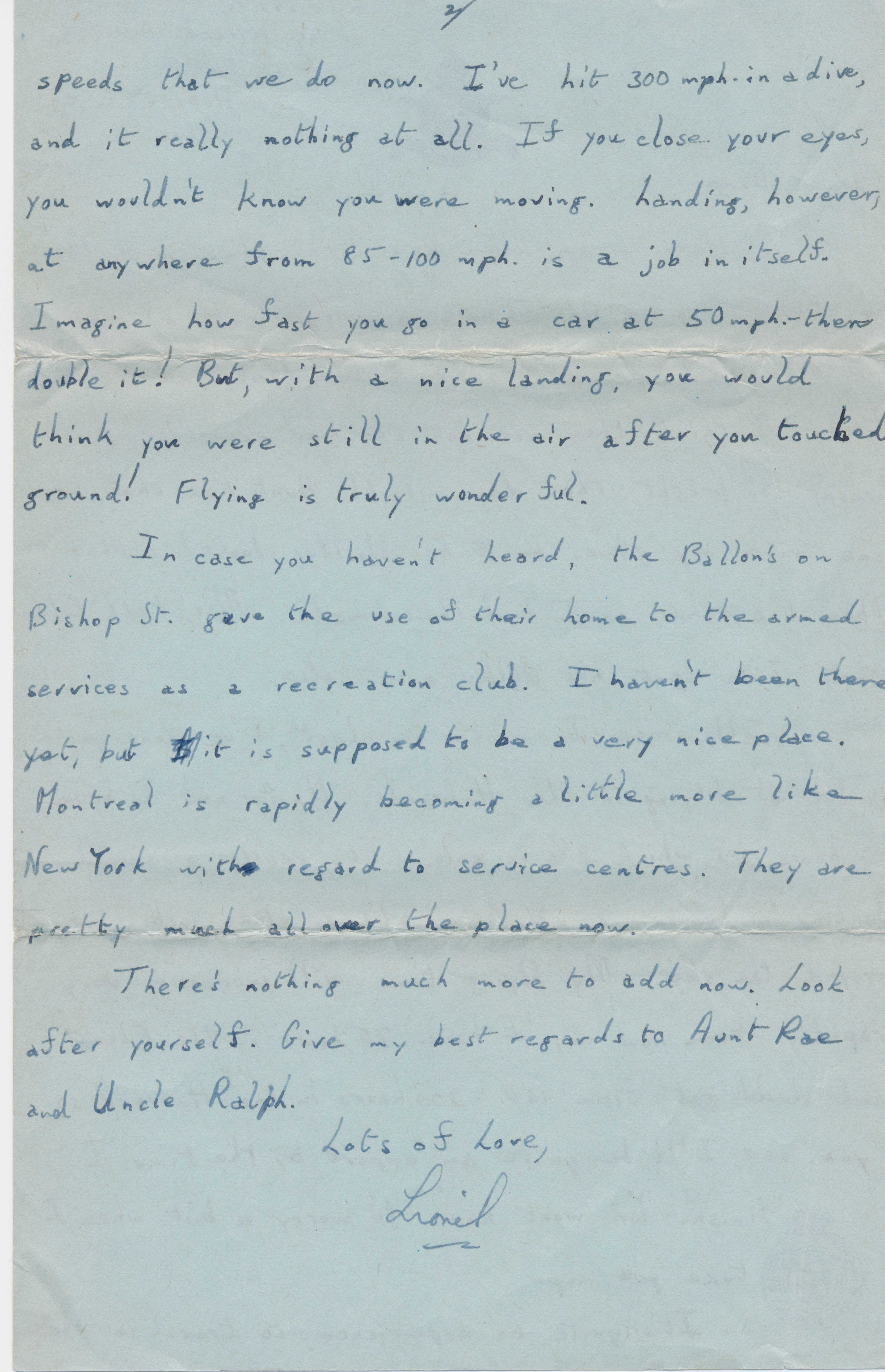
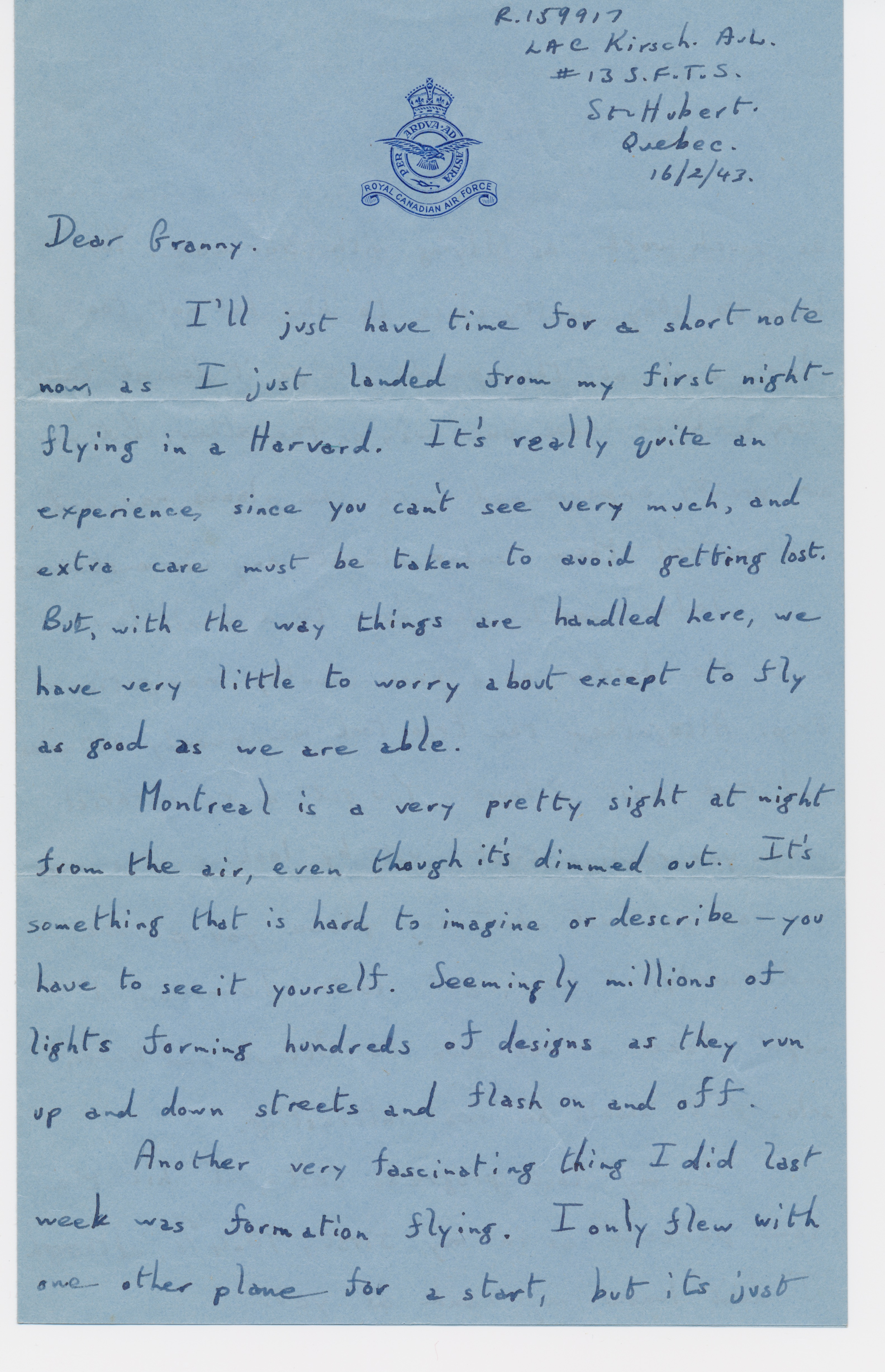
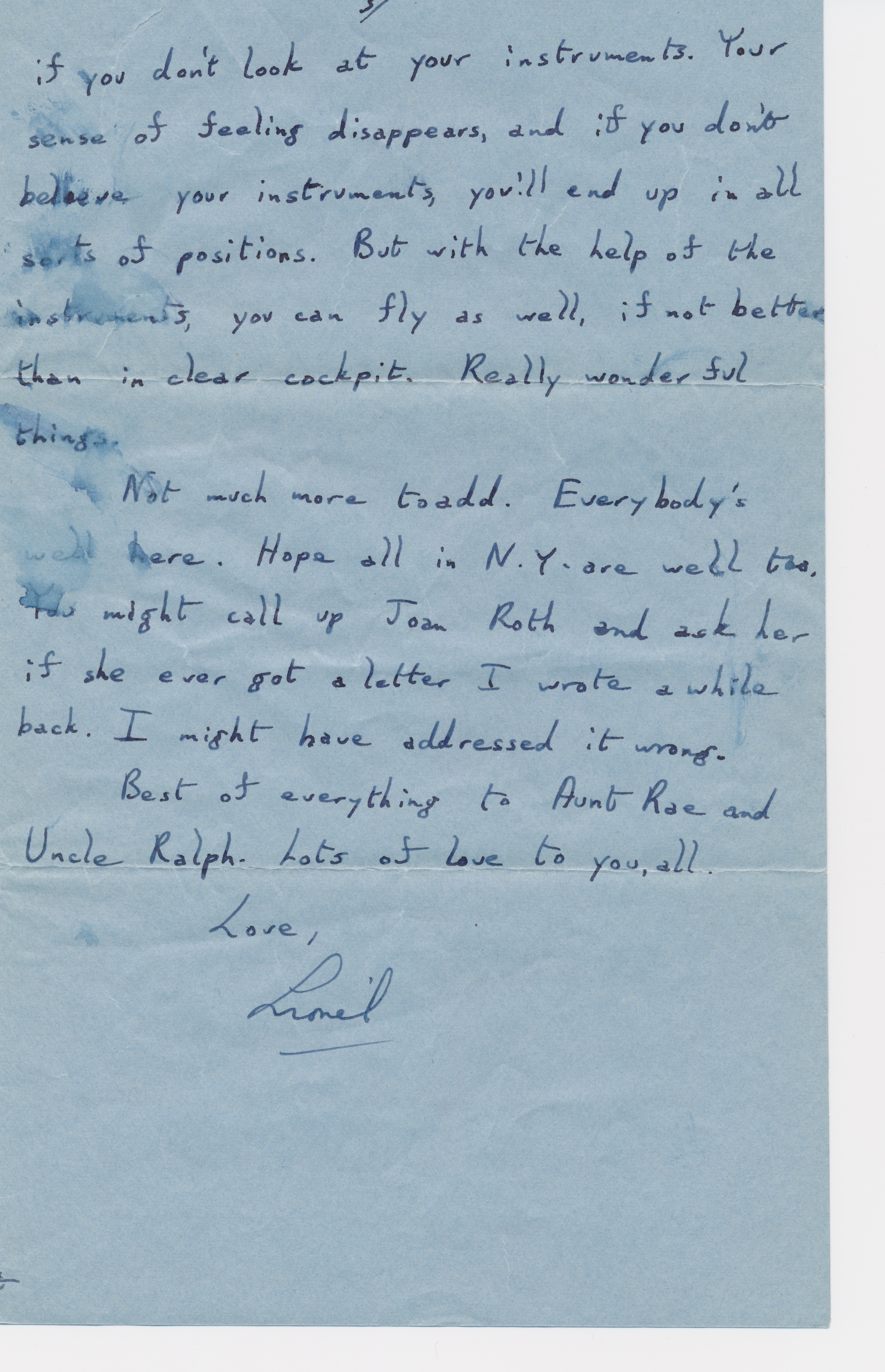
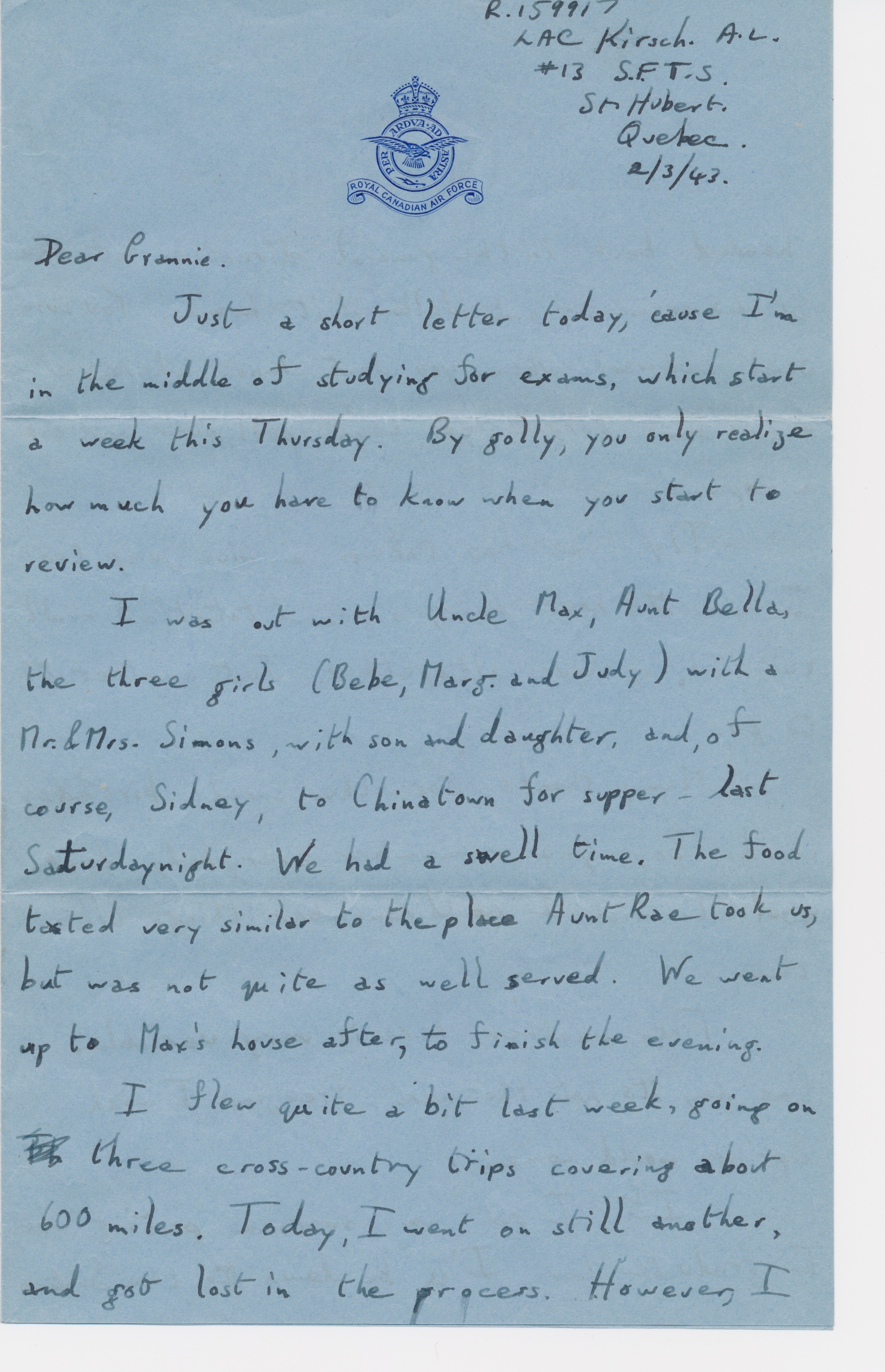
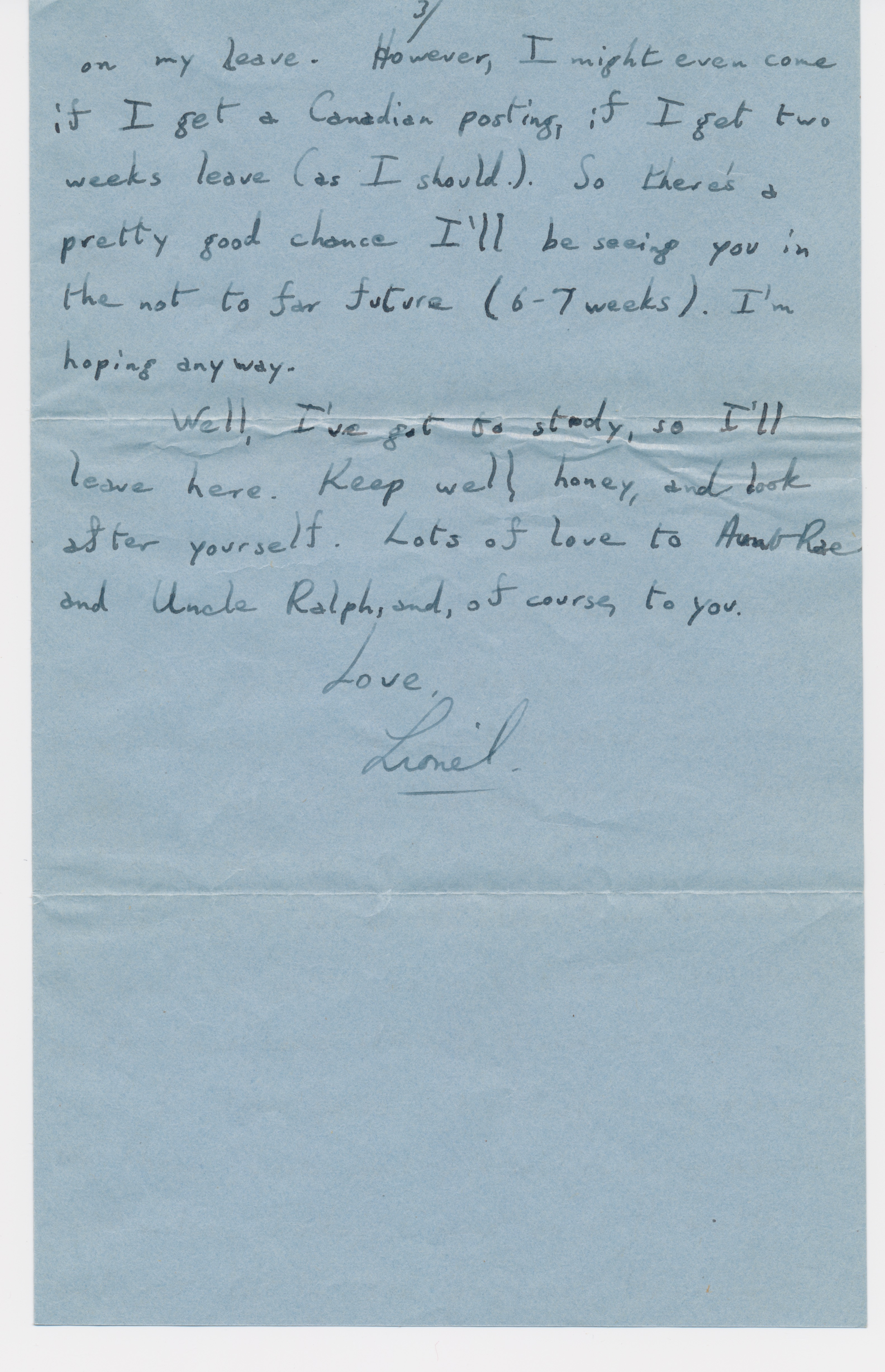
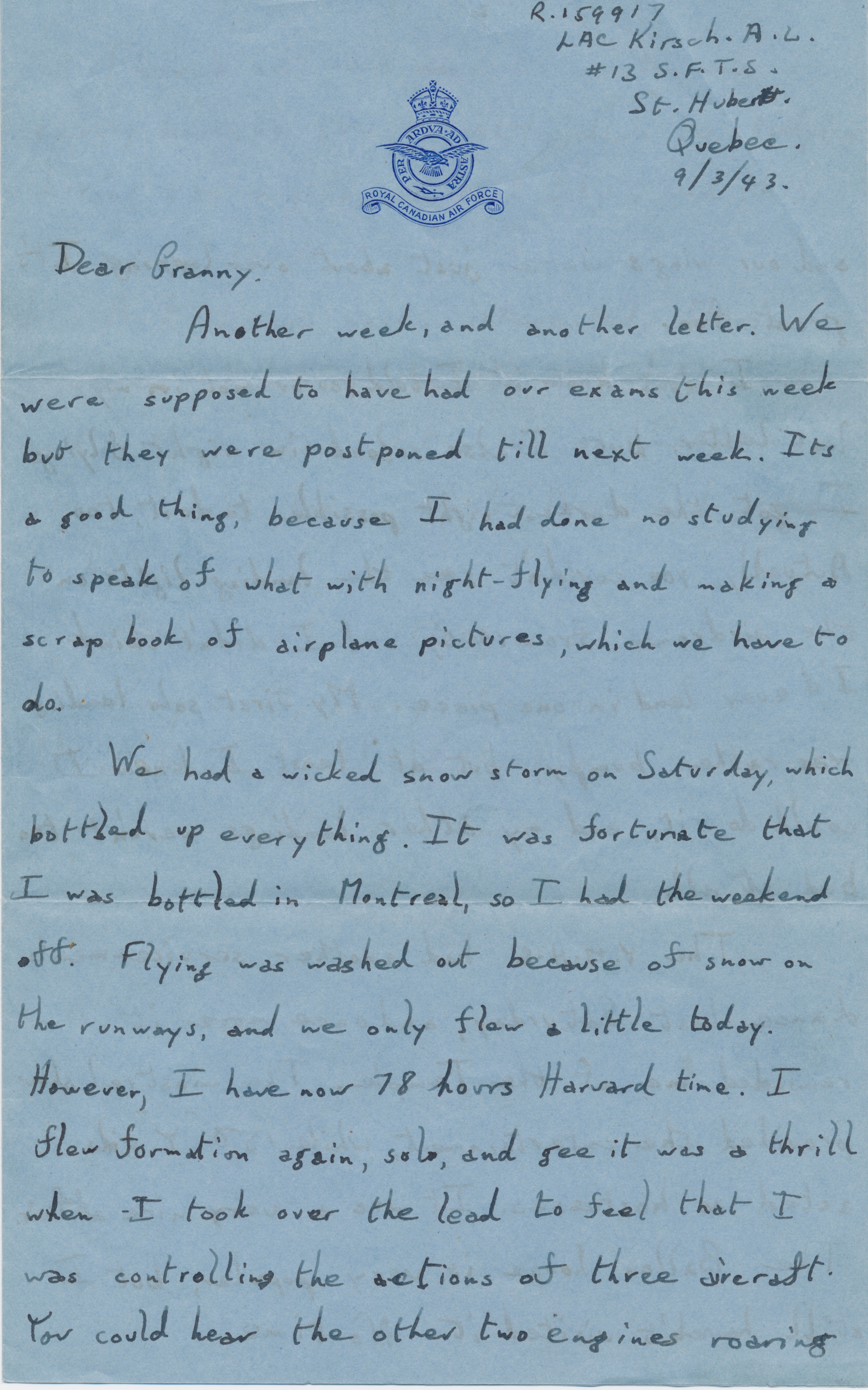
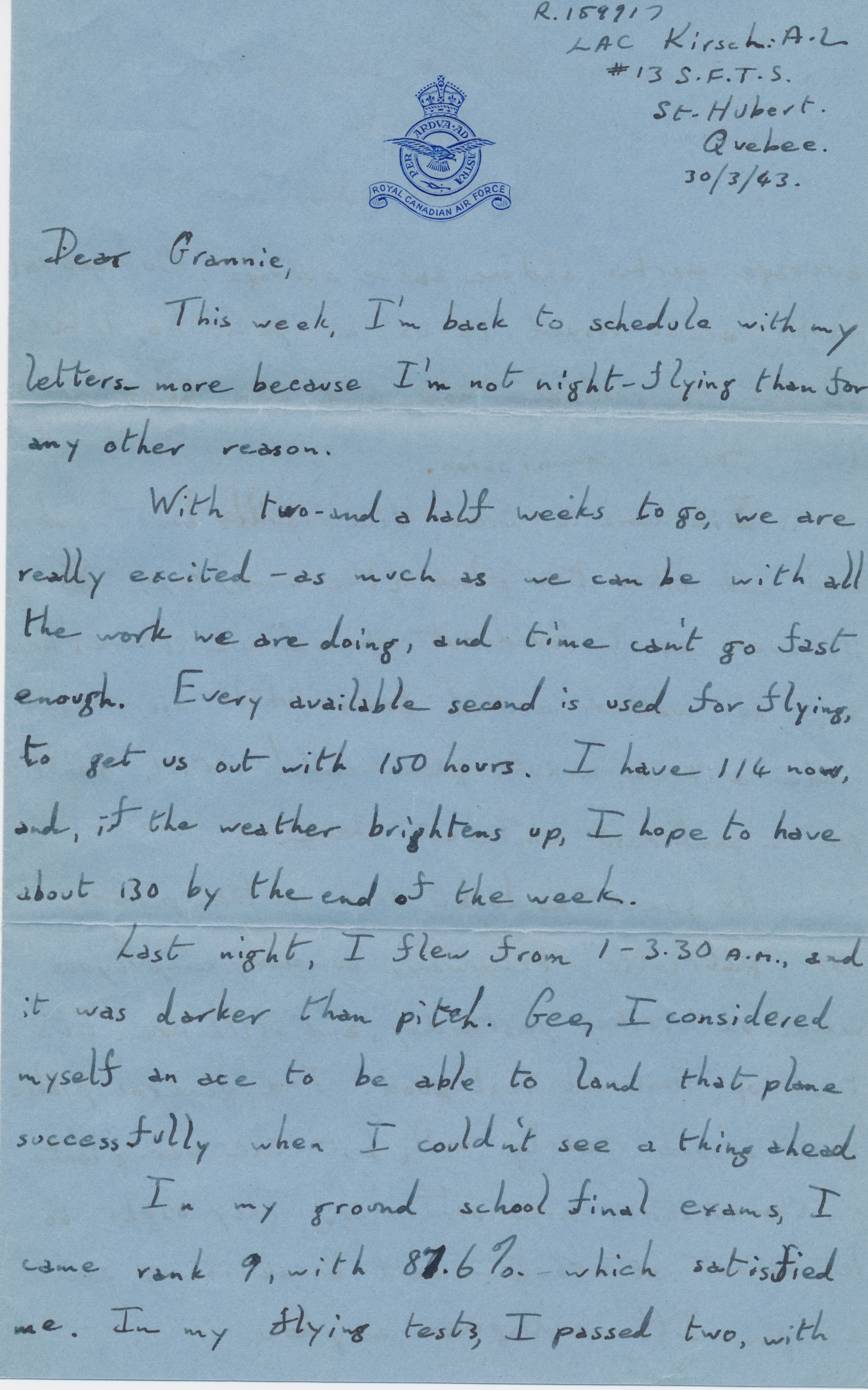
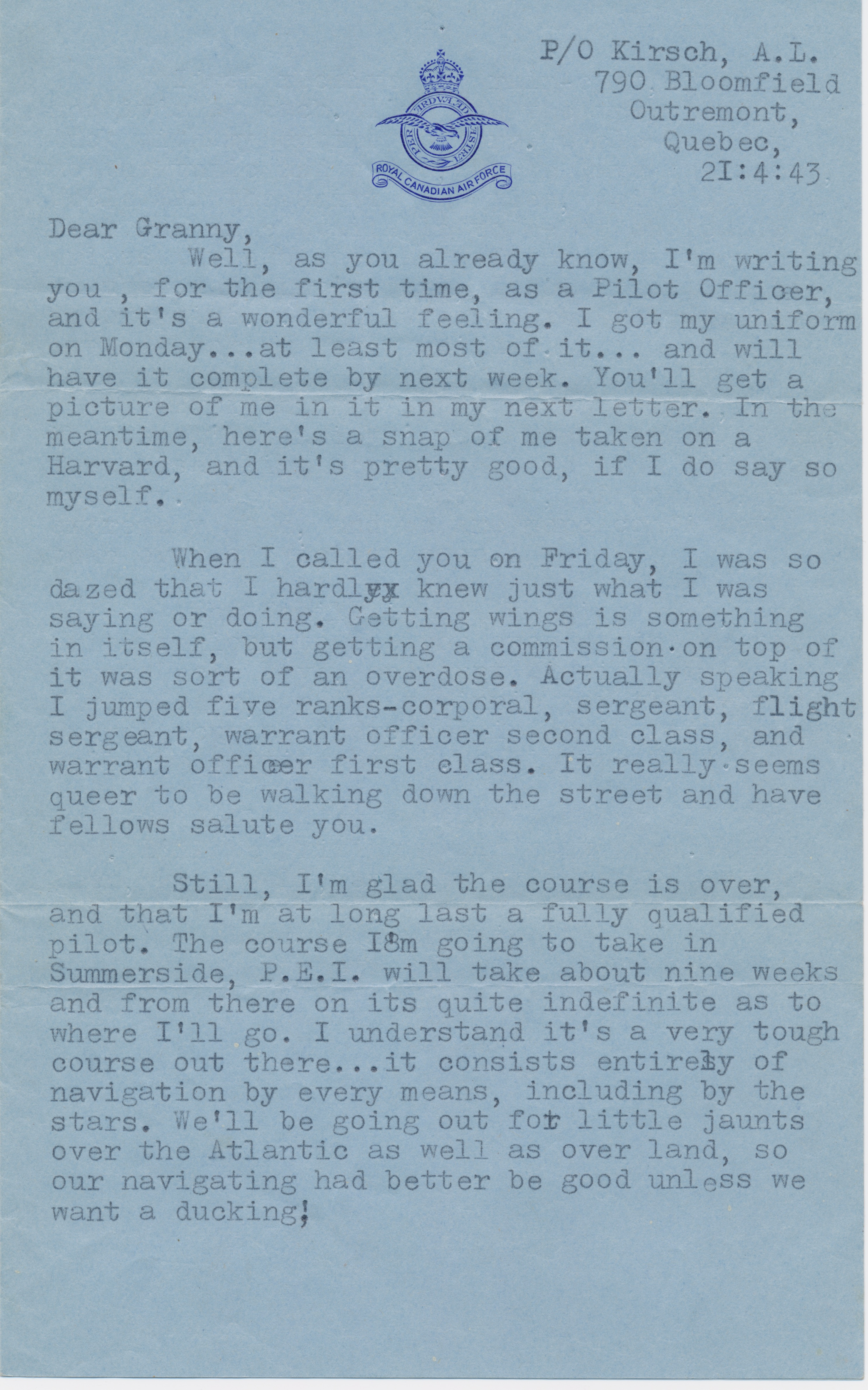
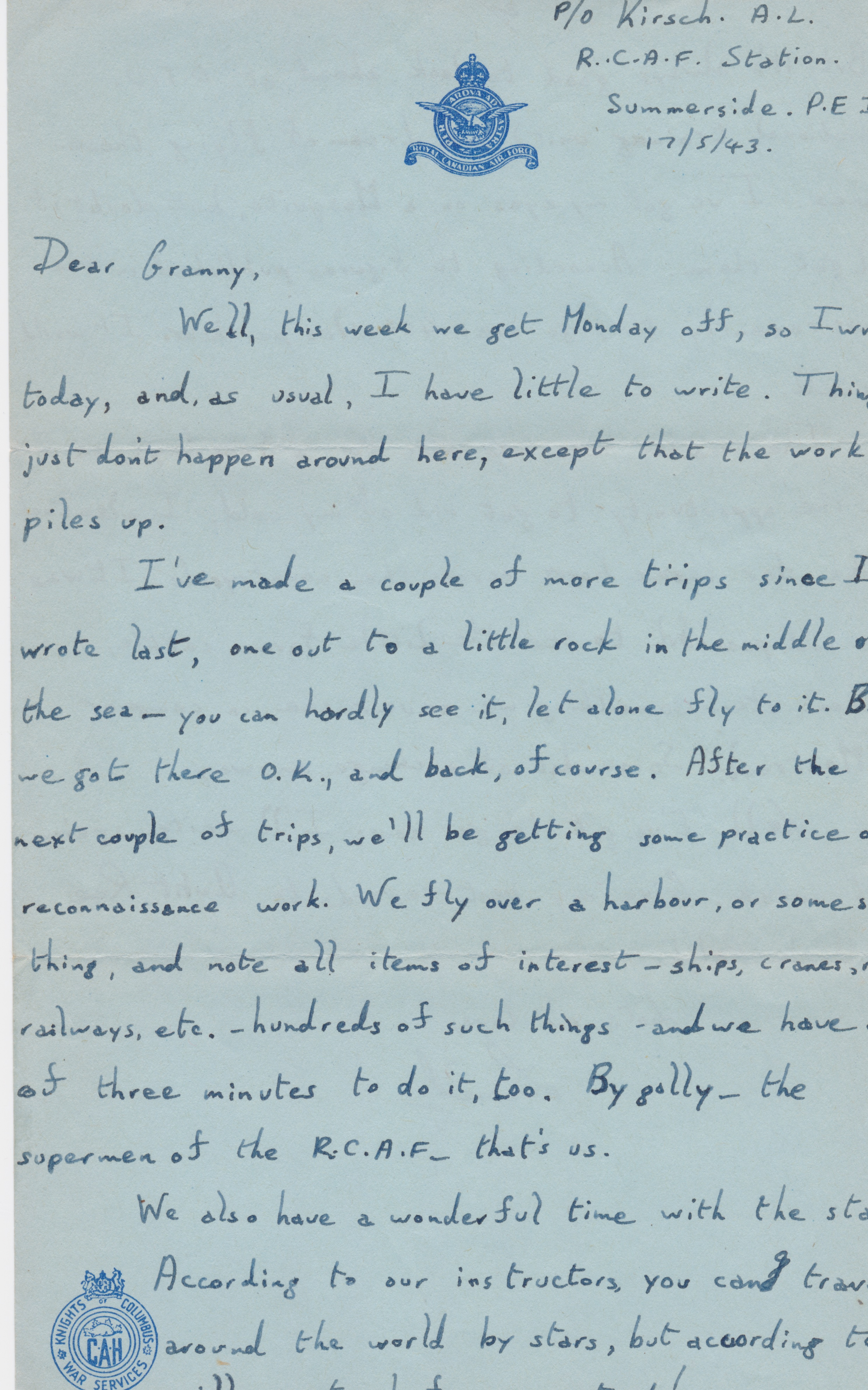
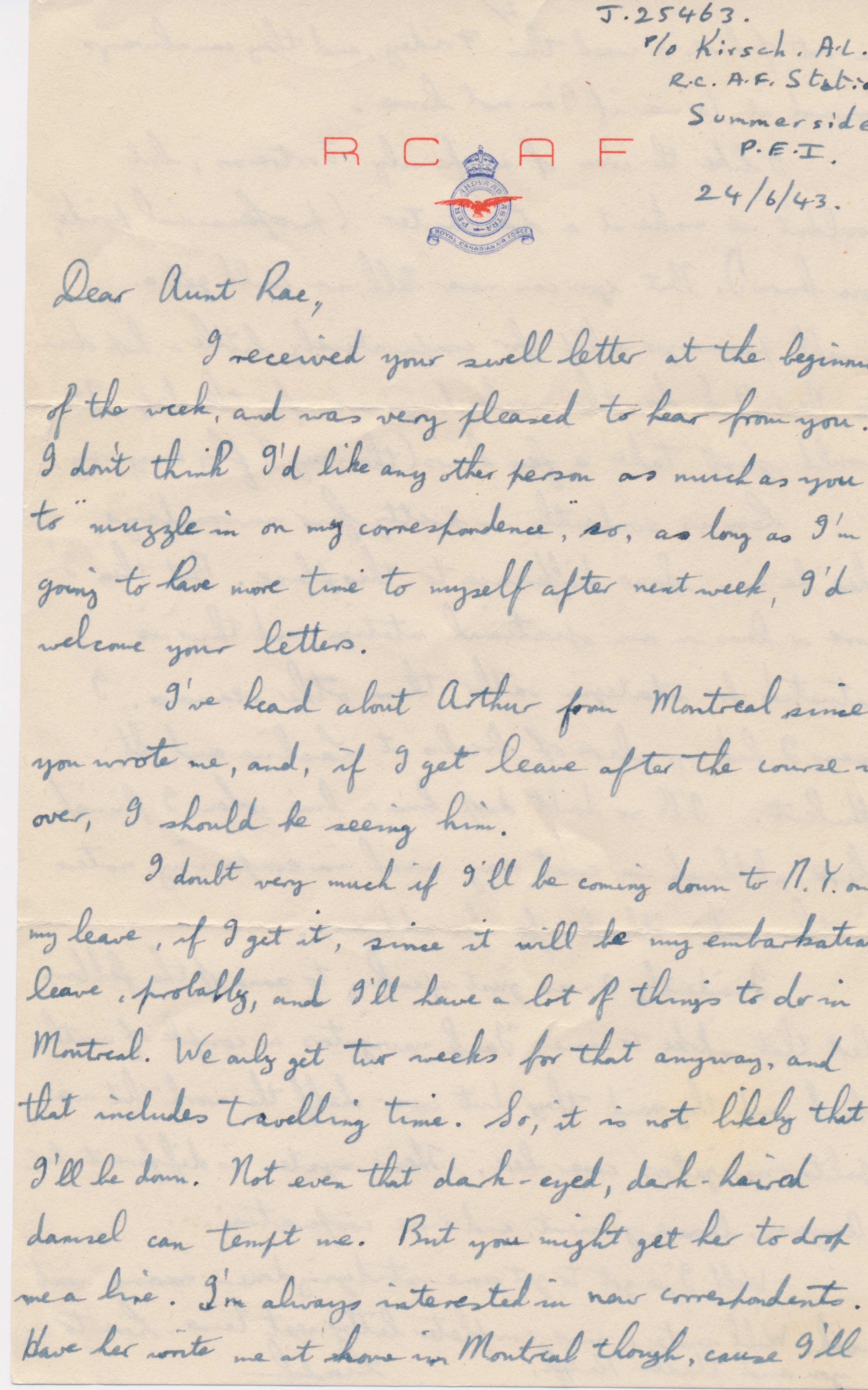
Abraham Lionel Kirsch wrote to his family regularly – almost every week like clockwork. Most of the letters that his sister Elma shared with us were written while he was still in Canada. They are addressed from where he was stationed at the time: Victoriaville, Cap de la Madelaine, Outremont, St. Hubert, Summerside, “Overseas”, or no postal source at all, as the censors were watching.
Lionel’s “Granny” lived, at that time, at 3475 Vendome Avenue, Montreal, which today is still a very tidy middle-class neighbourhood.
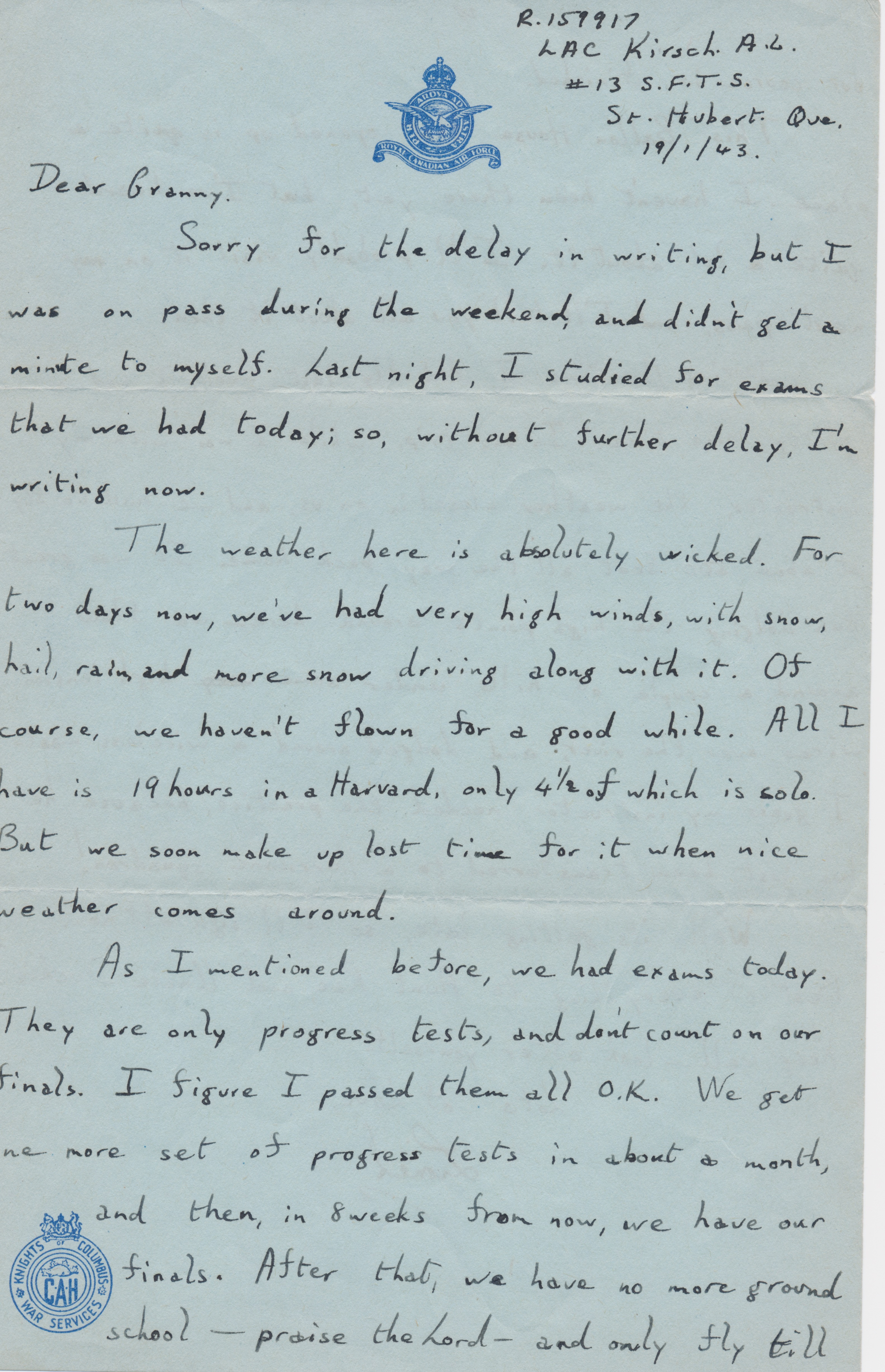
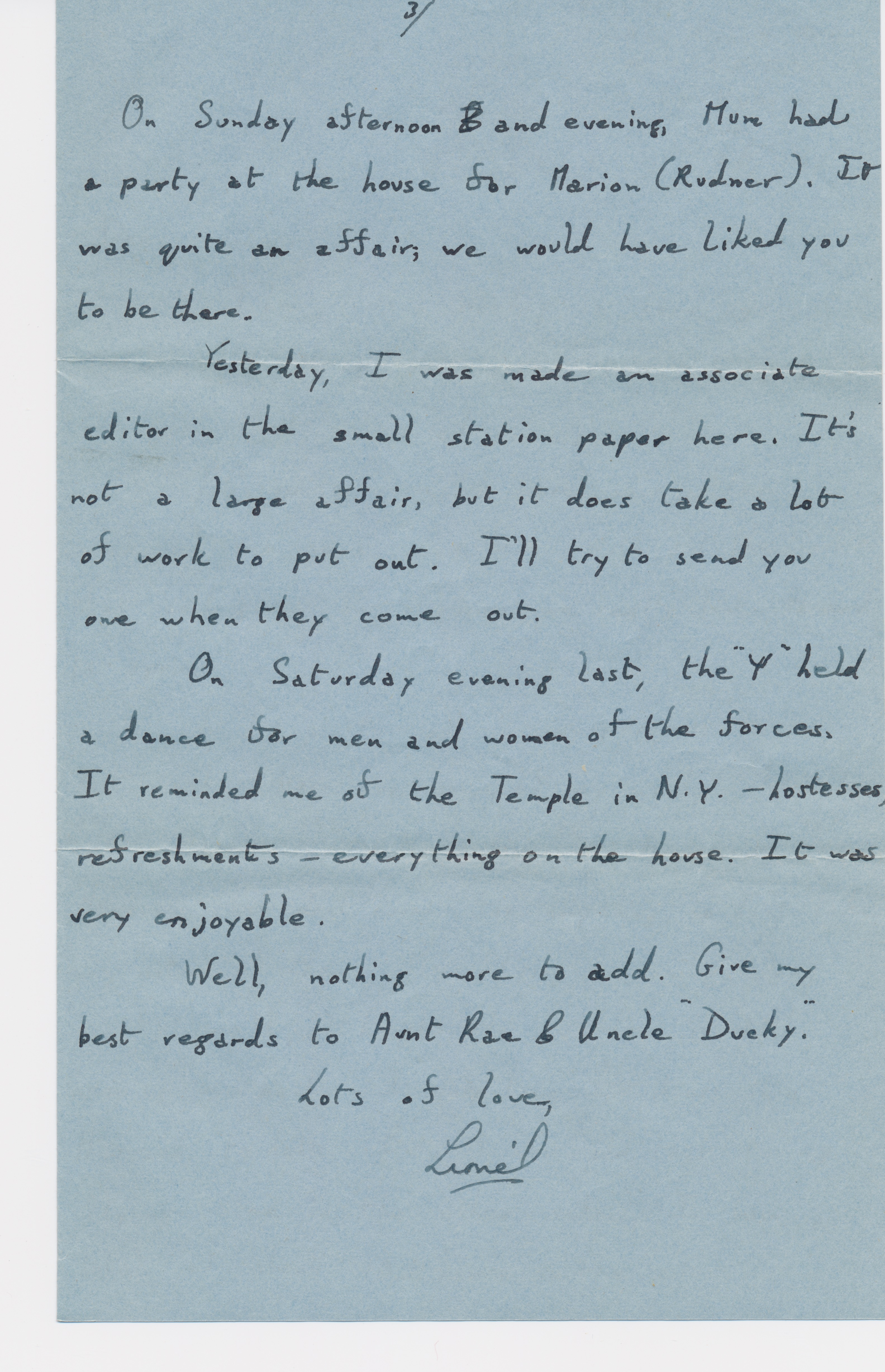
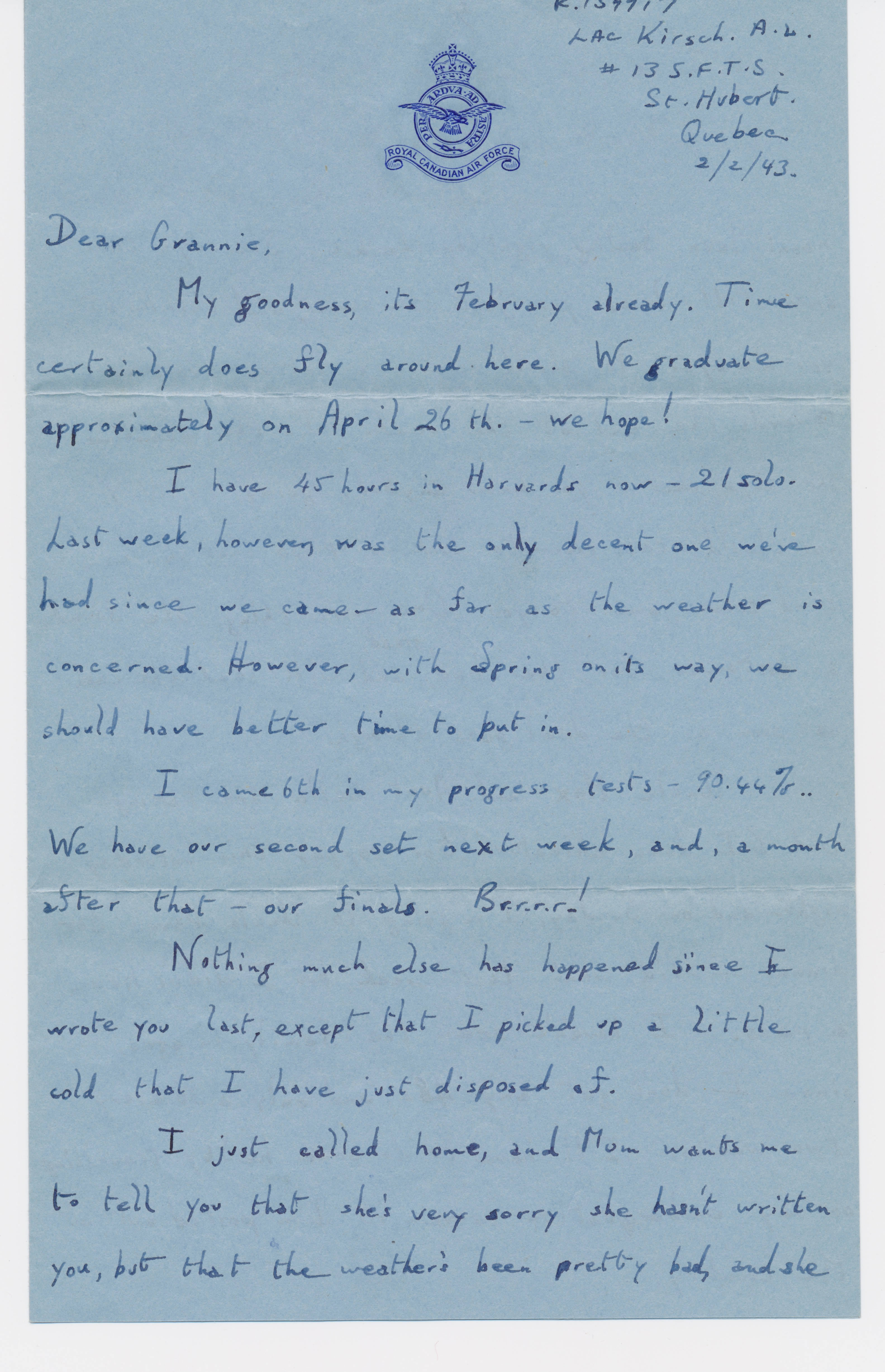
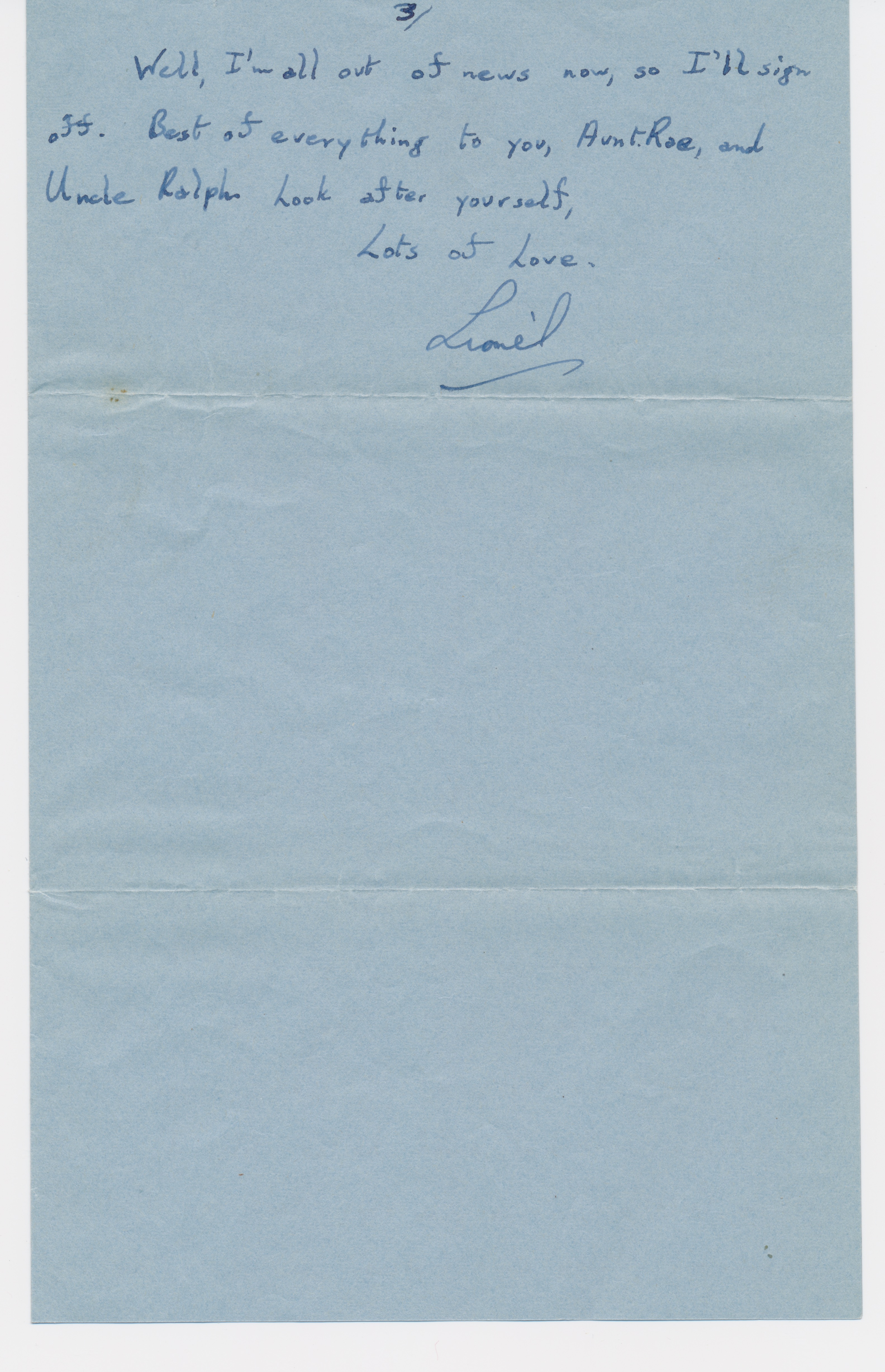
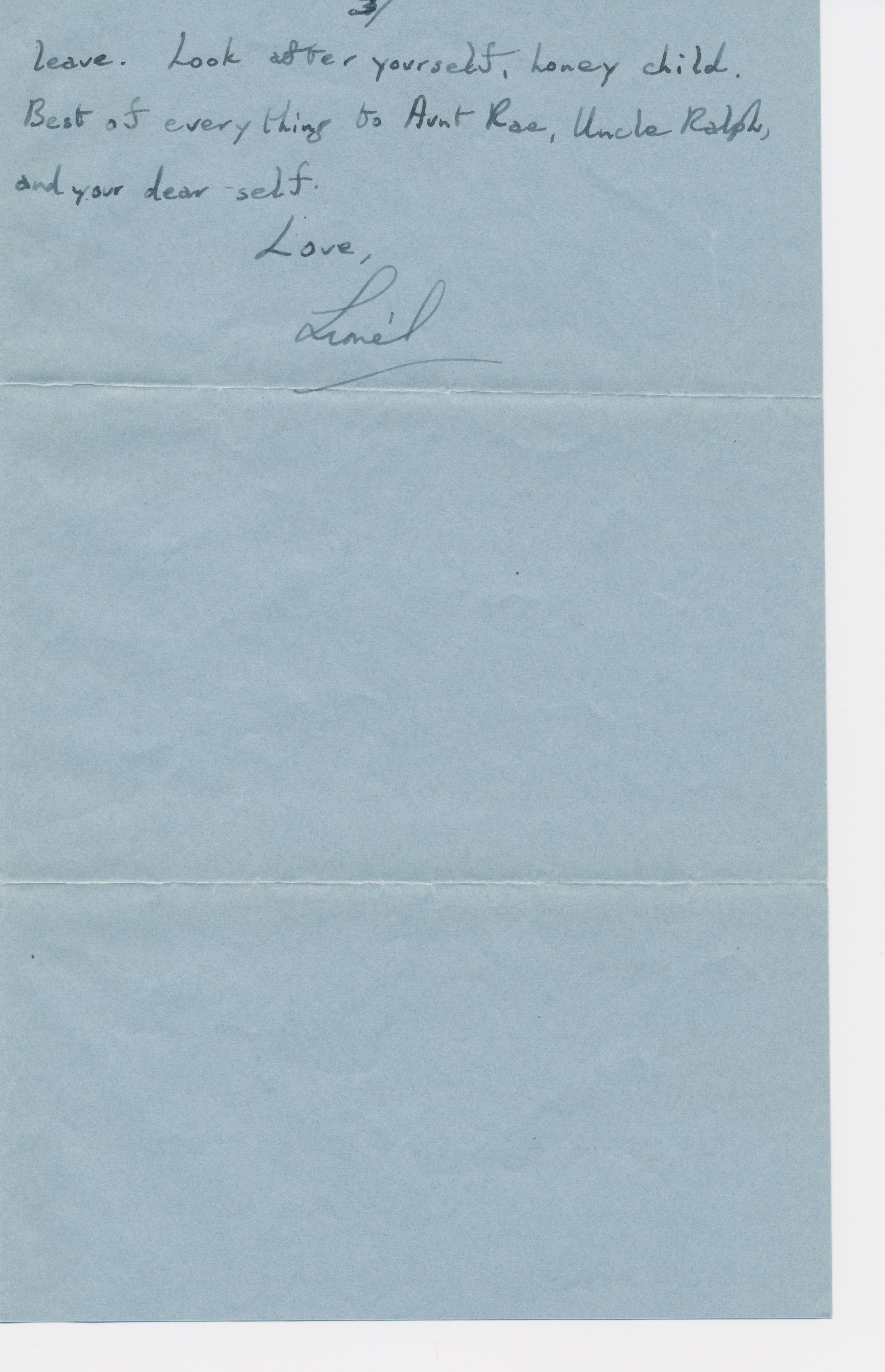
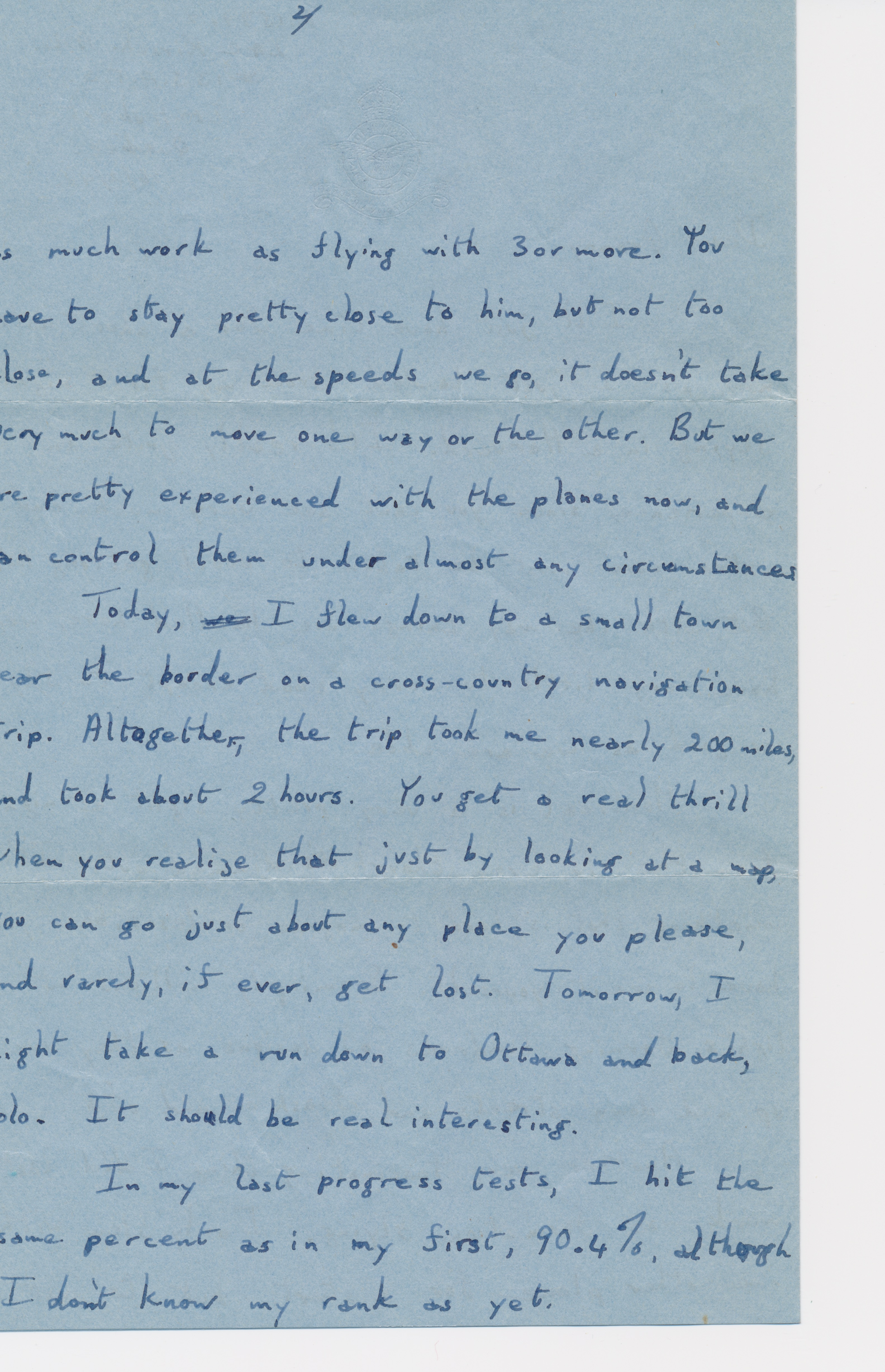
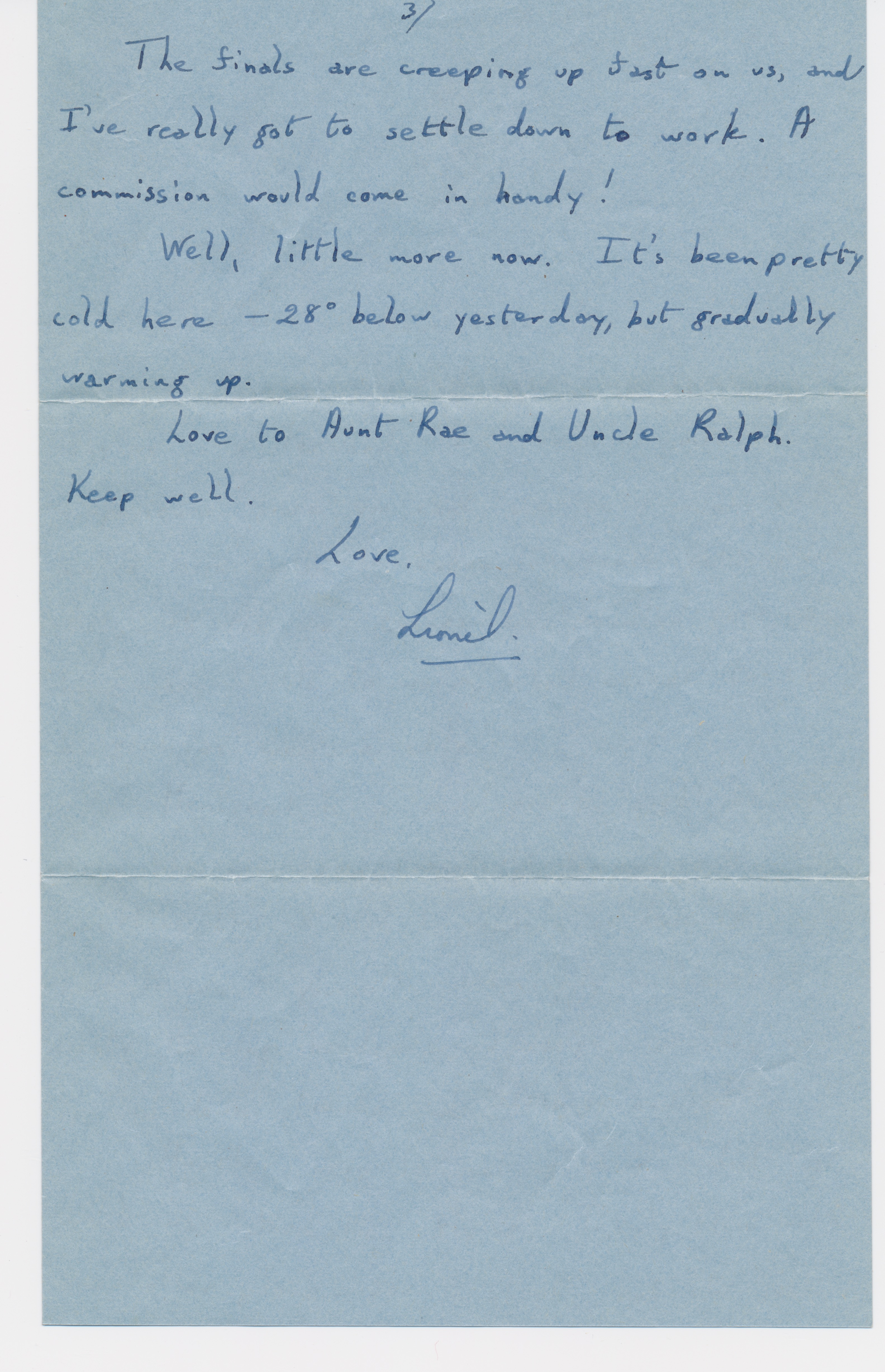
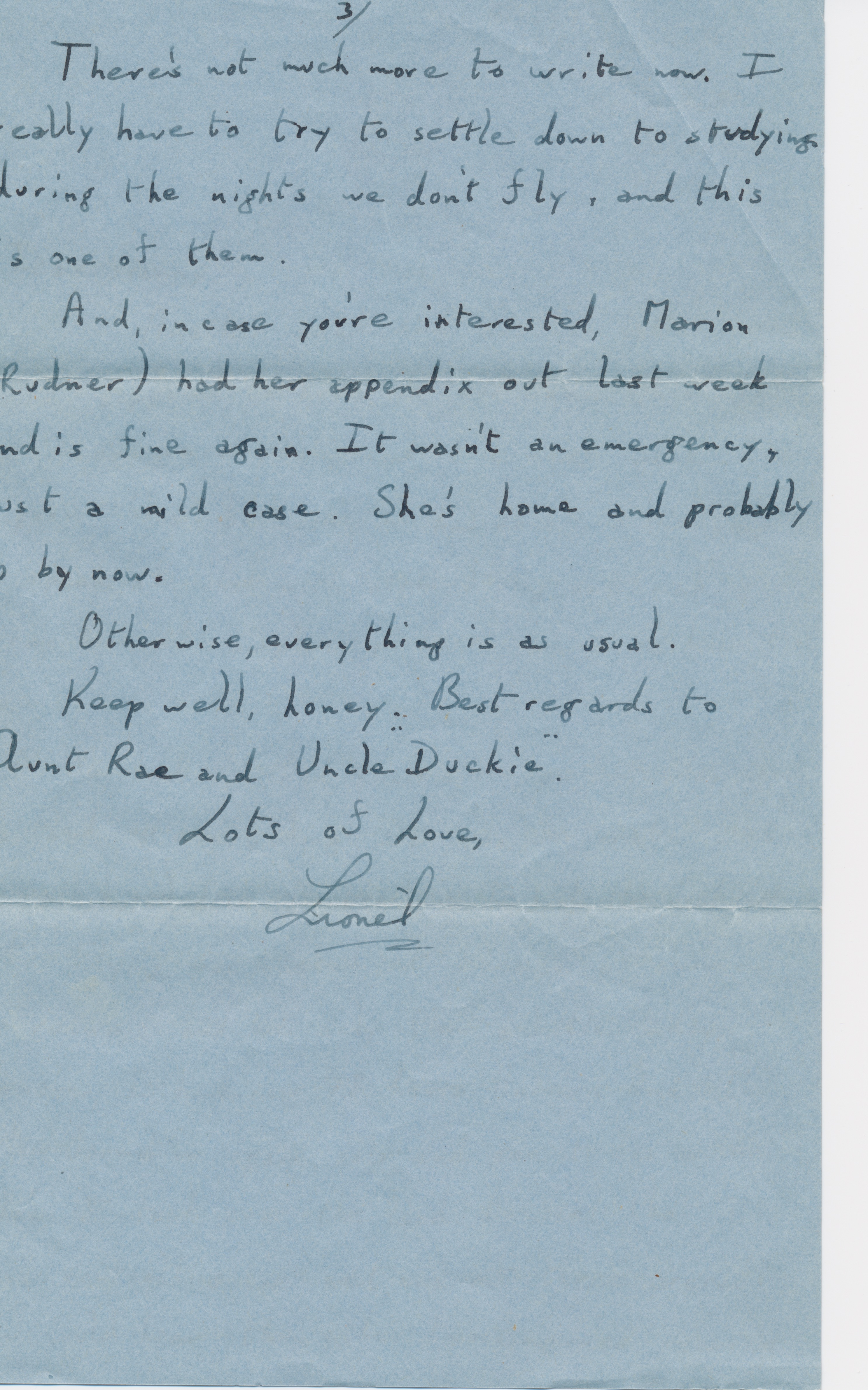
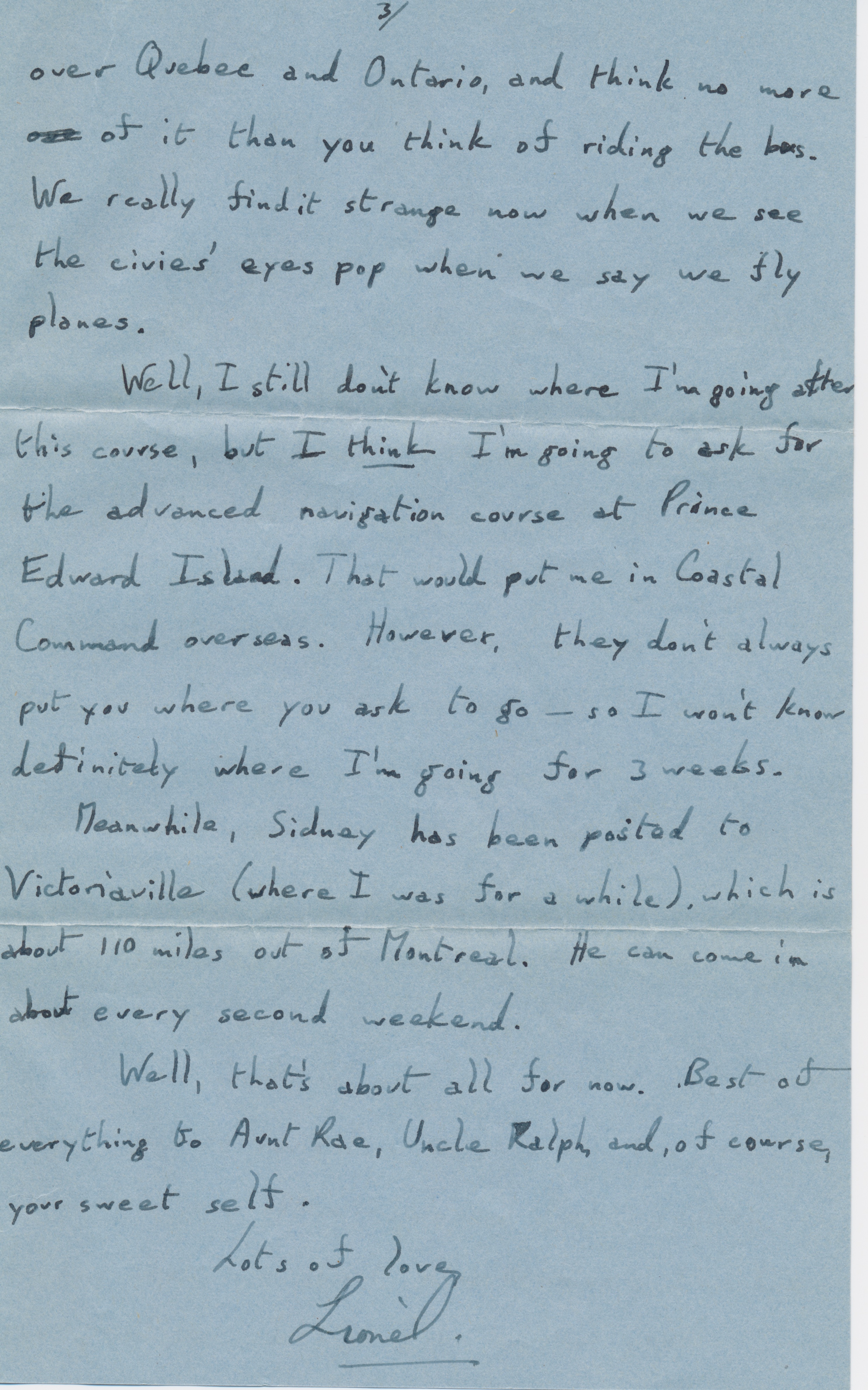
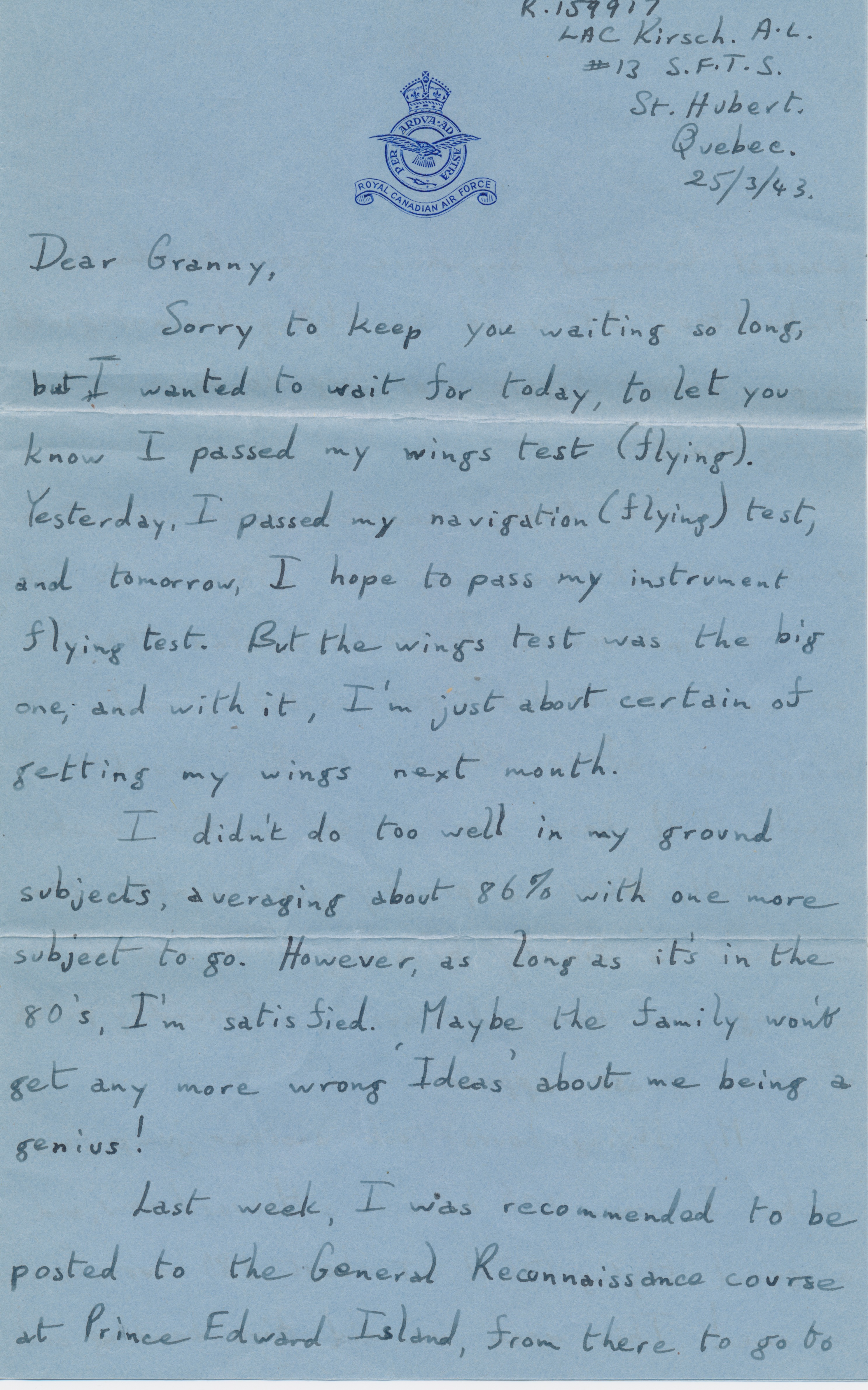
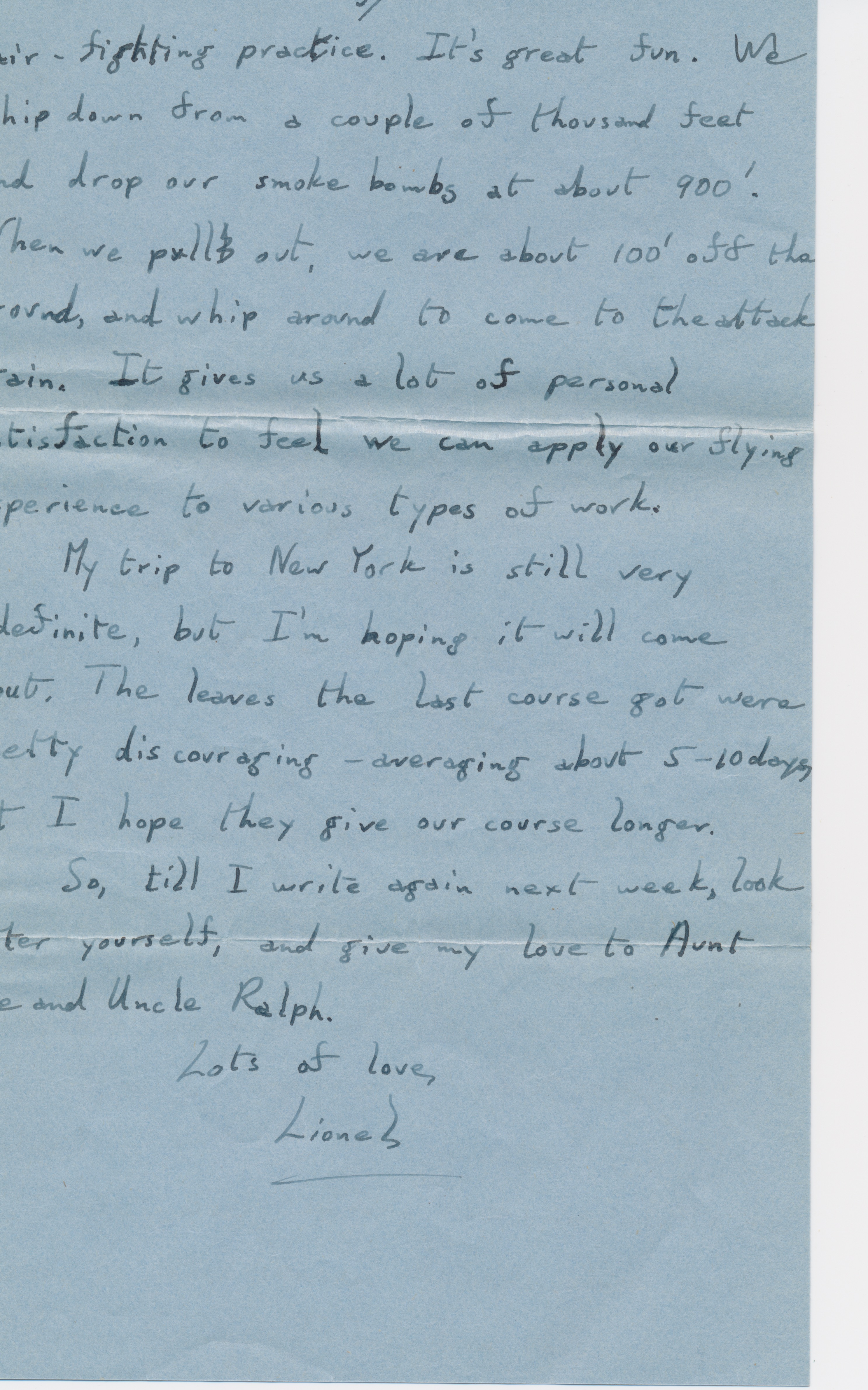
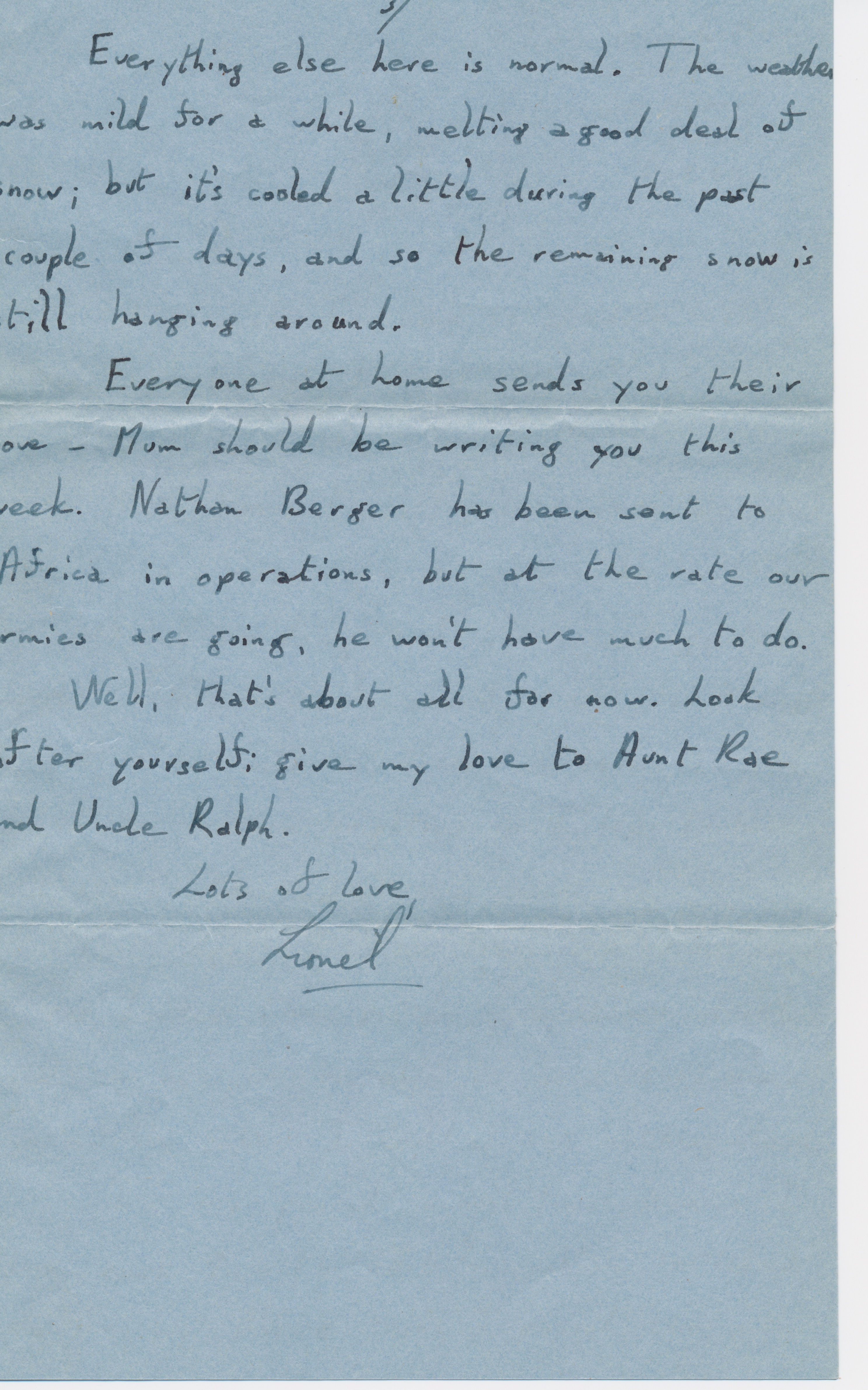
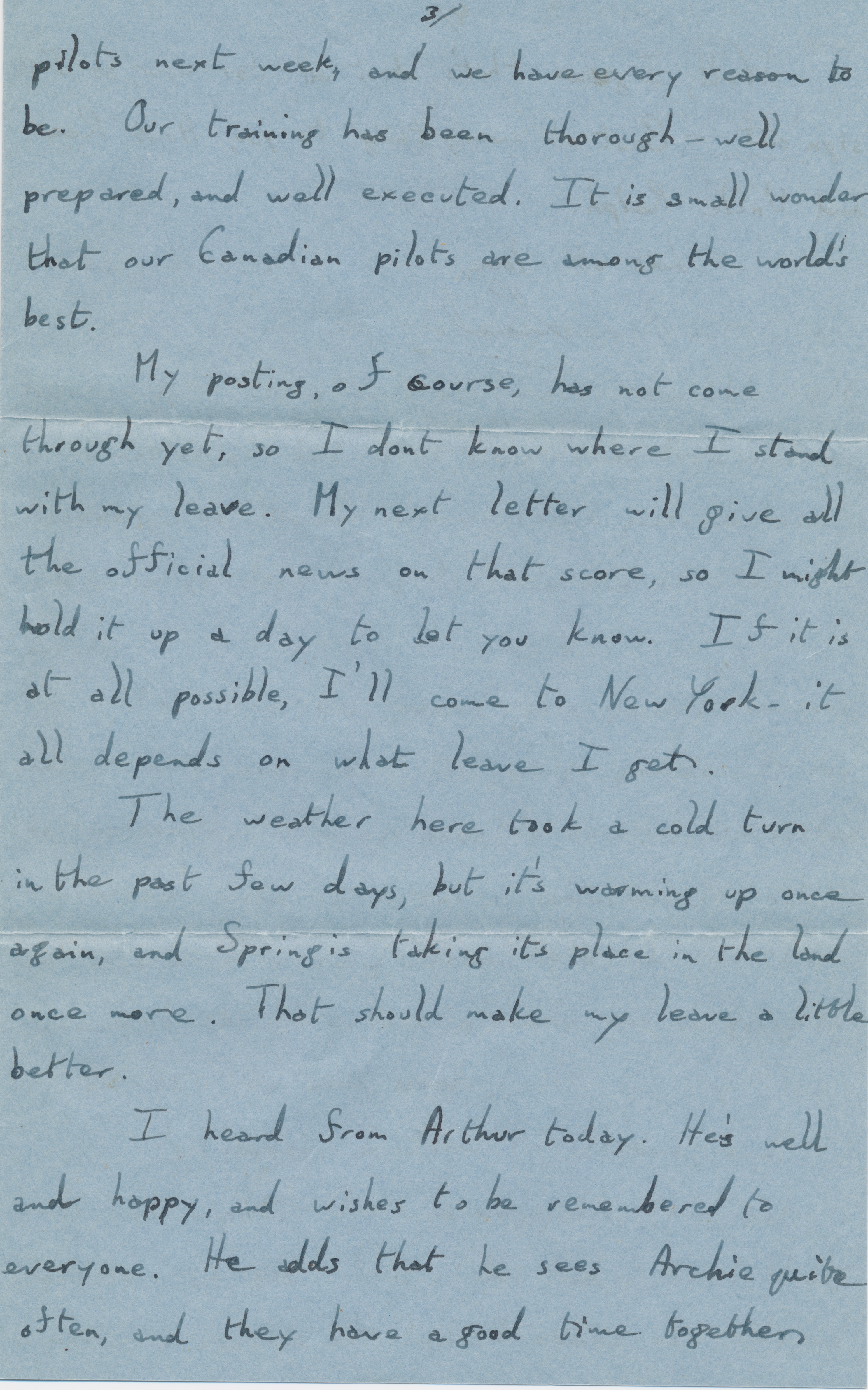
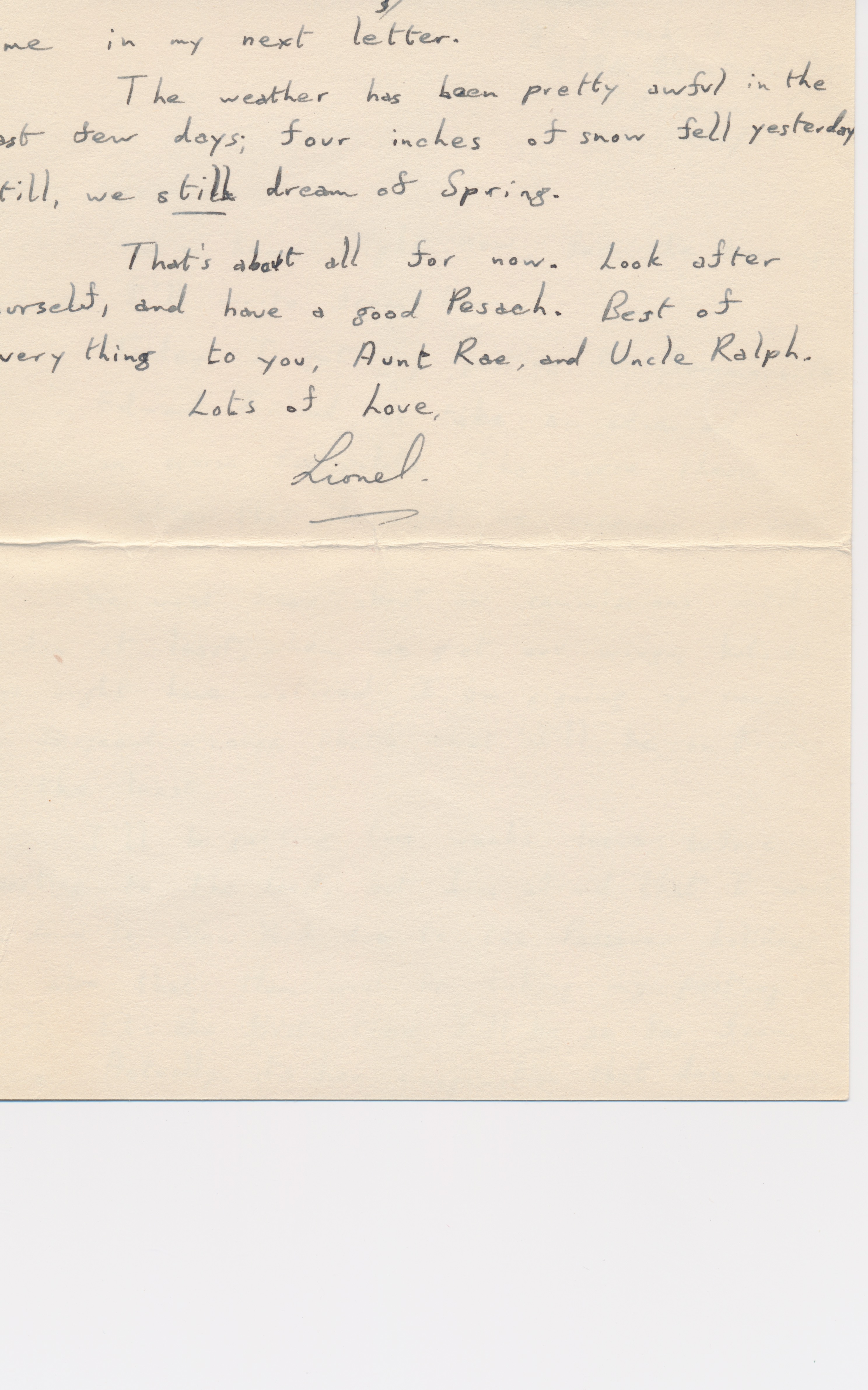
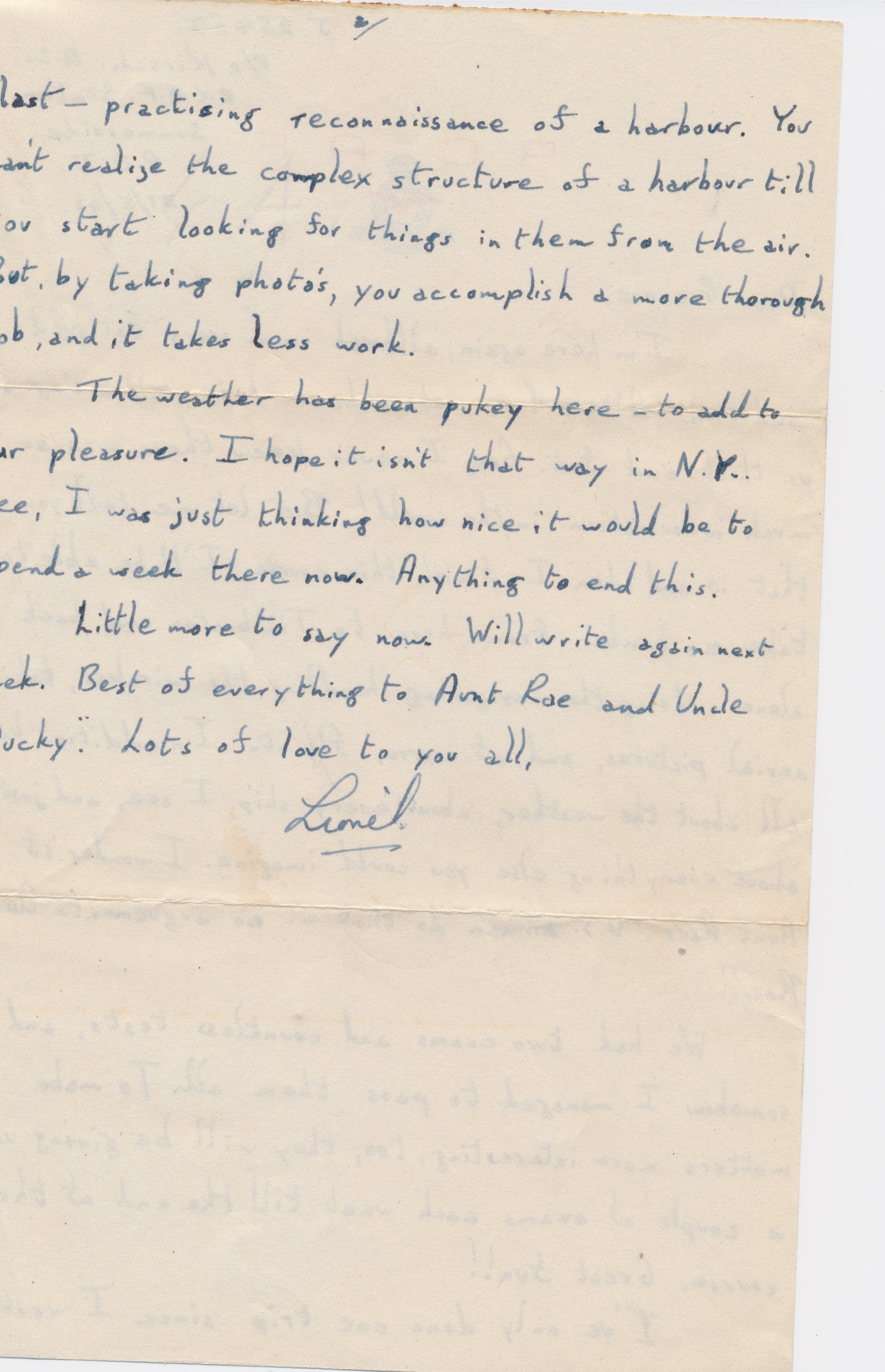
Just as it can be noticed that meetings tend to last as long as the time they are scheduled for, seldom any less, letters tend to be the same. Letters tend to fill the space available and then stop. Lionel’s first letters filled all the space on both sides of a page, later as he added a “folded page” there was blank space left over. Lionel is a very careful writer with a quite legible script, he writes with a regular spacing and attention to margins. His paragraphs are spaced and indented and grammatically coherent. Lionel was a well educated, literate, thoughtful man if his letters are any indication.
According to Elma, Lionel wrote regularly to his mother and father as well as to his “Grannie / Granny”. We don’t have any of his letters to his mother and father as they were destroyed – probably due to a form of grief Elma suspects. However, there are many letters Lionel wrote to his “Dearest Grannie / My Dear Grannie” and Aunt Rae and Uncle Ralph. It’s amazing that these letters, recently scanned (2016) from their original into digital format, are now 74 years old!
Here they are:




























London has been bombed.


Lionel and some buddies went into London to see the sites.
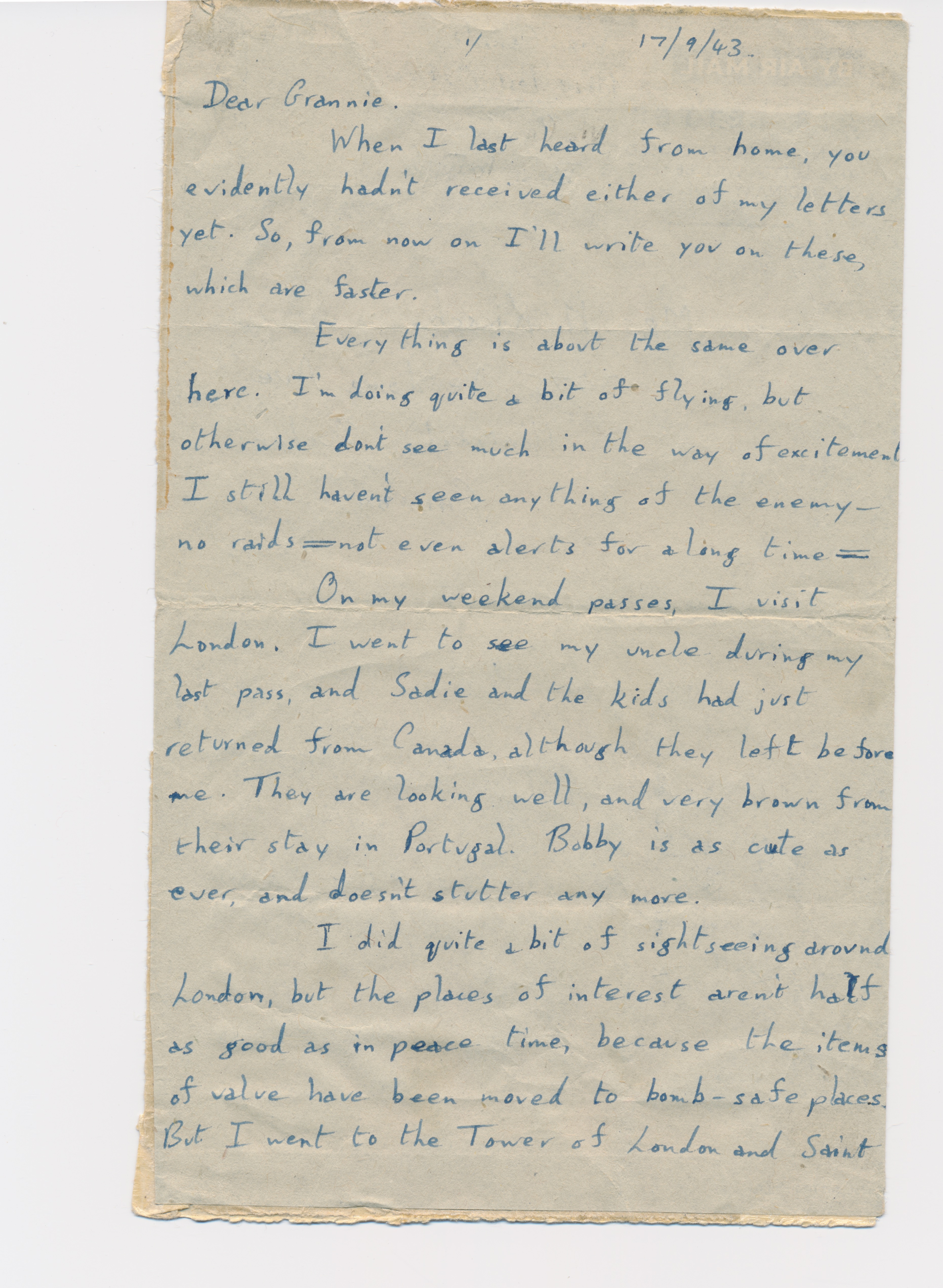

He bought a bike today to get around on.


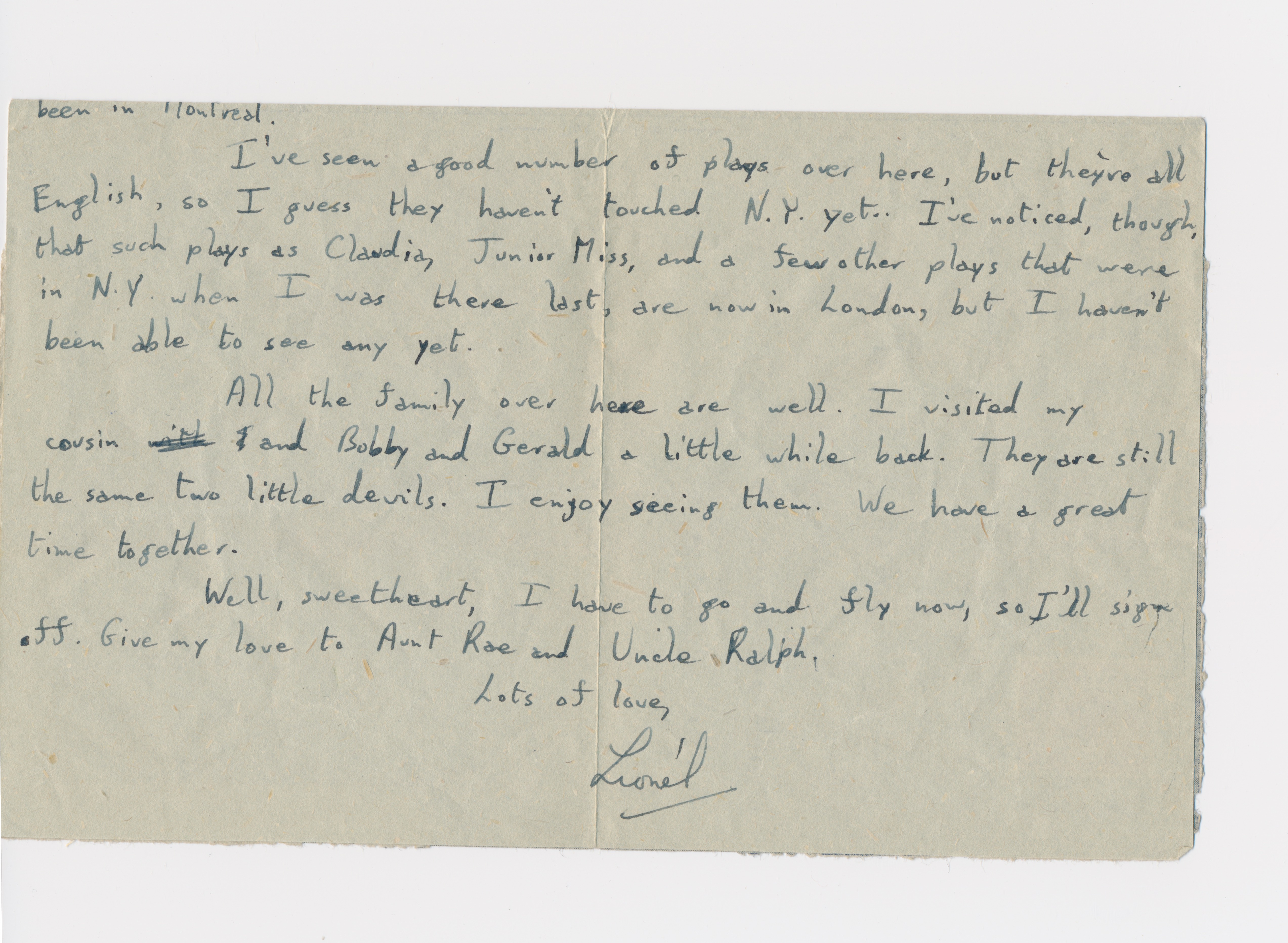


Lionel experimented with space usage by writing ‘across’ the paper.

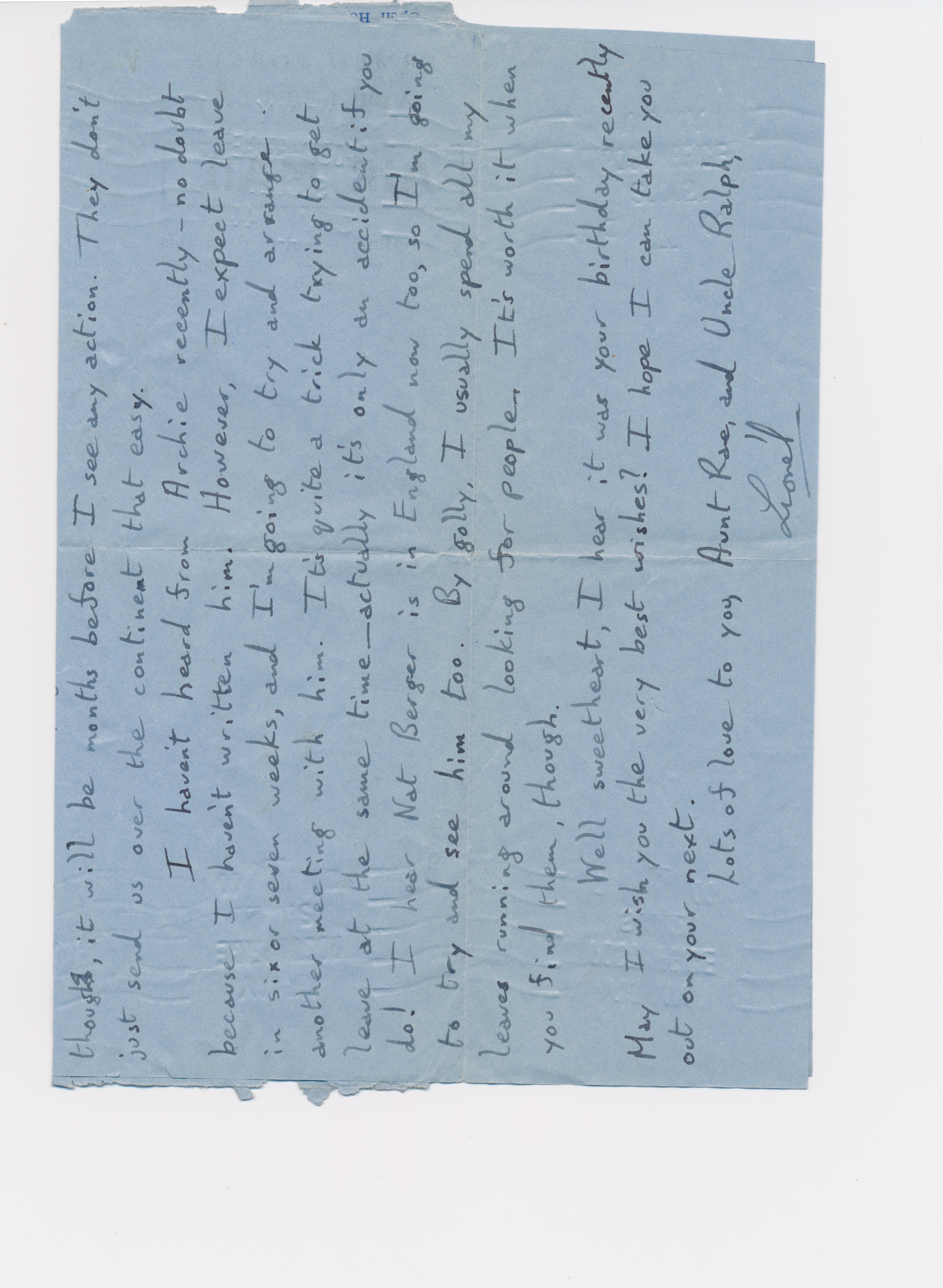

The next letter is the ‘last one’ that Elma has, dated prior to Lionel’s death in September.


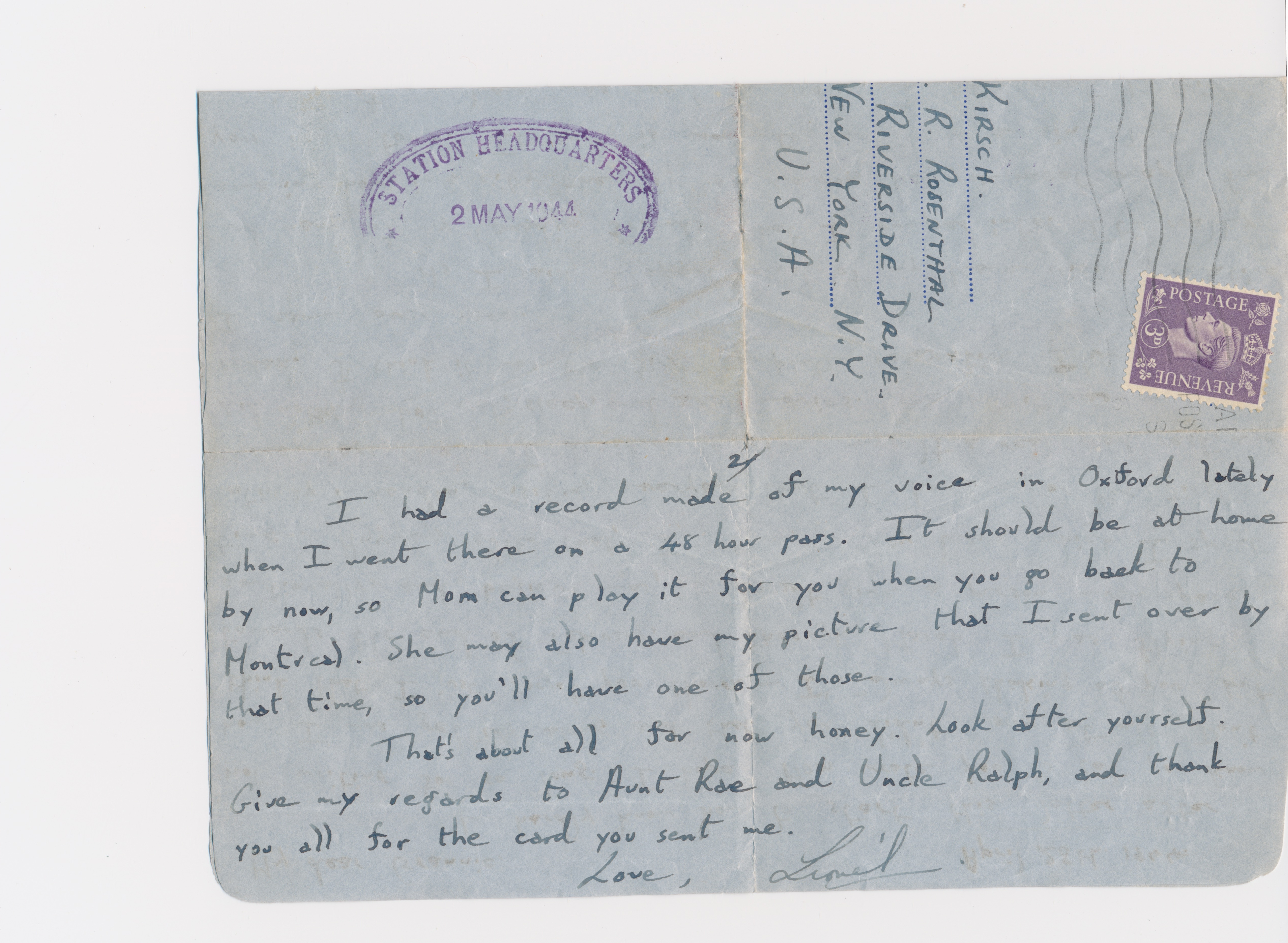

Airmail letters were written on one piece of paper. As much space as possible was used. All mail could be opened and read by an official ‘examiner’ who could censor the contents to ensure war security. The next two letters show the ‘outside’ of the folded letter, and that they had been read by an examiner.

