
Clive Morant #1279554
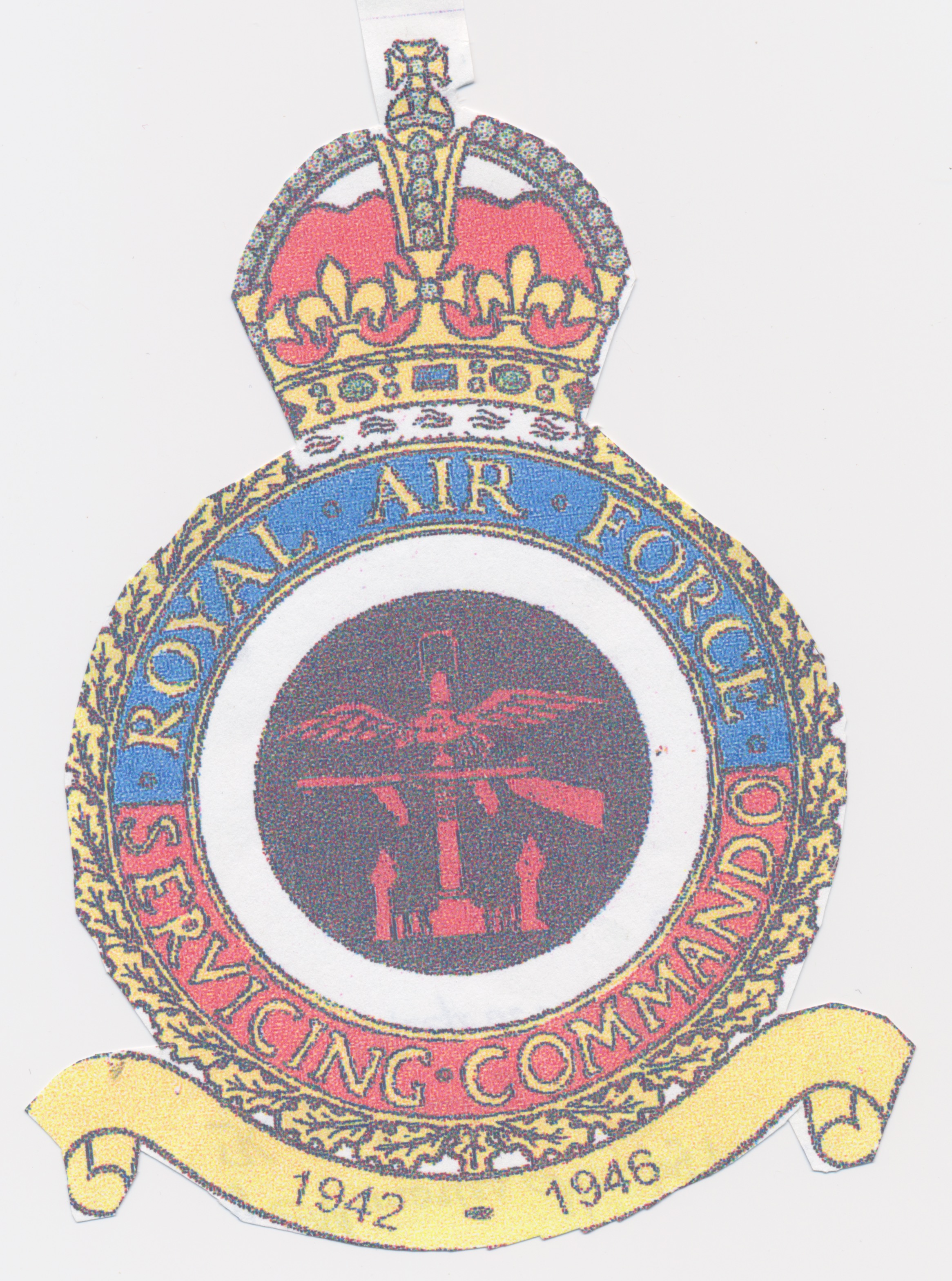
3207 Servicing Commandos R.A.F.
182 Squadron R.A.F.
This is Clive Morant’s story in 4 parts. The first part is Clive’s recollections, in his own words, of his earlier life. The second part is the narrative summary of Clive’s war years as related in an interview with Barry Wolfe of the Strathroy – Caradoc Lions Club. The third part is a series of anecdotal stories chronicled by Clive’s granddaughter, Chloe Morant, from chats she had with her grandfather over the years. The fourth part is Clive’s recollections, in his own words, of “The Post War Years”.
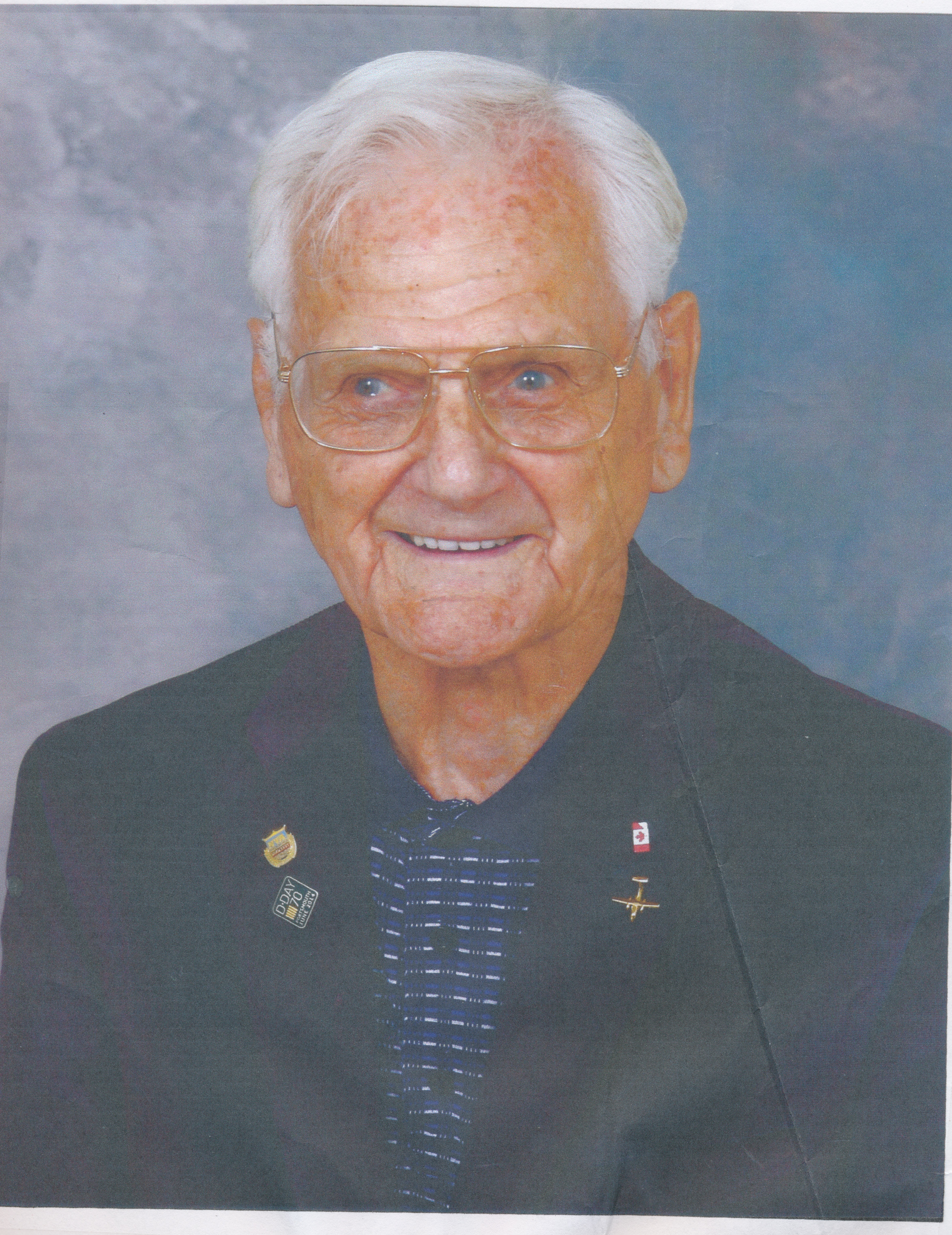
Clive Morant in 2016
Part One: Clive’s Introduction
“I entered the world on February 3rd, 1923, in a rented house at 14 Lowcay Road, Southsea, Portsmouth, England. 14 has been a very important number throughout my life as these pages will record. My mother, Laura Hyde, worked as a seamstress in a large drapery store. My father, Felix Hayes, served as a naval officer in the royal navy.
“Unfortunately, I have no official documentation or factual knowledge of the reasons, but early in my infancy, I was adopted by another naval family, Sidney Morant and his wife Betty. Neither my natural parents nor my foster parents have ever explained the facts, why, the reason of the momentous changes in my early life.
“To add to the problem, in 1940/41, during an air raid, our home in Hale Street was destroyed, and my foster parents lost most of their home including a box of personal family information which I am sure I would have found “Very interesting!”. In fact, that was the second home damaged during the war. So, for personal reasons, I never relate or pursue the facts that decided my future.
“Except in January 1961, having been known by the name “Morant” for so many years, I officially changed my name from Hayes-Hyde to “Morant” by deed pole so as to establish my identity for clarity. The vid in my life will never be happily filled, but life moves on.
“The facts show I actually controlled my own life from an early age. I joined the Royal Navy Cadets and later the National Association of Boys’ Club. I joined a boxing club, I swam in competition for my school and found part-time jobs to provide pocket money. Receiving an allowance from the family was out of the question in those “Depression Years”. In actual fact, I contributed (as expected) on a regular basis to the family income from my after-school activities. Plus, I continued a monthly allowance from my monthly service pay to my stepmother throughout my service career from 1941 until 1944, when to my step mother’s disappointment I canceled her allotment when Vera and I were married.
“Sydney Morant, my father, was often at sea for 2 – 3 years’ duration, and stationed in various naval institutions throughout the U.K. and overseas, which meant we were continually moving our accommodation. The result was my family life was very very disjointed, and the many different schools I attended interrupted my education seriously. Plus, I spent several periods in hospital, including one long spell suffering from burns caused by a gas leak explosion in the kitchen when I was preparing my breakfast, and my mother’s tea to be served in bed, prior to going to school. It all contributed to one of my biggest regrets in life, a lack of an education.
“In 1932 my foster parents added a baby girl, Lily, to the family. In 1953 she married Cyril Burrell and they were blessed with two children, Steven and Linda. They originally started family life in Portsmouth, but later moved to settle in Somerset. Linda married Robert Cole in 1976 and now lives only a few miles from her mother. Steven, who suffers from ill health, now lives with his mother after separating from his “girlfriend” after 15 years.
“My stepmother supplemented the family income, as naval marriage allowance pay barely met the basic needs, by working as an assistant school caretaker in my own school. This meant thatmy “after class” hours were helping her dust and sweep the classrooms, including my own, plus cleaning out and relaying the fireplaces in 6 other classrooms for the following day. Needless to say, there was no hockey, baseball, or playtime for “little Clive”. The 1920s and 30s are known as the “Depression Years”, and for me, they were in more ways than one.
“To earn a few pence at weekends I worked as a coal merchant chopping wood plus filing and delivering 52 lbs. sacks of coal or coke throughout the neighbourhood. When I finally left school at 14 years old, I obtained work with a newsagent, but my desire was to be an electrician. My second job, in 1940, helped me to achieve my aim when I secured a position with ABC Cinema company as a projectionist/trainee electrician at the Apollo Cinema in Southsea. Sadly that has now been demolished. Eventually, I applied for an electrical apprenticeship and worked in the Portsmouth naval dockyard repairing damaged warships.
“During the period 1940-41 our house was badly damaged by a bomb explosion and we were temporarily housed in a vacated house. Unfortunately, a month later, that also was demolished during a massive air raid, and again we were moved to a temporary home. But, this time, in the village of Emsworth, approximately 10 miles northeast of Portsmouth. This caused me concern because I had no means of transport or money to travel the distance to work each day. The problem was solved when my school chum, Lenard Hacket’s, mother offered the chance to live with them, which was walking distance from the dockyards. So, I left “home”, lived with them, and continued working in the naval dockyard until I joined the R.A.F.
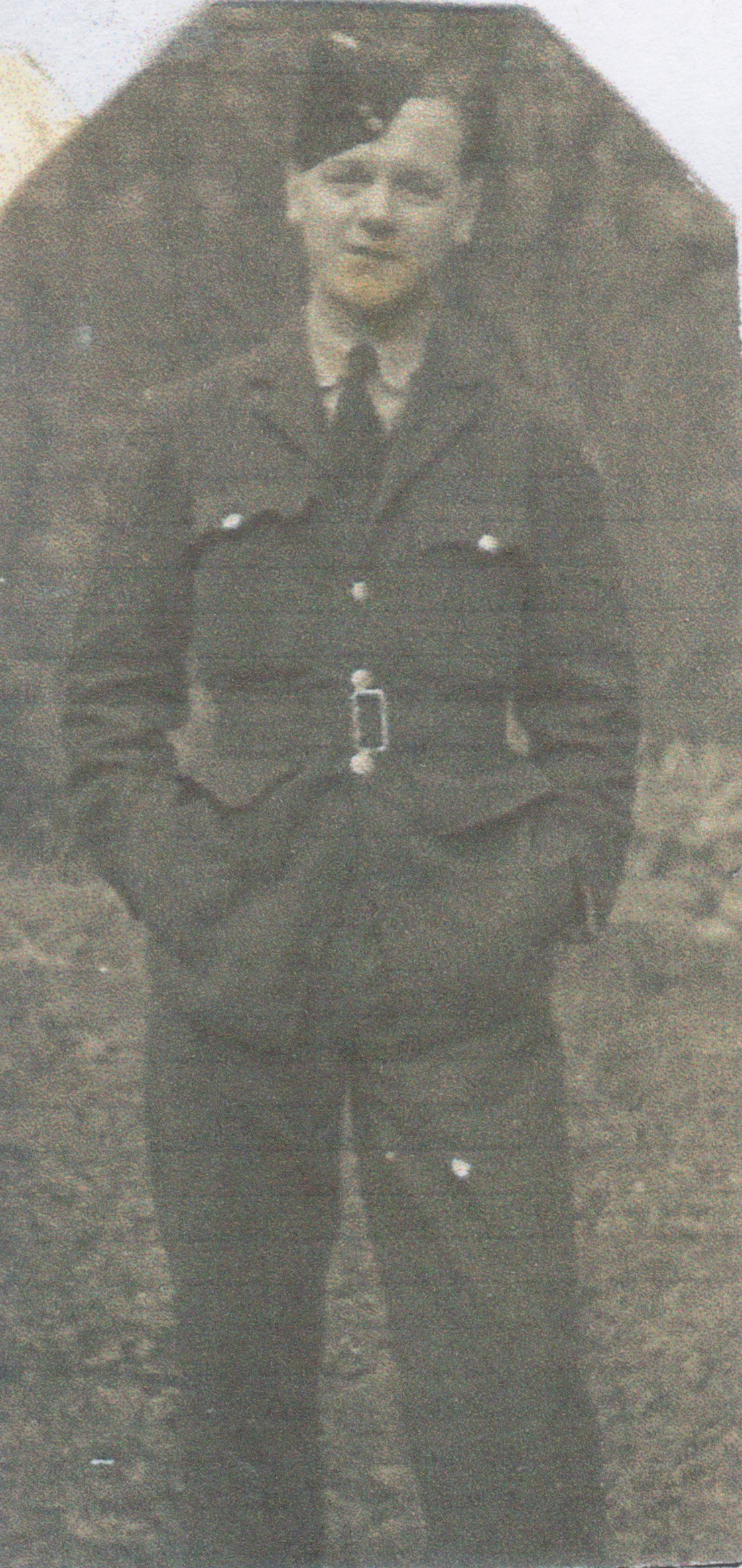
“During January 1941 I was wounded while assisting firemen during a bombing raid. After receiving surgery and spending the night in an overcrowded corridor in St. Mary’s hospital, I was transferred to a hospital in Alton, about 20 miles northeast of Portsmouth, for further surgery. The ward I was in was full of army personnel wounded on the beaches of Dunkirk. The transfer to the military hospital proved lucky because a few days later St. Mary’s hospital was badly damaged in another air raid, and the surgeon who patched me up, Dr. Mulvanny, was among the victims killed. My step parents paid me a visit during my recovery and informed me they were both living in Stornoway, in northeastern Scotland, where my stepfather was stationed. This was a planned effort by them to solve my step mother’s problem of having lost her home, as mentioned previously.
“During March 1941, while recovering in hospital from my injuries, I received my “Call-up” papers to report to R.A.F. Bournemouth for my basic training. I informed the doctor, an army captain, who promptly arranged for my train fare to enable me to report on time. This solved my future accommodations needs. Never was I to return to Portsmouth! So, a new chapter in my life began. I left my step parents’ home at 17 teen years of age to mold a new life.
“The most important event, of all the events that were ever to occur to me in all the years to follow, happened in 1943 when I met “the love of my life”, Winnifred Vera Payne.
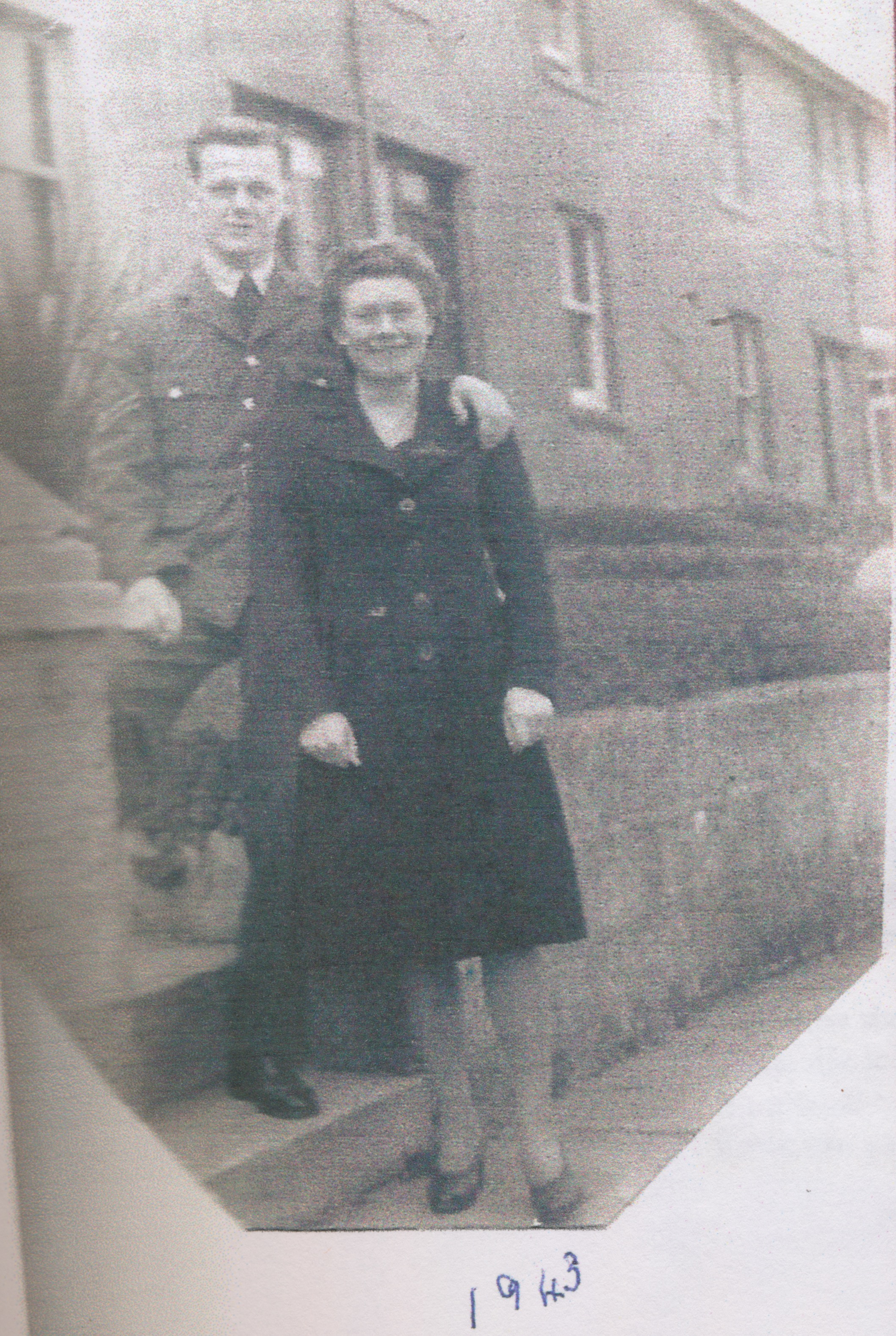
As a point of interest, Vera and I were married from Mrs. Hacket’s house, and my wife borrowed Dorothy’s bridal gown.

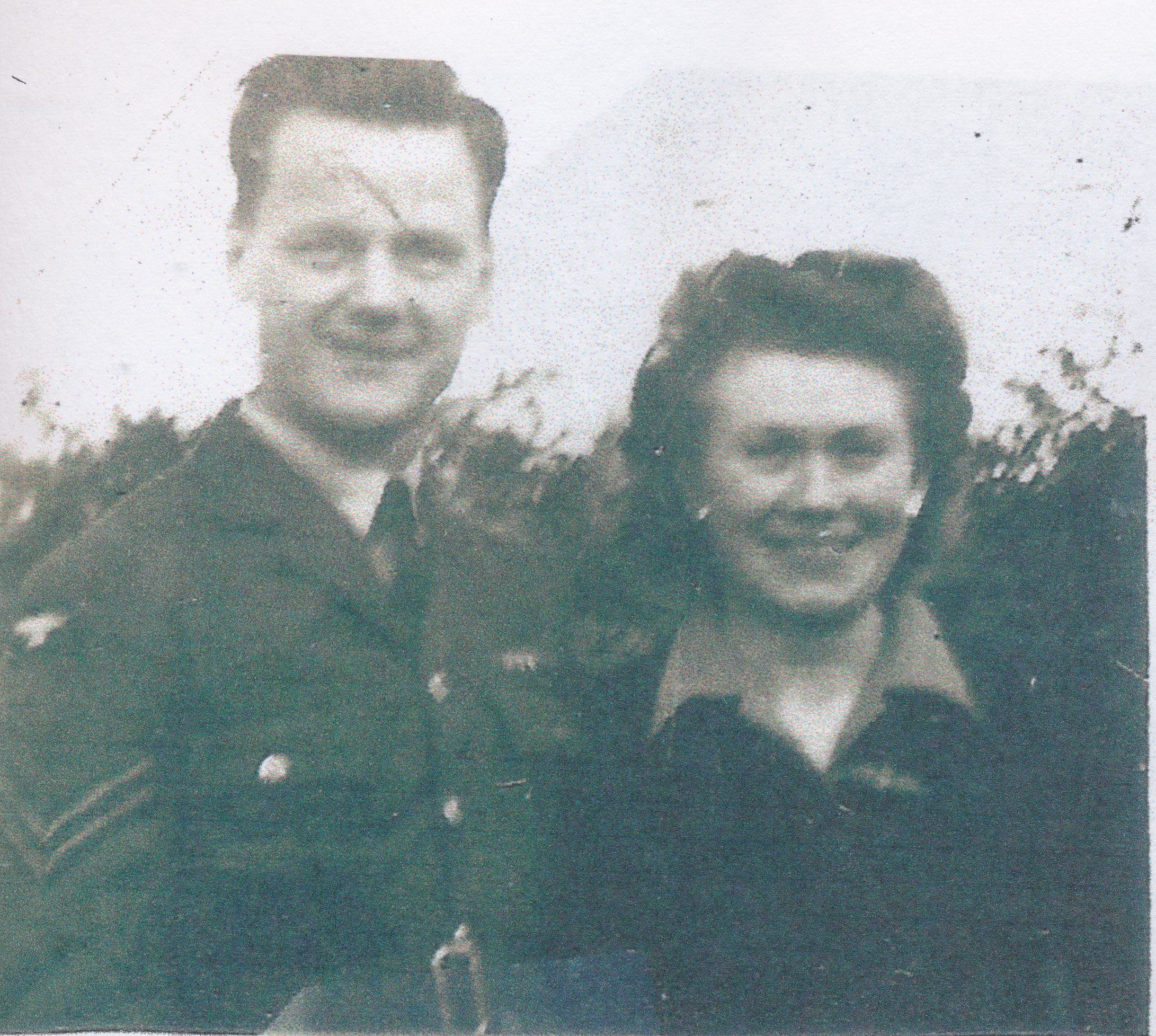
Vera was serving in the R.A.F. electrical section, in charge of battery maintenance. In March 1944 she became my wife. Unfortunately, the church we were married in, and which no longer exists, was badly damaged during an air raid the night before we were to be married. However we carried on, and one of my wife’s fondest memories was, on our leaving the damaged church. The firemen, who were still clearing up the damage, formed an arch with their shovels and brooms for us to leave. Unfortunately, we never had a camera to record that momentous day as cameras were not cheap in those days. To quote a well-known phrase – “The rest is history!”
Part Two: The Interview Summarized
Clive was born on February 3rd, 1923, in Portsmouth, England. He became an orphan when he was taken in by a foster family. He relates that he had a challenging, unhappy childhood, and did not have much of a formal education. He attended schools from age 5 to 14, but his attendance was frequently interrupted and he had to go to work at age 14. He worked in a series of low skill jobs and joined the Air Force in 1941.
His basic training was in electrical, and his first stationing was in Scotland at air gunnery school. He got “fed up” with that and joined the ‘special services’ in late 1942. He was placed at Inverary, Scotland for commando training in preparation for an unknown ‘future invasion landing’.
Clive was placed in the 3207 Servicing Commando Unit. a servicing unit is made of approximately 150+ specialists in various skills and trades. The 3207 was designed to service the needs of the Royal Air Force aircraft and pilots. These are the people who do the ‘servicing’ of the aircraft so that they are mechanically fit for flight and combat. The 3207 serviced fighter aircraft, not bombers.
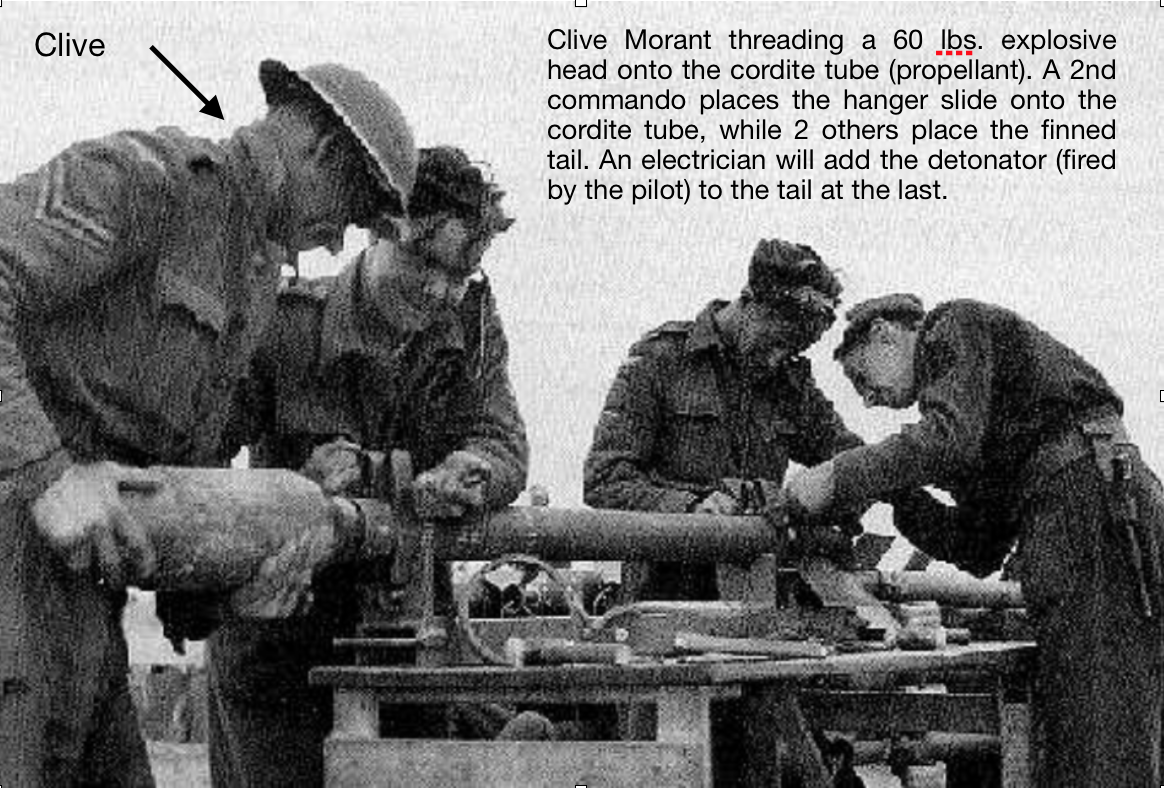
A serving unit had skilled specialists for such duties as: ‘fitters’ who serviced the engines, ‘electricians’, ‘airframe’ (wings, body, etc), and ‘armourers’ (bombs & machine guns). Clive was in charge of the electricians in his colour company.
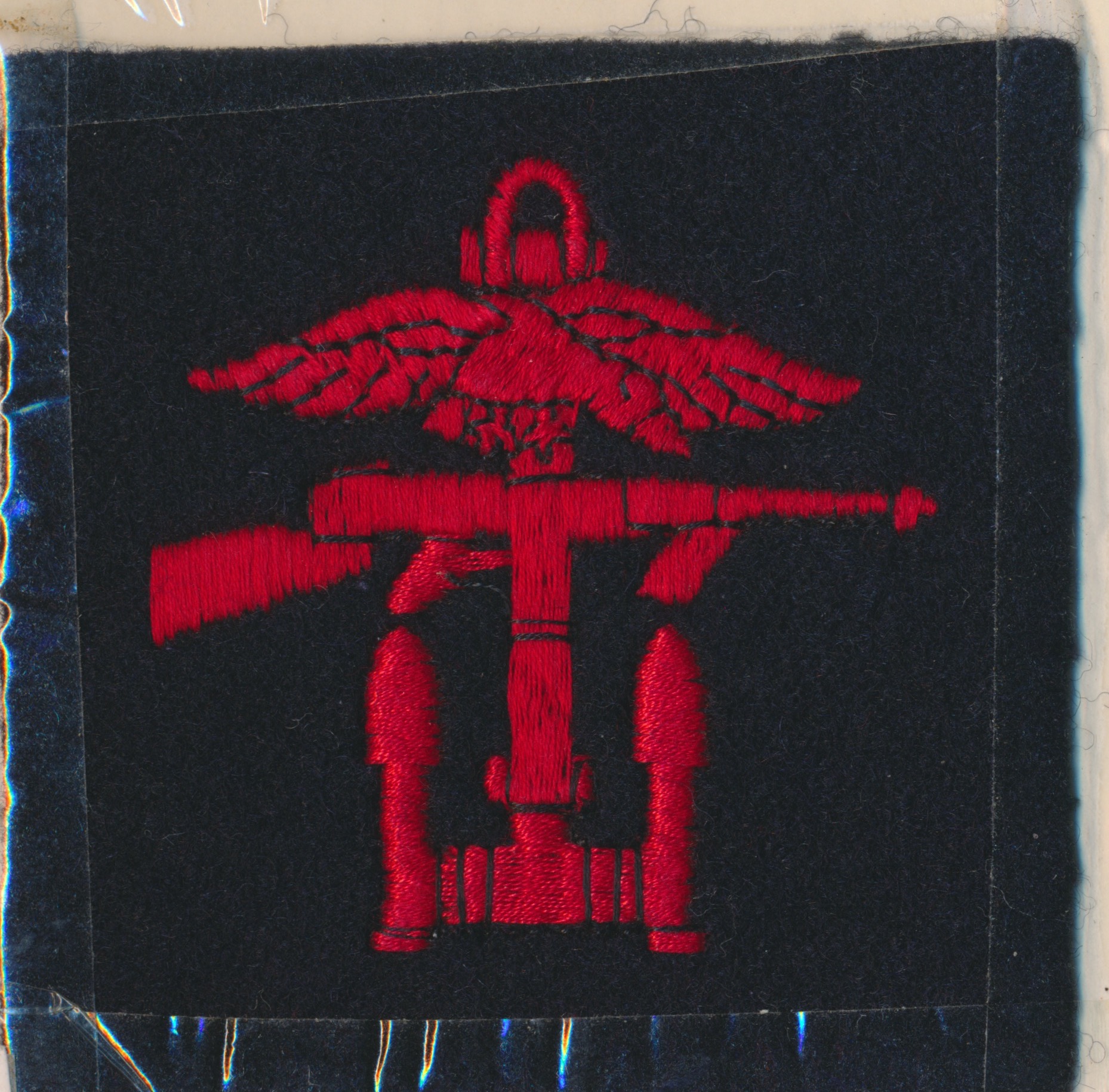
Clive’s 3207 Insignia Shoulder Patch
Clive’s training to be able to service all fighter aircraft involved moving from airfield to airfield, in England, where different types of fighter aircraft were based, so he and his fellows could learn all they needed about all types of aircraft. In 1943 Clive was cycled through various airfields: RAF Weston Zoyland that had Spitfires, RAF Zeals where there were Typhoons, RAF Hurn where they had Mustangs, and RAF Evanton with the Hurricanes.
A strategy of conducting war was to keep moving one’s forces further away from your home and deeper into enemy territory until they are defeated. The land-based army fought from trenches and with cannons. Fighter aircraft were an important part of war for the Allies. The fighter aircraft took off from England, flew a sortie into enemy territory, and then had to return all the way back to England.
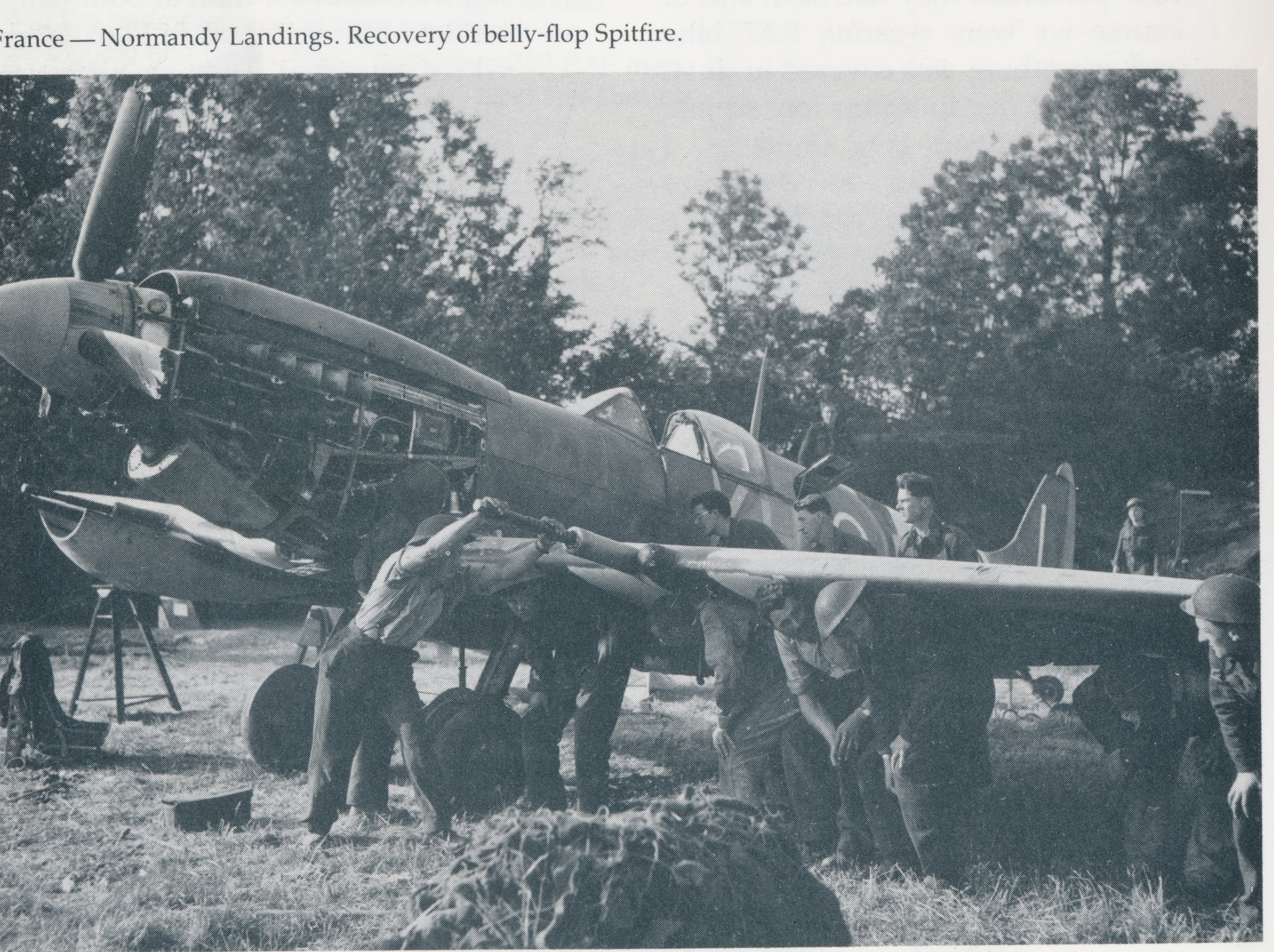
A strategy was to move the airfields from England into Europe so that the aircraft didn’t have to travel so far on each flight. When the Allied army was able to penetrate into enemy territory, and secure an area, an airfield was constructed in what was previously enemy territory. Engineers would bring heavy equipment in and grade an airfield in what was previously a farm field. It was then that the servicing unit would move in and set up all the equipment needed to service the aircraft flying into and out of that new airfield. As the army moved further, then a new airfield would be created closer to the action. Thus, the servicing units were consistently setting up new airfields farther and farther from England and closer to the enemy’s core -Berlin.
[huge_it_slider id=”22″]
When a servicing unit, such as the 3207, moved in they arrived with 15 – 3 ton Bedford trucks (also loaded with ammunition for the aircraft), 2 dispatch riders on motorcycles, a Jeep for the Commanding Officer. The first thing they did was set up their bivouacs (groundsheet tied to hedges along the field, set up the armourers (with ammunition and bombs for reloading aircraft, areas where they would assemble rockets for the Typhoons.
[huge_it_slider id=”23″]
When the ‘airfield’ is established then a flight squadron would arrive and permanently take over so that aircraft could continue to land and take off, and the servicing unit would “stand down” and move to a new airfield. Each servicing unit would move from field-to-field in a ‘leapfrog fashion, with ½ the unit staying until the flight squadron was established and ½ the unit leaving early to start a new field. The ½ that stayed behind, would then move to ‘catch up’ at the new field. When the next field needed to be created, the last ½ to arrive, left first to the new field. Thus, movement was a first in – last out, last in – first out leapfrog movement pattern.
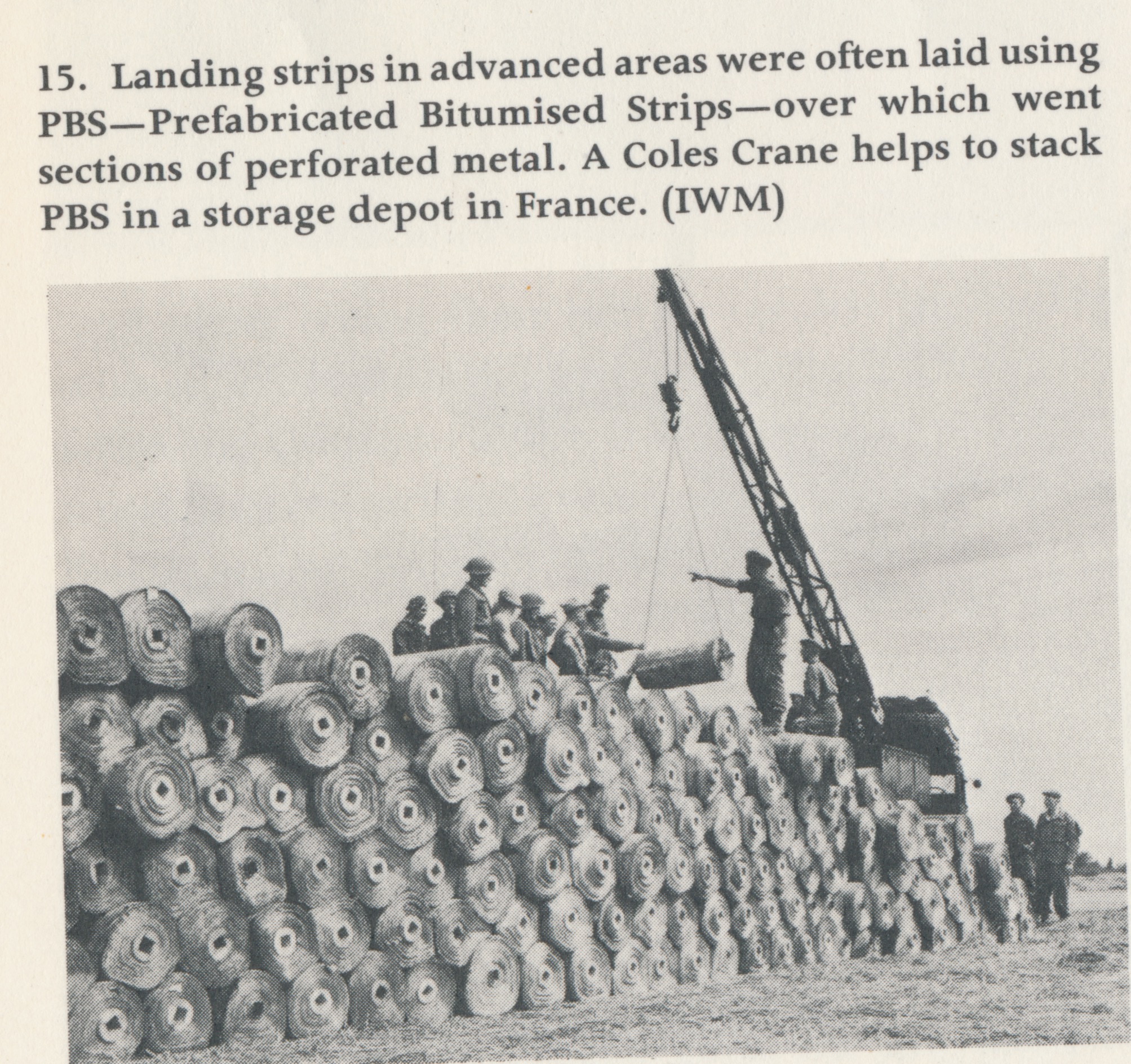
So, here was Clive Morant, in England, moving from airfield to airfield learning his trade in an RAF servicing unit. When his training was completed he was posted to Gosport, a suburb of Portsmouth naval base awaiting deployment into the battle which is now known as “Normandy”. The 3207 was one of the serving units being sent to France and the attack at Normandy. The 3207 had 150+ men, in 4 colour flights (red, green yellow, blue) and Clive was the NCO of the green flight, under the command of a sergeant. Each flight had 2NCOs, a sergeant, a flight sergeant, an adjutant (assistant/clerk) to the CO.
The Allied invasion combatants had assembled at Portsmouth as of June 6th, 1944, and Clive said there was so many invasion craft that you could walk from boat to boat, tied together, they covered a distance halfway to Mt Brydges, there was so many craft. The invasion was the largest assembled to that time in history.
On June 6th, a.m., Clive is just off the Isle of Wight on an L.C.T. (landing craft tank) or landing barge, with other men in his 3207 unit plus others from other units. Their destination was Sword Beach. At 3:00 a.m. Clive’s LCT was hit by an enemy submarine torpedo before they could get away from harbour. The LCT caught fire and several men were killed. The survivors were rescued by an American launch, the casualties were removed, and transferred to Portsmouth. The commanders didn’t know what to do with him. The rest of his unit was no longer in England. They were now in Normandy, setting up an airfield town as B.2, at Bazenville, France.
He was given a medical to determine his fitness and a replacement kit (personal gear, equipment) for those lost in the torpedo attack. He was eventually transferred to the No. 182 Squadron RAF, which was assembling at RAF Hearn, when it was recognized what his skills were. The 182nd had 14 units, and Clive was placed in the 14th Dakota unit. (The number 14 keeps reoccurring in Clive’s life.) Clive is no longer in the 3207and is now in the 182nd.
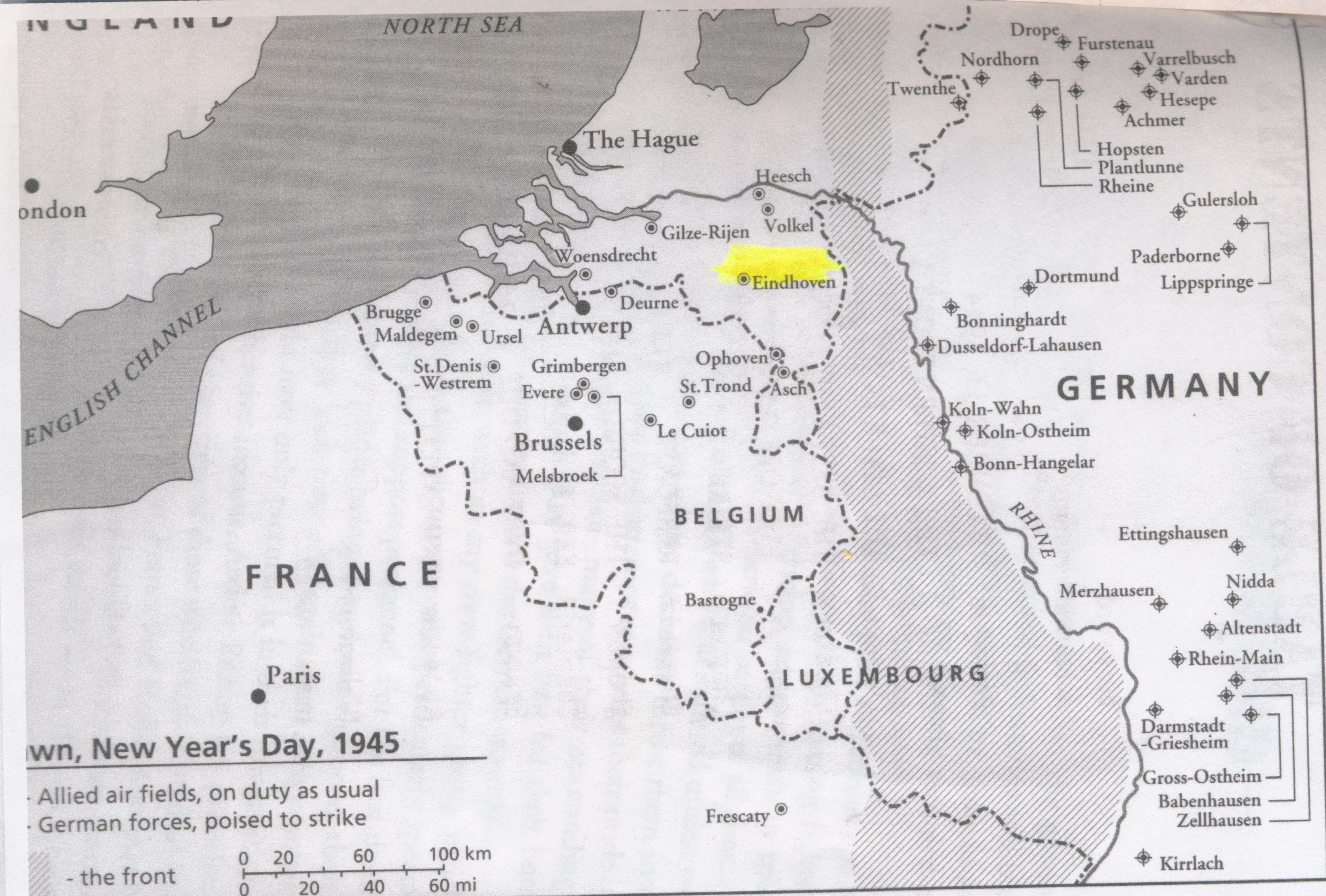
The 182nd was sent to France on June 10th, 1944, and ironically they’re sent to B.2 airfield to relieve the 3207 Servicing Commando Unit of which Clive had been a part. The 3207 left France and went to Burma, and Clive stayed with the 182nd. Clive’s subsequent wartime was in the 182nd following the army in its movement against the enemy. After France, he was part of the liberation of Brussels on September 3rd,1944. He then went to Eindhoven, Holland, in January 1945, and in April1945 they crossed the Rhine to liberate Arnheim, and from there to Hanover (still in April), Wilnsdorf and on May 8th, 1945 the RAF met up with the Russian allies at Lubeck, on the Baltic coast, just outside Berlin.
The war ended on May 8th, 1945 and on May 9th / 10th Clive was sent to the liberation of Copenhagen at Kastrup Airfield. It was the most modern airfield at the time because it had been untouched by war. Clive and the 182nd rested here for a month at war’s end. As the war had ended there was a lot of equipment that had to be dealt with that was no longer needed for war. Clive’s duties were to book vehicles into hangars and “disburse” all equipment. No equipment was to be ‘saved’. In fact, much of it was dumped into bomb holes on the airfield grounds and was buried.
Many Allied combatants were demobbed and sent home as soon as practical because it was expensive to feed, clothe, house and otherwise care for people who were longer needed to fight. However, Clive was not immediately sent home. Rather, he was placed at Schleswig Air Base, in Holstein Germany, for “peacetime” duties. He was too young to be demobbed.
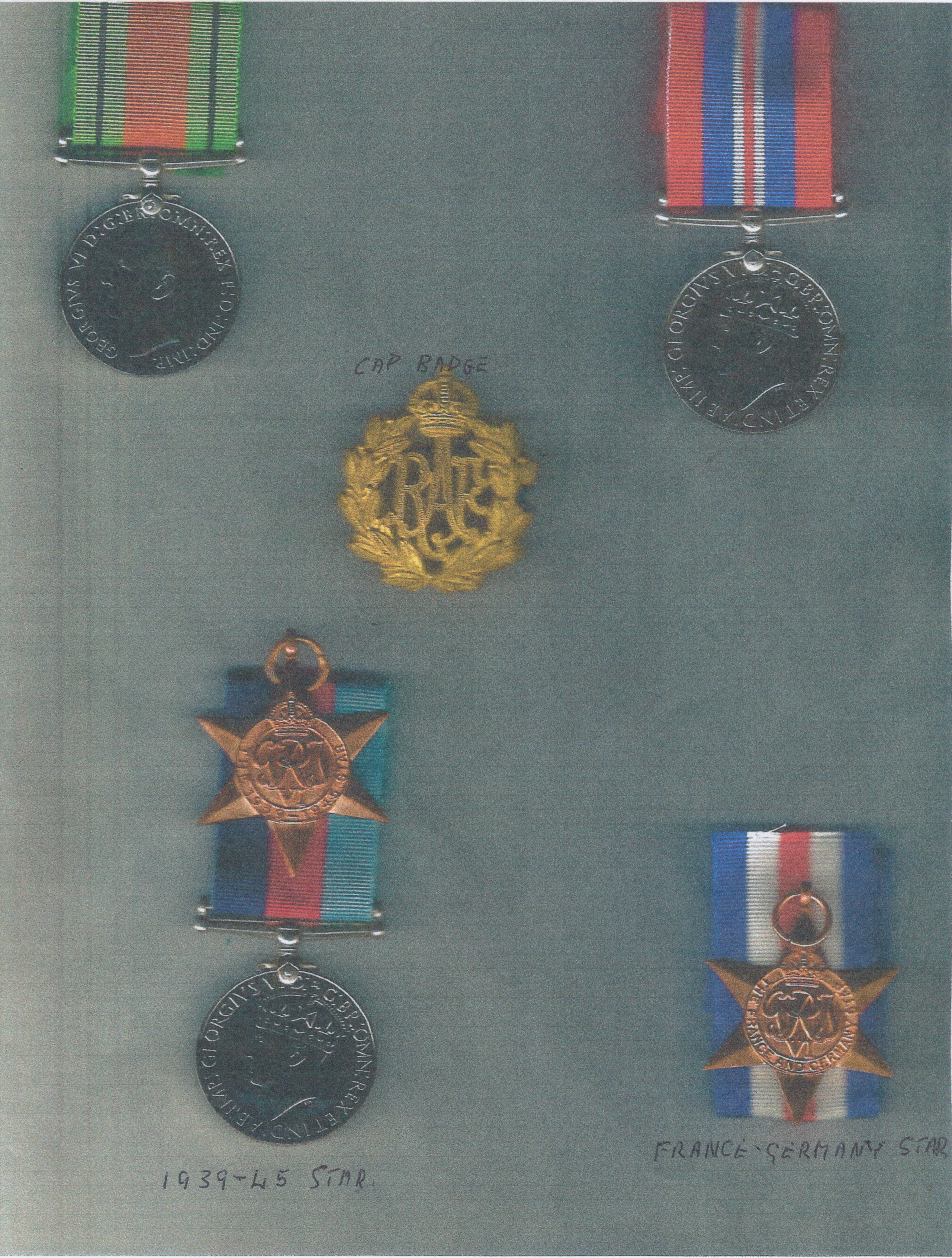
In September 1946, Clive was discharged to civilian life.
[wonderplugin_video iframe=”https://youtu.be/oLJ5J2Lnnyg” videowidth=600 videoheight=400 keepaspectratio=1 videocss=”position:relative;display:block;background-color:#000;overflow:hidden;max-width:100%;margin:0 auto;” playbutton=”https://rememberourvets.ca/wp-content/plugins/wonderplugin-video-embed/engine/playvideo-64-64-0.png”]
Anecdotes from the Interview
1) Clive said that during the war he changed his name to Chris, instead of Clive. The reason he changed his name was due to poor printing and writing skills by some officers. When anyone was “called out” by an officer while on parade, the officer would shout out something like this, “Step forward, George Gilder, Frank Lewis, Clive Morant”, and Clive and his fellows would step forward waiting for orders.
However, a sloppy writer would mishap the C to look like an O, and instead of calling out Clive, he would call out Olive, which made him subject to much teasing and ridicule by his fellows. Thus, Clive became Chris for the war.
2) On New Year’s Eve, December 31, 1944, Chris was placed in Eindhoven, B.78, Holland. Clive’s friend, Corporal “Bunny” Rabbit, was scheduled to be the guard commander, but he wanted to party with his buddies. Clive did not drink, so Cpl. Rabbit asked Clive to switch with him and take charge of the guard and “Bunny” could go drinking and celebrating. Clive made “Bunny” agree to cover for him the next day, before agreeing to the switch. So, “Bunny” signed in as being on guard, Clive substituted for him, and “Bunny” went off to party. The next morning Clive discharged the guard and started off to his billet.
However, early on that morning of January 1st, the German Luftwaffe decided to make a last stand by attacking and trying to destroy the airfield. It was the height of winter and conditions were frosty, but clear. Approximately 300+ Ju88s, Fock Wulf 190’s, Messerschmidt 109s, and bombers destroyed everything.
“Aircraft were being shot up in the air and on the ground, fuel, bomb, and rocket dumps exploded, buildings bombed and strafed, hangars set on fire and motor vehicles and fuel trucks wrecked and left burning. Smoke and flames were everywhere. The thunder of bombs and rockets exploding mingling with the rattle and thump-thump of machine guns and cannon fire, the blasts from the Bofors ground defence guns, the whining and whirring of aircraft swooping and swerving, and the explosions of planes crashing into the ground or being blown to bits in the air, added a deadly cacophony to the already frightening spectacle of the field under relentless attack.”
[“Destruction at Dawn”, Arthur Bishop
Cpl. Rabbit had taken shelter in a ditch and another man was in it with him. Cpl. Rabbit had been mortally hit and said to the man beside him, “Chris, take care of me.” and died. In his pain and confusion Cpl. Rabbit had mistaken this man for his friend Clive / Chris. The man thought that ‘Chris’ had been with Cpl. Rabbit and had deserted him. This is one of the worst things a man can do in war – desert a fellow man.
Clive was reported, taken into custody, and placed in security under guard. The officer in charge did not believe Clive’s story about the switch and about being nowhere near to Cpl. Rabbit at the time of the attack. He was accused of desertion and lying. The guard record was checked, and Cpl. Rabbit’s name was the official guard commander. Finally, a witness was found, who had been on guard duty, to attest to the fact that Clive had in fact been guard commander, a switch had been made, and Clive had discharged the guard as per duty. The officer sent a messenger to open the security door and with only the words, “OK, Corporal, you can go!” Chris was released. Clive related that this was the most frightening, uncomfortable, disgusting experience of his war. There was anger and disgust in his tone as Clive related the event. Clive said that “Bunny” was buried in a churchyard in Eindhoven.
3) In May 1945 Clive was at Kastrup Airfield in Copenhagen. At this camp, they had a resentful German cook preparing meals for the Allied troops. He served a poisoned cream sauce one day and poisoned the crew. Clive spent many days in the hospital after having his stomach pumped by German nurses. The cook was found guilty and ‘executed’.
Part Three: Anecdotes by Chloe Morant
Chloe Morant is Clive Morant’s granddaughter. While studying journalism at university she wrote a paper, “thesis”, based on various conversations and questions she asked her father and grandfather, of Clive’s exploits during WWII while serving in the R.A.F. Click on the button below to take you to “Chloe’s Chronicles”.
Part Four: “The Post War Years”
Clive Morant was discharged in September 1946. Click on the button to take you to his postwar recollections, so far.