Enlistment # J-40651
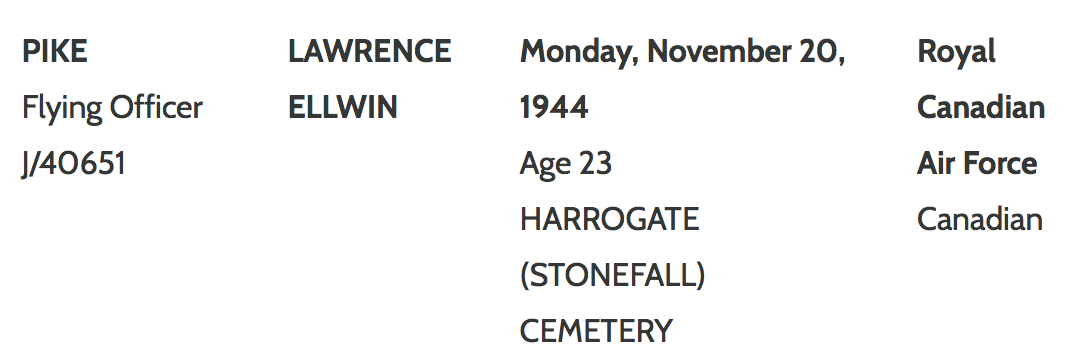
Flying Officer
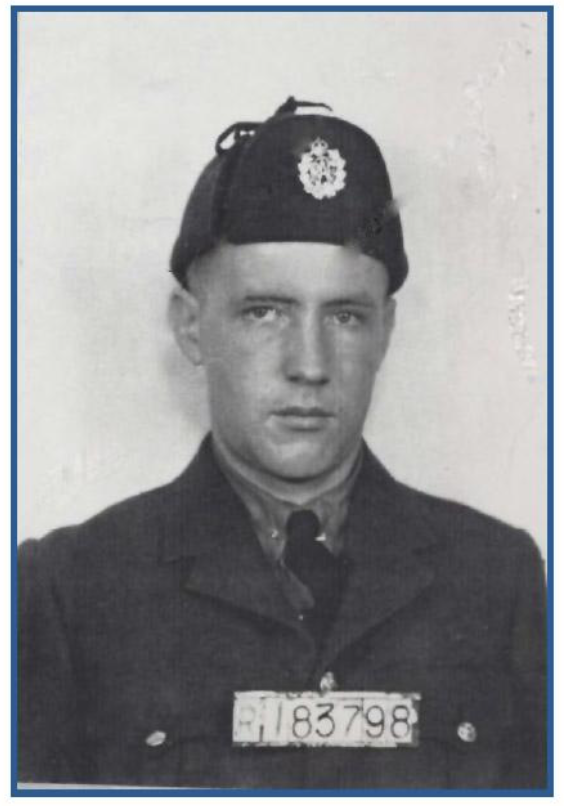
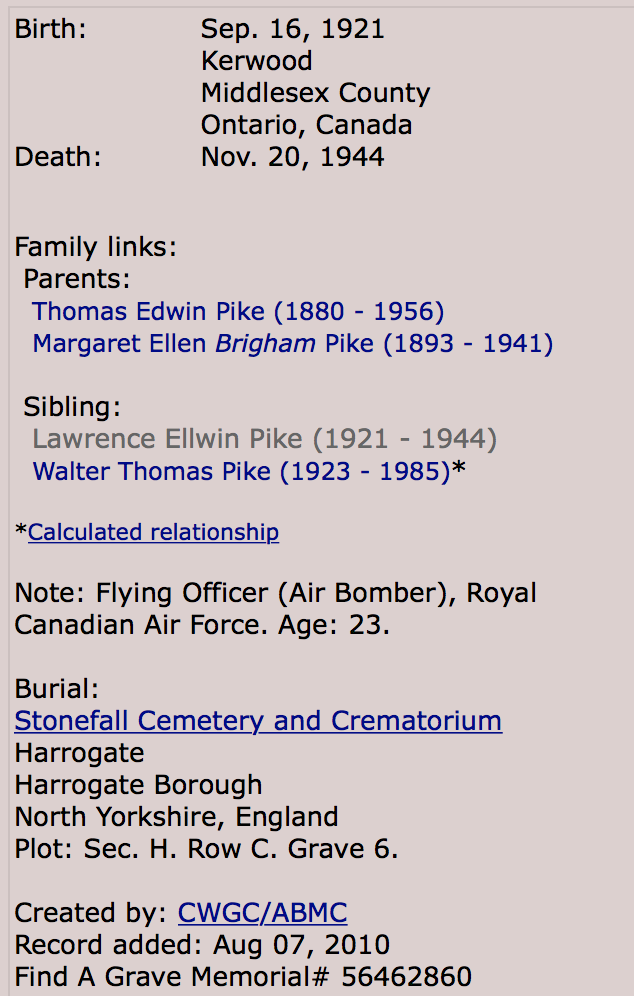
Lawrence Ellwin Pike was born on September 18, 1921 in Kerwood, Ontario to Thomas Edwin Pike and Margaret Ellen Brigham Pike. He had auburn hair and blue eyes. He had an older sister Doreen and a younger brother Walter. Lawrence attended S.S.#2 Metcalfe School and Strathroy Collegiate Institute.
The family lived on a mixed farm near Kerwood where Lawrence and his brother helped their dad with the harvest each year.
Lawrence also worked for his neighbours on their farm.
Lawrence enlisted with the Royal Canadian Air Force, on August 21, 1942. He was a Flying Officer Air Bomber in the Heavy Conversion Unit #1656. Lawrence was not married.
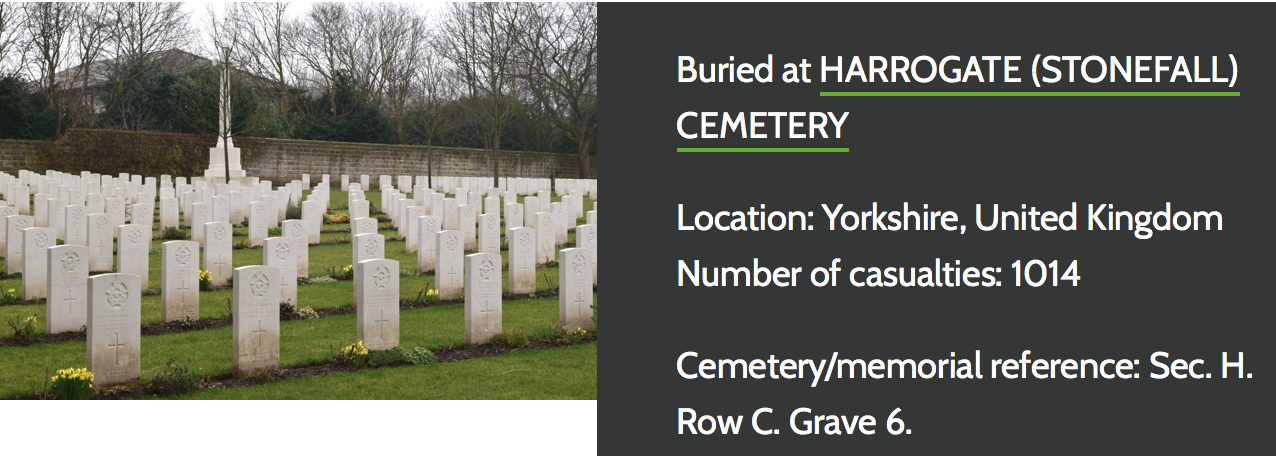
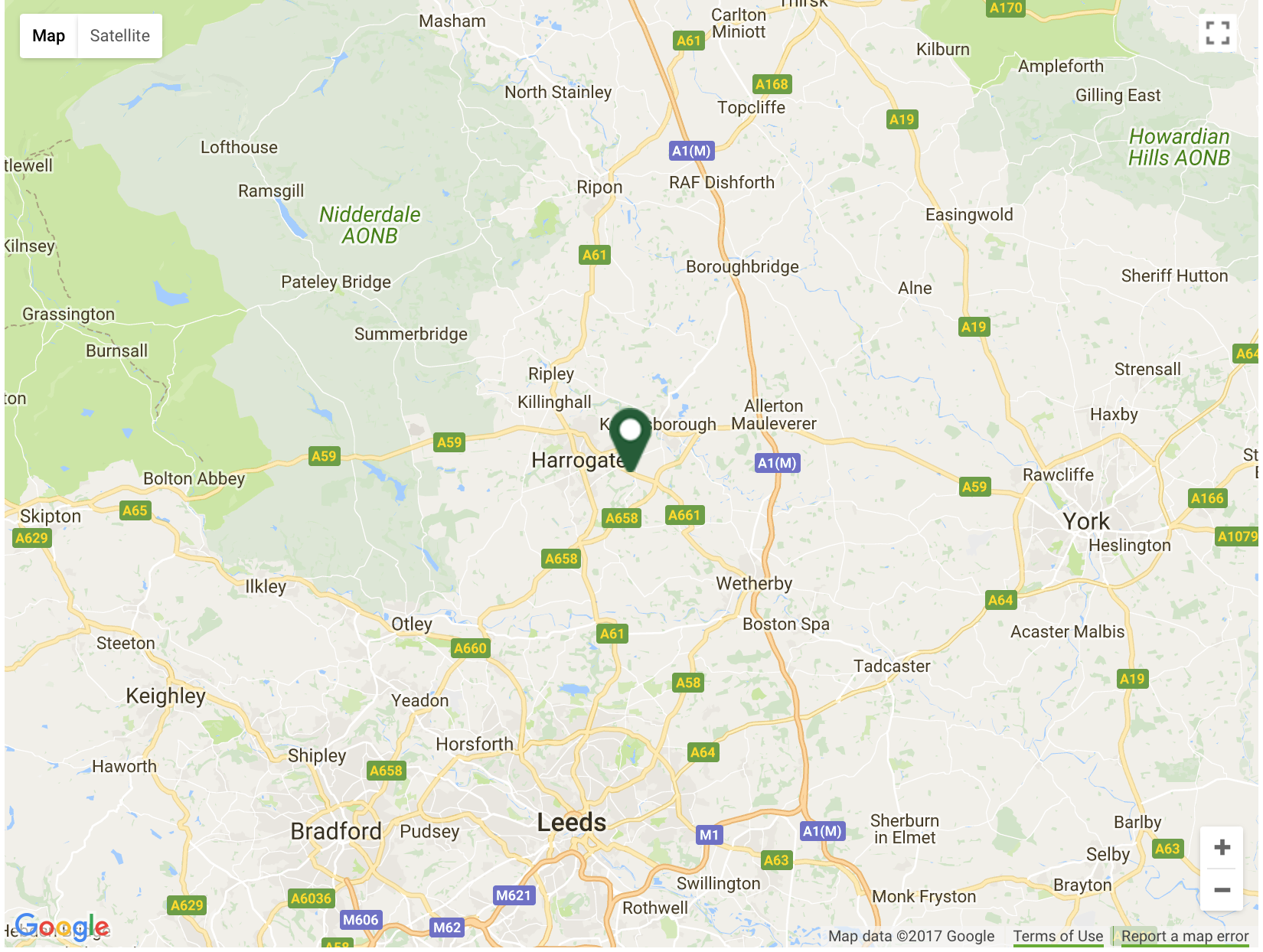
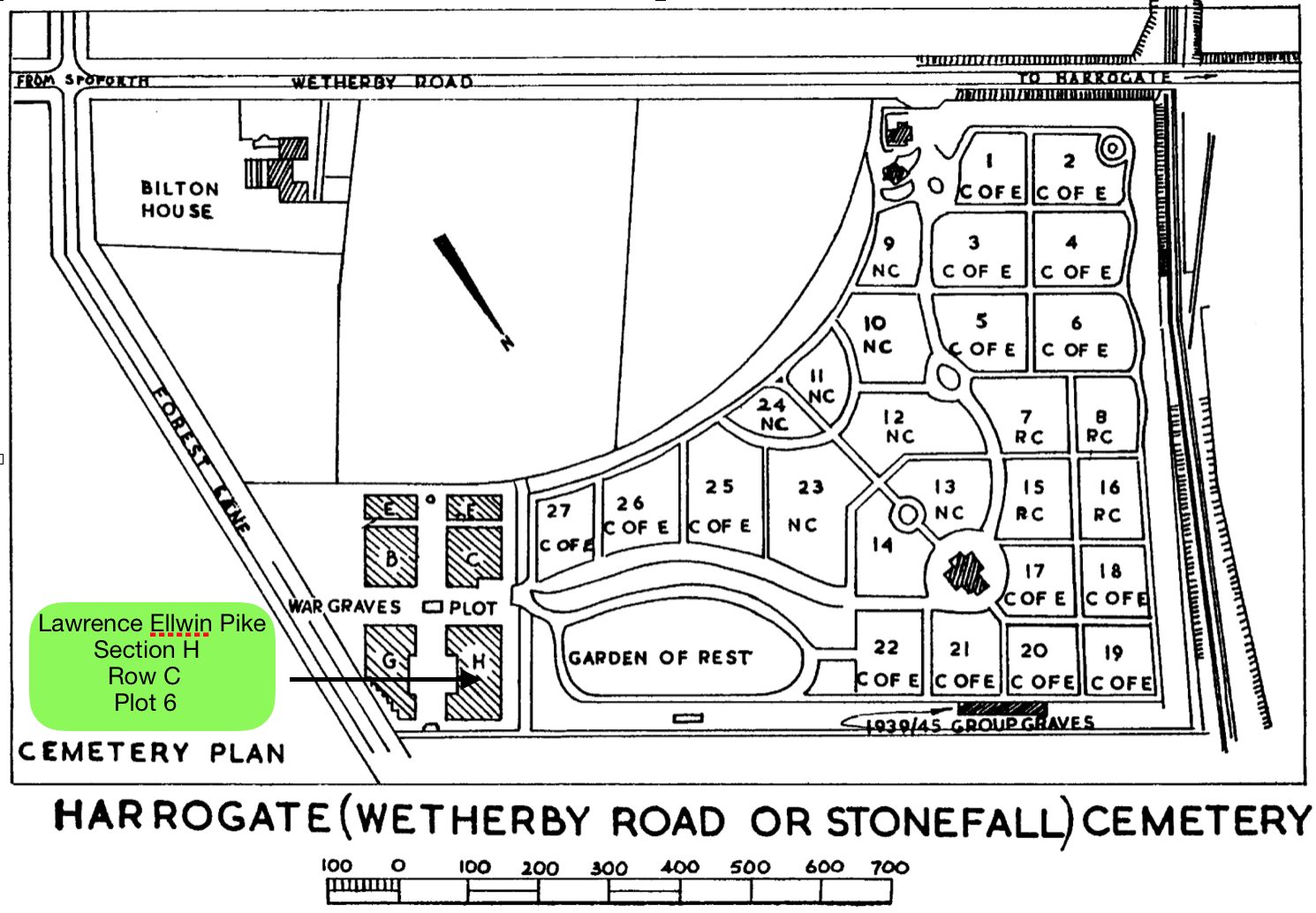
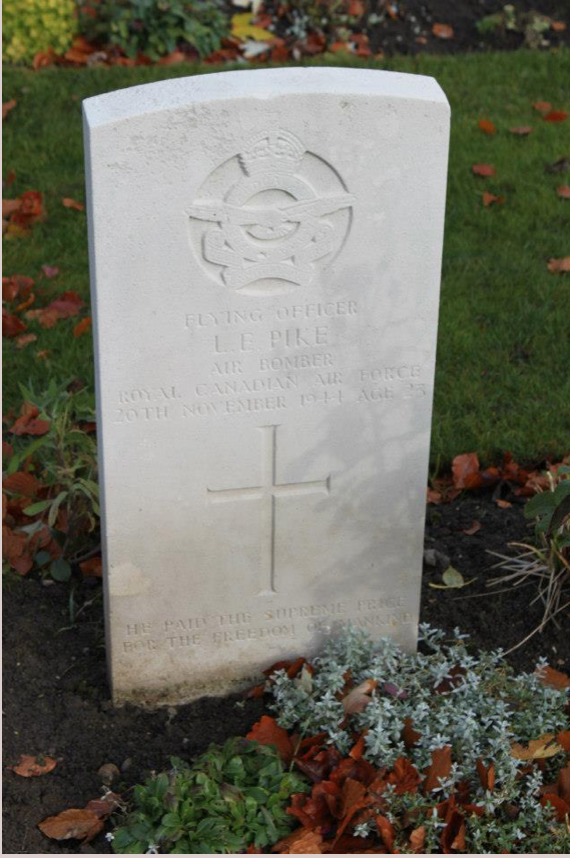
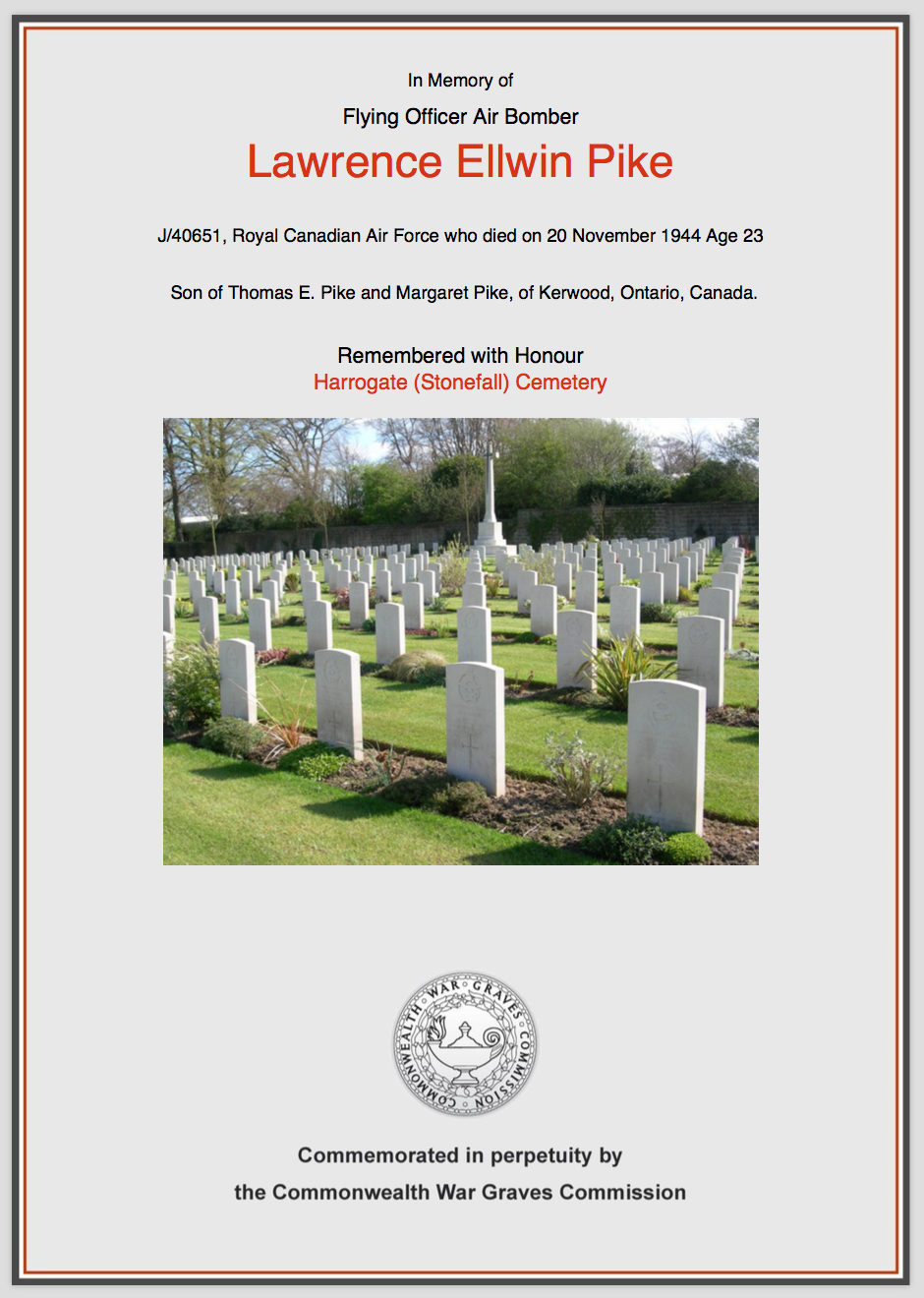
He was killed in action on November 20, 1944, when the Halifax aircraft #W 7875, he was in, (crashed at Lings Farm near Dunsville, Doncaster, England during a night training flight. The other members of his crew, Sergeant Norman R. Stubbs, Flying Officer Charles Currie, and Flying Officer John D. East, (the pilot of the aircraft at the time) were also killed, along with two other airmen who were not Canadians. Lawrence was 23 years old when he died. He is buried in the Stonefall Cemetery, Wetherby Road, in Harrogate, Yorkshire, England.
“Halifax II W7875 was taking off at 21:58 hrs. flown by 20-year-old, F/O John Douglas Alfred East J/36618 RCAF from British Columbia, Canada, and all his crew killed when almost immediately after takeoff crashed into trees at a village called Dunsville. The cause was put down to raising the flaps by mistake instead of the wheels.”
[Source: Archive Report: Allied Forces]
November 20, 19944 was a bad night for the 1656th as two other Halifax aircraft crashed that night with a loss of life. The first crash was BB254 at 20:51 caused by raising the flaps instead of the wheels. The second crash was HR794 at 21:05 caused by leaving the bomb doors open and the aircraft failed to climb. These men were quite young, flying very large, complex machinery, at night. The video showed that the pre-takeoff checklist was quite extensive. Human error is common under extremely stressful conditions. All these men died in action, serving and sacrificing for the “common good” of their fellow citizens.